Buying Guides
How to Buy Gemstones in Sri Lanka Safely and Confidently
A complete guide for tourists, collectors and investors: what to look for, what to ask, what to avoid and how to protect a gemstone purchase in Sri Lanka.
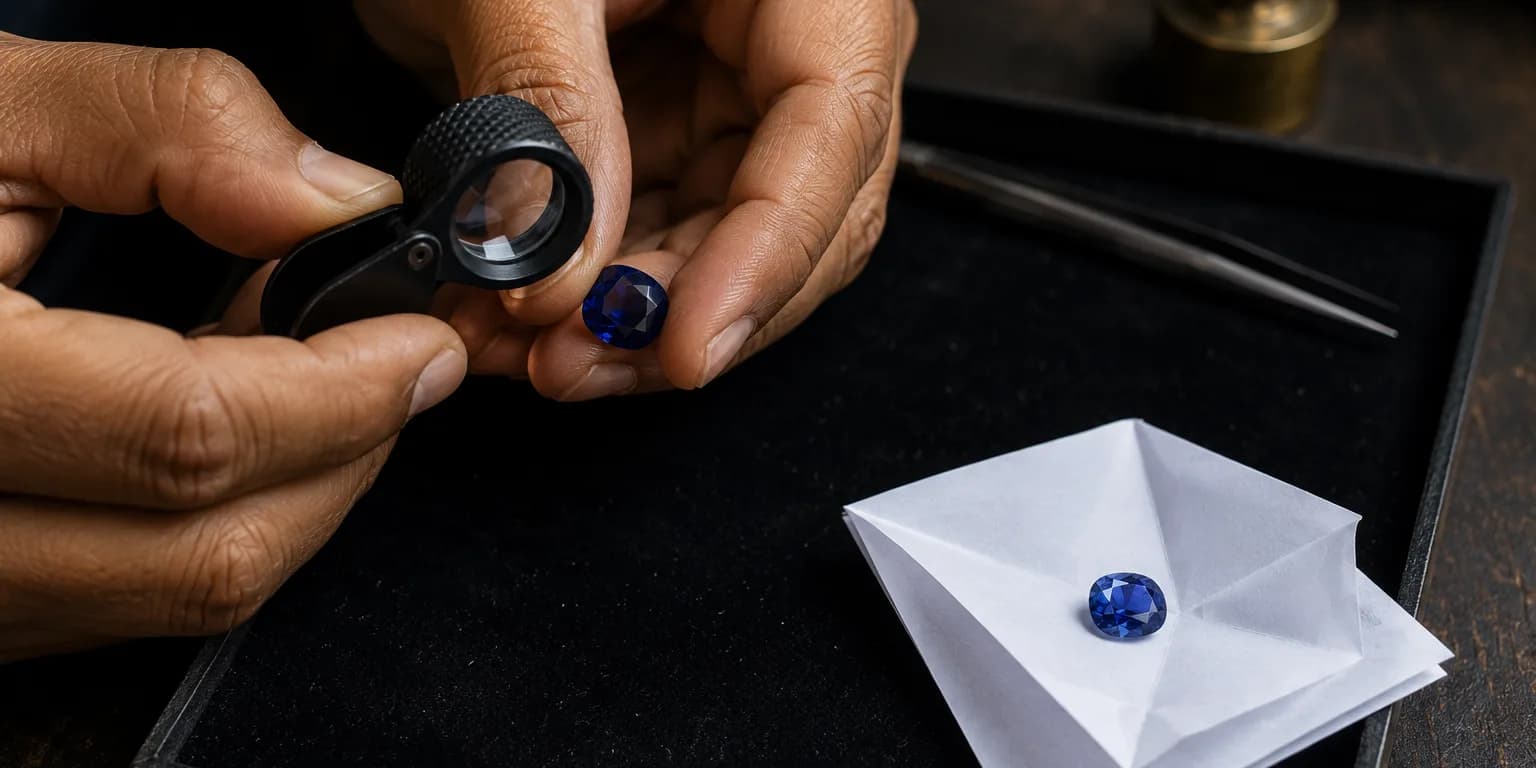
To buy gemstones safely in Sri Lanka, buy from licensed dealers, ask for full written disclosure of species, treatments and weight, compare prices before committing, consider an independent laboratory report for significant purchases, and keep every document, invoice, report and payment record, together for customs and insurance.
Sri Lanka is one of the longest-documented sources of coloured gemstones, named among the traditional origins of sapphire in gemmological references, with a gem trade recorded over many centuries in and medieval accounts. Most of the island's stones come from secondary gravel deposits; how those deposits form is a short read that makes the rest of the trade easier to understand. For travellers and collectors, that heritage is the attraction, and also the challenge. A market this old and this deep contains everything from internationally respected dealers to opportunistic sellers, and the difference is not always visible from the shop front.
This guide explains how to buy with confidence: how to prepare, how to judge what you are shown, which questions to ask, and which documents to insist on before money changes hands.
Before You Buy
Preparation does more to protect you than any single question you can ask at the counter.
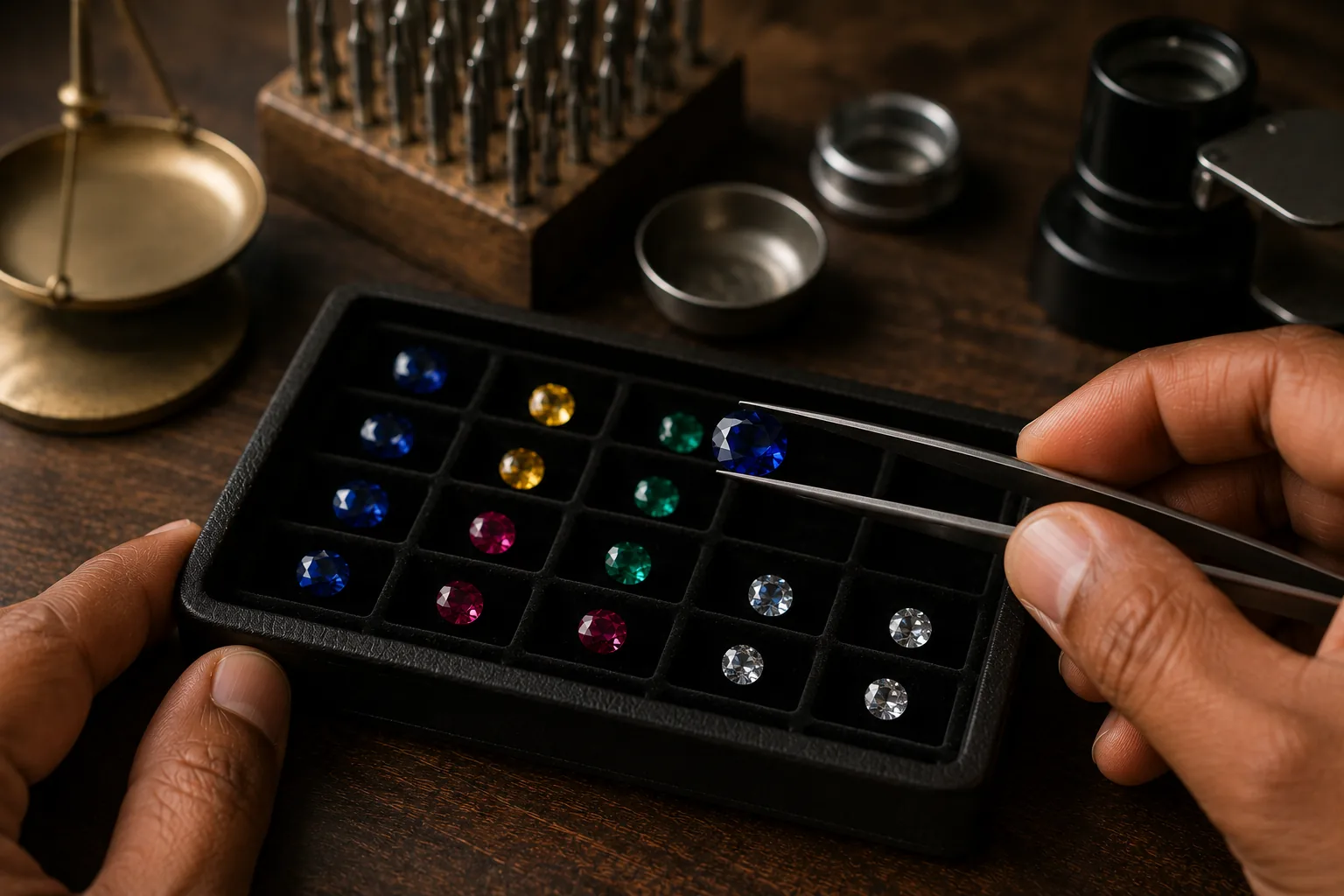
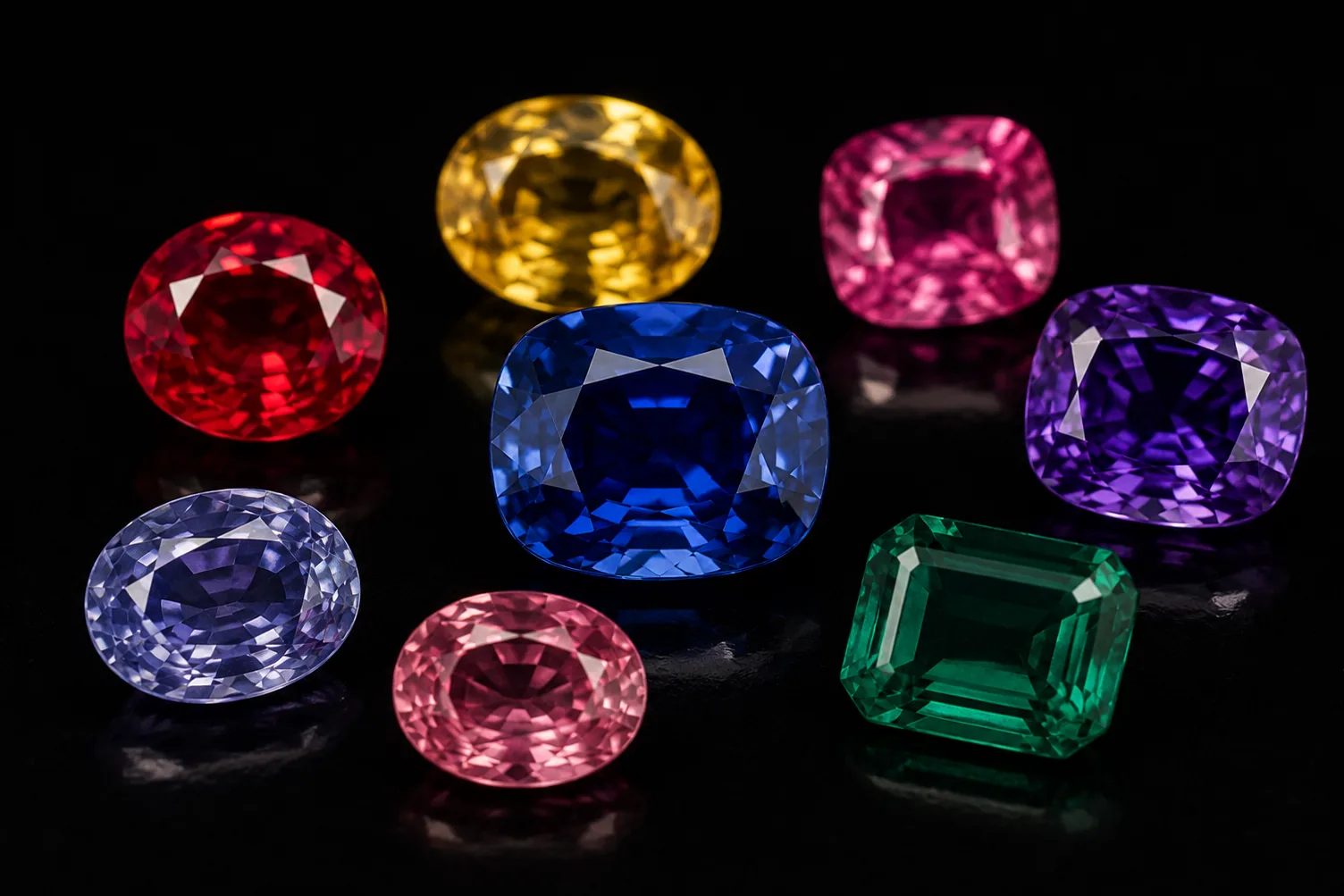
Learn the basic gem types. Sri Lanka is best known for sapphires in many colours, but the island also produces spinel, garnet, tourmaline, zircon, moonstone, topaz, aquamarine and chrysoberyl, including cat's eye and the rare alexandrite. Knowing roughly what each stone is, and what it typically costs, makes you a harder target for substitution and overpricing.
Set your budget before you shop. Decide what you are comfortable spending and treat it as a ceiling. High-pressure sales situations are much easier to manage when the number is fixed in advance.
Understand treatments. Most sapphires on the market are heated, which is an accepted trade practice when disclosed. Other treatments matter more. What you need is written disclosure, not a verbal assurance.
Know your preferences. Colour is the dominant value factor in coloured stones. Decide what you actually like before a seller decides for you.
Prepare your questions. The section below gives you a working list. Sellers who answer clearly and in writing are self-selecting for trustworthiness.
Plan your documentation. If you intend to take the stone out of Sri Lanka, read our guide to taking gemstones out of Sri Lanka before you buy, so you know which papers to collect at the point of sale.
Choosing the Right Gem
Focus on the four main quality factors: colour, clarity, cut and carat weight. Each of these can dramatically affect value.
Colour carries the most weight in coloured gemstones. In sapphires, evenness of colour and its behaviour in different light matter as much as the hue itself. View any serious stone in daylight, not only under shop lighting.
Clarity expectations differ by species. Eye-visible inclusions reduce value in sapphire more than in, say, emerald, where they are expected. Ask to examine the stone with a loupe.
Cut determines how the stone returns light. A well-proportioned stone will look lively across the whole face; a stone cut mainly to preserve weight may show a washed-out window in the centre.
Carat weight interacts with everything else. Price per carat rises steeply at quality thresholds, which is why two stones of the same weight can differ in price many times over.
Questions to Ask the Seller
Ask these questions and pay attention to how, not just what, the seller answers:
- Is this stone natural, or is it synthetic or imitation?
- Has it been treated in any way, including heating?
- What is its exact weight, and will you weigh it in front of me?
- Will all of this be stated on the invoice?
- Can the stone be verified by an independent laboratory before I complete the purchase?
- What are your return terms, in writing?
A reputable dealer hears these questions every day and answers them without hesitation. Reluctance to put claims in writing is the single clearest warning sign in the trade.
Certificates and Verification
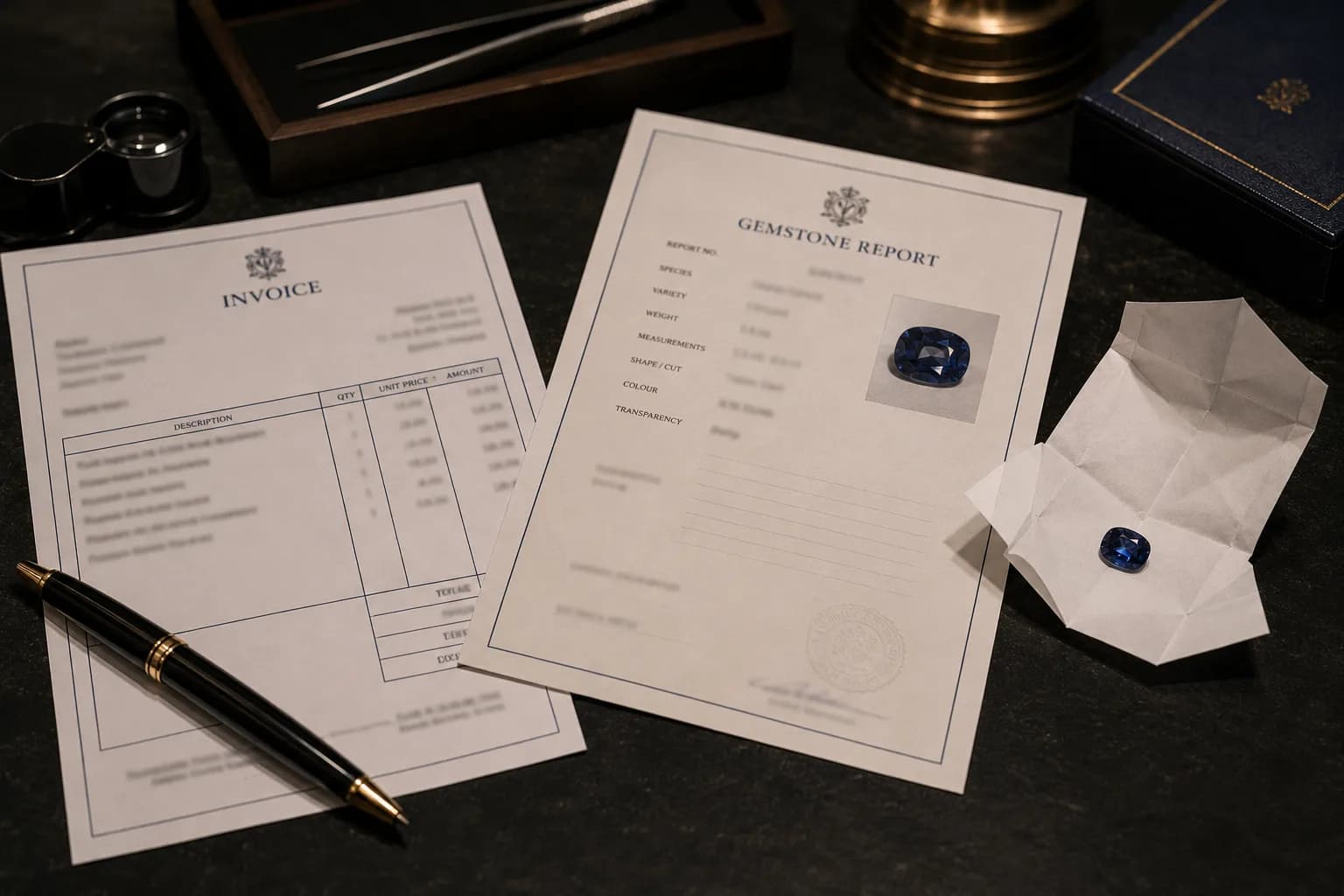
For significant purchases, an independent laboratory report is the standard protection. A proper report identifies the species and variety, states whether the stone is natural or synthetic, and discloses detected treatments.
Two points matter in practice. First, the report should come from a laboratory independent of the seller. Second, the report should travel with the stone, check that the weight and measurements on the paper match the stone in front of you. Our guide to reading a gem report explains each field.
Pricing and Value
There is no single "price list" for coloured gemstones; value depends on the interaction of the quality factors above, and on origin claims where they are supported. What you can do:
- Compare several sellers for similar material before committing.
- Treat origin claims ("Ceylon sapphire") as value-relevant statements that belong on the invoice, ideally supported by a laboratory origin opinion for important stones.
- Remember that a discount from an invented starting price is not a saving.
Common Red Flags
Walk away, or slow down considerably, when you encounter any of the following:
- Reluctance to provide written disclosure of treatments or identity
- "No time", pressure to complete the sale immediately
- A story that the stone can be resold at a guaranteed profit elsewhere
- Prices dramatically below any comparable quote
- Refusal to allow independent laboratory verification
- Invoices that describe the stone more vaguely than the seller did
For the complete list with explanations, see red flags when buying gemstones.
Export and Customs
If you are taking your purchase home, keep every document from the transaction together and understand the declaration requirements of both Sri Lanka and your destination country before you travel. Rules change and vary by country, verify current requirements with official sources close to your departure date. Start with our guides to taking gemstones out of Sri Lanka and customs declarations.
Checklist
Before you pay, confirm every item:
- Seller's full business details recorded
- Itemised invoice describing stone, weight and treatments
- Written treatment disclosure
- Weight confirmed on a scale in front of you
- Laboratory report obtained or purchase made subject to verification
- Return terms in writing
- Payment evidence retained
- Export documentation understood
Our interactive Jewellery Purchase Checker walks through this list and generates the questions you still need to ask.
Frequently asked questions
Is it safe to buy gemstones in Sri Lanka as a tourist?
Yes, buying gemstones in Sri Lanka is generally safe when you buy from licensed dealers, insist on written disclosure of the stone's identity and treatments, and keep complete documentation. Problems most often arise from informal street purchases and undocumented claims.
Should I get a certificate when buying a gemstone in Sri Lanka?
For any significant purchase, yes. An independent laboratory report confirming species, variety and treatment status protects you far beyond its cost. Reputable dealers will not object to laboratory verification.
Can I negotiate gemstone prices in Sri Lanka?
Negotiation is normal in the Sri Lankan gem trade. Comparing prices across several dealers before committing gives you a realistic sense of the market for a given quality.
What documents should I keep after buying a gemstone?
Keep the itemised invoice, any laboratory report, payment evidence and any customs or export paperwork together. You may need them for customs on departure, for insurance, and for resale.
Related terms
Sources
- National Gem and Jewellery Authority of Sri Lanka (NGJA), Dealer licensing and industry regulation
- CIBJO, The World Jewellery Confederation, Disclosure standards for gemstone treatments
- Gemological Institute of America (GIA), Gemological concepts and terminology
External references are provided for verification. Listing a source does not imply affiliation or endorsement.
Seen something that needs correcting? Read how corrections work or contact the editorial team.
Related Guides
Buying Guides
A Tourist's Guide to Buying Gems in Sri Lanka
A practical guide for visitors buying gems in Sri Lanka, where tourists buy, how to judge what you are shown, paying safely and taking stones home.
3 min read
Buying Guides
How to Buy a Sapphire: What Actually Determines Quality
How to buy a sapphire with confidence, judging colour, clarity, cut and weight, understanding heat treatment and origin claims, and using laboratory reports.
3 min read
Buying Guides
What Are the Red Flags When Buying Gemstones?
Ten red flags when buying gemstones, pressure tactics, resale-profit stories, fantasy discounts and documentation dodges, and why each one matters.
3 min read
Certificates
How Do You Read a Gem Report, Field by Field?
A field-by-field walkthrough of a generic laboratory report, report number, species, variety, weight, measurements, colour, treatment comments and origin.
3 min read