Chrysoberyl Cat's Eye
A living band of light across golden chrysoberyl
Also known as: Cymophane
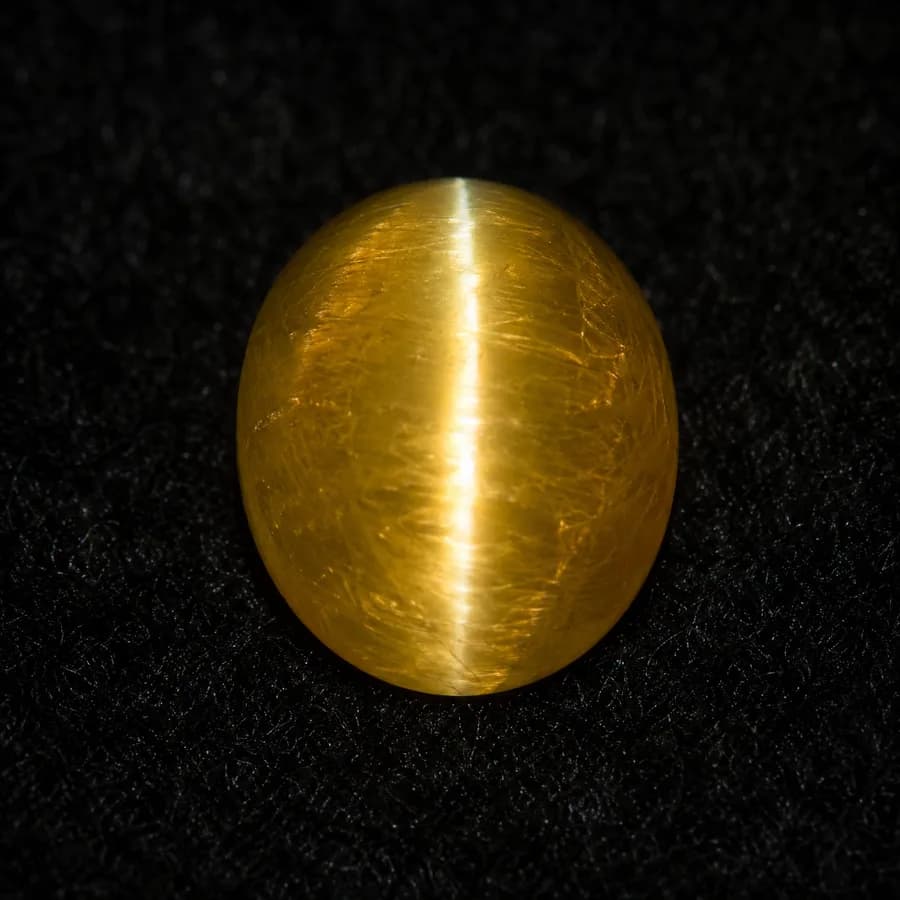
Chrysoberyl cat's eye, also called cymophane, displays chatoyancy, a sharp band of light that glides across a domed cabochon like the slit pupil of a cat's eye. The effect is caused by dense, parallel needle-like inclusions within the chrysoberyl.
Updated:
Natural Beauty
From Sri Lanka
Durability
Mohs 8.5
Treatments
Typically untreated
Overview
Sri Lanka is the source most famously associated with fine cat's eye, and when gemmologists say simply 'cat's eye', chrysoberyl is the species they mean.
Colours
Cat's eye chrysoberyl occurs in honey yellow, golden brown, greenish yellow and milky green body colours, with the honeyed golden tones traditionally the most celebrated. The finest stones display the 'milk and honey' effect: with light coming from one side, the half of the stone nearer the light appears milky while the far half glows honey-toned, the eye dividing them crisply. The chatoyant band itself is ideally bright, narrow, straight and silvery white against the body colour. Body colour and eye interact, extremely dense silk sharpens the eye but mutes transparency, so the best stones balance a strong eye with attractive, semi-transparent colour.
Quality Factors
A fine cat's eye is judged first on the eye: it should be sharp, complete from girdle to girdle, well centred, straight and strongly contrasted against the body colour, opening and closing cleanly as the light moves. Body colour comes second, with rich honey and golden hues most prized. The cabochon should be well proportioned, high enough to focus the eye, without excessive hidden weight, and symmetrical. Translucency should be lively rather than dull or overly opaque. Fine large cat's eyes are rare and command serious prices, particularly with laboratory confirmation. Examine any cat's eye under a single direct light source, which is how the effect is properly displayed and compared.
Treatments
Chrysoberyl cat's eye is typically untreated; the chatoyancy and colour are natural, and no enhancement is routine for the variety. Any treatment on a particular stone, irradiation of some brownish material has been reported historically, should be disclosed at every stage of sale under international trade standards such as CIBJO's Gemstone Book (Blue Book). The market's real hazards are substitutes: quartz cat's eye, tourmaline and apatite cat's eyes, artificial fibre-optic glass with a strikingly perfect eye, and synthetic chrysoberyl. Only chrysoberyl may be sold as simply 'cat's eye' without a species name, so insist on precise labelling. A recognised gemmological laboratory can confirm species, natural origin and the absence of treatment, and a report should accompany any important stone.
CIBJO’s Gemstone Book, one of the Blue Book standards published by the World Jewellery Confederation, calls for every treatment to be disclosed at each sale, and consumer law in many countries separately requires material facts such as treatment to be disclosed. Undisclosed treatment is grounds to walk away, see our guide to heated versus unheated stones.
Origin in Sri Lanka
Sri Lanka is the classic origin for chrysoberyl cat's eye, and the island's reputation for the gem stretches back centuries; fine cymophane from Ceylon has featured in notable collections and royal jewellery around the world. The stones are recovered from alluvial gravels in the traditional districts, including Ratnapura, Elahera and Balangoda, where chrysoberyl's hardness lets it survive as waterworn pebbles. Brazil and India also produce cat's eye chrysoberyl, and material appears from East Africa and Madagascar. For many collectors, a fine Sri Lankan cat's eye with the milk-and-honey effect remains the definitive expression of the gem.
Origin describes where a stone was mined, it is not a grade, and trade terms such as “Ceylon” are origin descriptions, never an automatic premium. A fine stone from elsewhere can outclass a mediocre stone from a famous source; judge colour, clarity, cut and treatment first. Remember also that a laboratory origin determination is an expert opinion based on inclusions and chemistry, not an infallible guarantee, and a seller’s origin claim is not laboratory confirmation. Origin claims belong on the invoice and, for important stones, in a report.
Care
Cat's eye chrysoberyl is superbly durable: hardness 8.5, good toughness and a cabochon form with no facet edges to chip. Clean with warm soapy water and a soft brush, keeping the dome free of soap film so the eye stays bright; ultrasonic cleaning is generally safe for this untreated gem, though a heavily included stone merits gentler handling. The eye is best admired under direct light, sunlight or a single lamp, so a clean, polished dome matters. Store the stone away from diamonds and corundum, the only common gems that can scratch it, and have bezels or claws checked periodically by a jeweller.
As a Loose Stone
Where It Is Found in Sri Lanka
- Ratnapura
- Elahera
- Balangoda
Common Treatments at a Glance
- Typically untreated
All treatments must be disclosed at sale. See our treatment guides and treatment reports.
Chrysoberyl Cat's Eye: frequently asked questions
What causes the cat's eye effect?
Chatoyancy is produced by light reflecting off dense, parallel needle-like or tube-like inclusions inside the chrysoberyl. When the stone is cut as a cabochon with the fibres running parallel to its base, the reflections concentrate into a single bright band that moves as the light or stone moves.
Are all cat's eye gems chrysoberyl?
No, quartz, tourmaline, apatite and other gems can show chatoyancy, and man-made fibre-optic glass imitations exist. By trade convention, only chrysoberyl may be called simply 'cat's eye'; other species must be named, as in 'cat's eye quartz'. Laboratory testing confirms which material you have.
What is the milk-and-honey effect?
In a fine cat's eye lit from one side, the half of the cabochon facing the light appears milky white while the opposite half shows the stone's honey body colour, with the eye dividing the two. The effect swaps sides as the light moves and is a hallmark of top-quality stones.
How valuable are Sri Lankan cat's eyes?
Fine chrysoberyl cat's eyes with sharp eyes, strong milk-and-honey contrast and good size are rare and can be very valuable, and Sri Lanka is the origin most associated with such stones. Value varies enormously with quality, so an independent laboratory report is the sound basis for any significant purchase.