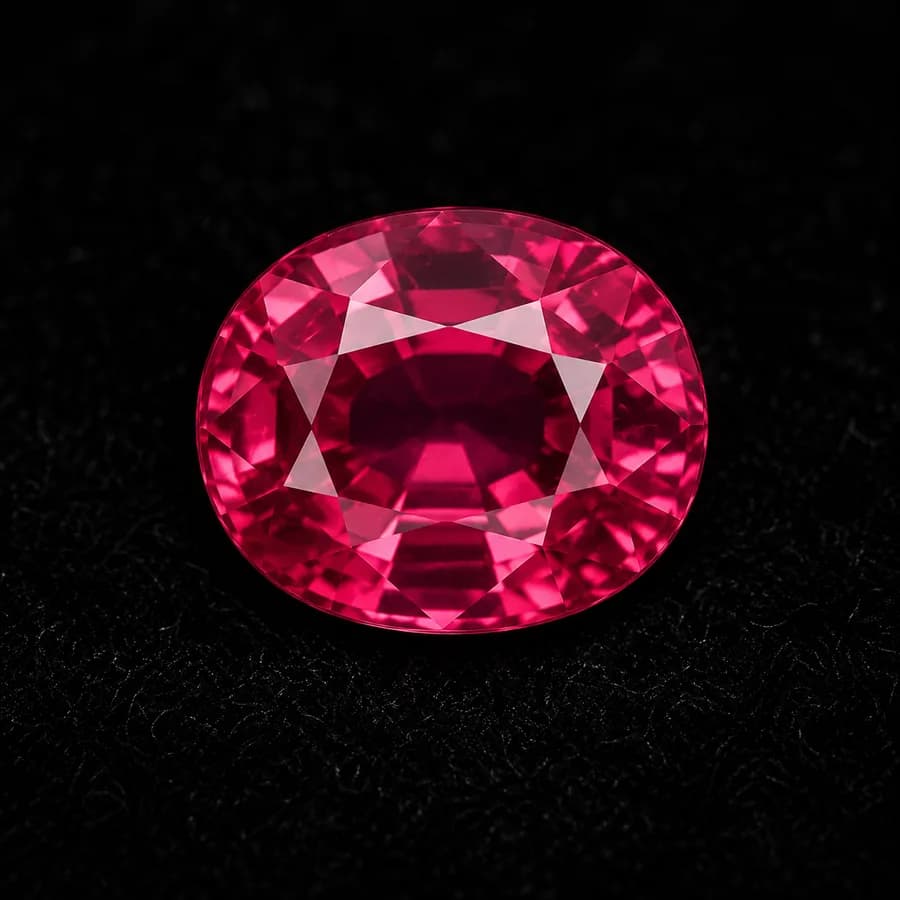
Tourmaline
The rainbow gem whose very name came through Ceylon
Tourmaline is a family of complex borosilicate minerals producing gems in virtually every colour, with elbaite the principal gem species. The very word tourmaline derives from the Sinhala term toramalli, used for mixed coloured stones in the Ceylon gem trade.
Updated:
Natural Beauty
From Sri Lanka
Durability
Mohs 7–7.5
Treatments
Heating (sometimes; must be disclosed)
Overview
Sri Lanka produces tourmaline from its gem gravels, historically including the yellow-green to brownish stones long associated with the island.
Colours
No gem family spans colour like tourmaline: greens from mint to deep forest, pinks and reds (rubellite), blues (indicolite), yellows, browns, near-colourless and black (schorl), plus bi-colour and colour-zoned crystals cut to display two hues at once. Colour arises from a shifting recipe of iron, manganese, chromium, vanadium and copper across the group's complex chemistry. Sri Lankan tourmaline is historically associated with yellow, honey and yellow-green material among mixed gravels. Tourmaline is strongly pleochroic, often showing a darker colour down the length of the crystal, which cutters manage when orienting stones. Many collectors assemble suites of tourmaline purely to celebrate the family's extraordinary range.
Quality Factors
Tourmaline quality turns on colour first: vivid, open colours without excessive darkness command the strongest interest, and certain colours, fine reds, clean blues and the rare copper-bearing varieties, sit well above the rest of the family. Clarity expectations vary by colour; blues and greens are expected to be relatively clean, while pink and red stones tolerate more inclusions. Cut matters doubly because of pleochroism, with the best cutters balancing colour, brightness and weight. Bi-colour stones are judged on the sharpness and attractiveness of their zoning. For notable stones, laboratory reports confirm species, detect treatment and can identify prized varieties, all of which materially affect value.
Treatments
Tourmaline is treated less routinely than corundum, but enhancements occur and must always be disclosed. Heating can lighten overly dark greens and blues or brighten some material; irradiation can intensify pinks and reds; and surface-reaching fractures in some stones are clarity enhanced with fillers. Heated and irradiated colours are generally stable, though filled fractures need care. Copper-bearing tourmalines in particular are commonly heated, and laboratories report on this where detectable. Some treatments in tourmaline are difficult or impossible to detect definitively, which the trade acknowledges honestly. Buy from sellers who disclose fully, and obtain a laboratory report for any tourmaline of significant value.
CIBJO’s Gemstone Book, one of the Blue Book standards published by the World Jewellery Confederation, calls for every treatment to be disclosed at each sale, and consumer law in many countries separately requires material facts such as treatment to be disclosed. Undisclosed treatment is grounds to walk away, see our guide to heated versus unheated stones.
Origin in Sri Lanka
The name tourmaline entered European languages through the Ceylon trade, from the Sinhala toramalli, a reminder of Sri Lanka's long role in the gem's history, when parcels of mixed coloured stones from the island reached Europe. Sri Lanka continues to yield tourmaline from its alluvial gravels, typically in yellows, greens and browns, in districts such as Ratnapura and around Rakwana. The world's major producers today include Brazil, various African countries, Mozambique, Nigeria, Namibia among them, plus Afghanistan and the United States. Each source contributes its own palette, with Sri Lanka's contribution woven into the gem's very name.
Origin describes where a stone was mined, it is not a grade, and trade terms such as “Ceylon” are origin descriptions, never an automatic premium. A fine stone from elsewhere can outclass a mediocre stone from a famous source; judge colour, clarity, cut and treatment first. Remember also that a laboratory origin determination is an expert opinion based on inclusions and chemistry, not an infallible guarantee, and a seller’s origin claim is not laboratory confirmation. Origin claims belong on the invoice and, for important stones, in a report.
Care
Tourmaline's hardness of 7 to 7.5 suits everyday jewellery with sensible care, though it is more scratchable than sapphire or spinel. Clean with warm soapy water and a soft brush; avoid ultrasonic and steam cleaners, particularly for included or clarity-enhanced stones, as heat and vibration can extend internal fractures. Interestingly, tourmaline is pyroelectric and piezoelectric, warmth and pressure give it a slight static charge that attracts dust, so stones may need cleaning a little more often than others. Protect the gem from sharp knocks and large temperature swings, store it apart from harder stones, and have settings checked periodically.
As a Loose Stone
Where It Is Found in Sri Lanka
- Ratnapura
- Rakwana
Common Treatments at a Glance
- Heating (sometimes; must be disclosed)
- Irradiation (sometimes, especially pink/red; must be disclosed)
- Clarity enhancement of fractures (occasional; must be disclosed)
All treatments must be disclosed at sale. See our treatment guides and treatment reports.
Tourmaline: frequently asked questions
Where does the name tourmaline come from?
It derives from toramalli, a Sinhala word used in the Ceylon gem trade for mixed or multicoloured stones. Parcels so labelled reached Europe through the island's trade, and the term evolved into the modern name, a direct linguistic link between the gem and Sri Lanka.
How can I tell if a tourmaline is real?
Tourmaline can resemble many gems, and glass or other species are sometimes offered in its place. Standard gemmological testing identifies tourmaline readily through its optical properties, and a laboratory report will confirm species and any detectable treatment. Documentation is recommended for valuable stones.
Which tourmaline colours are most valuable?
Copper-bearing blues and greens of the Paraíba type are the most celebrated, followed by fine rubellite reds and clean indicolite blues. Attractive greens and pinks remain more accessible. Value always depends on the individual stone's colour, clarity, cut and size, verified by documentation.
Is tourmaline durable enough for daily wear?
At hardness 7 to 7.5 it handles regular wear well in most jewellery, though it will scratch more easily than sapphire and dislikes sharp knocks and heat. Protective settings for rings and gentle hand cleaning keep tourmaline looking its best over the long term.