Gold & Metals
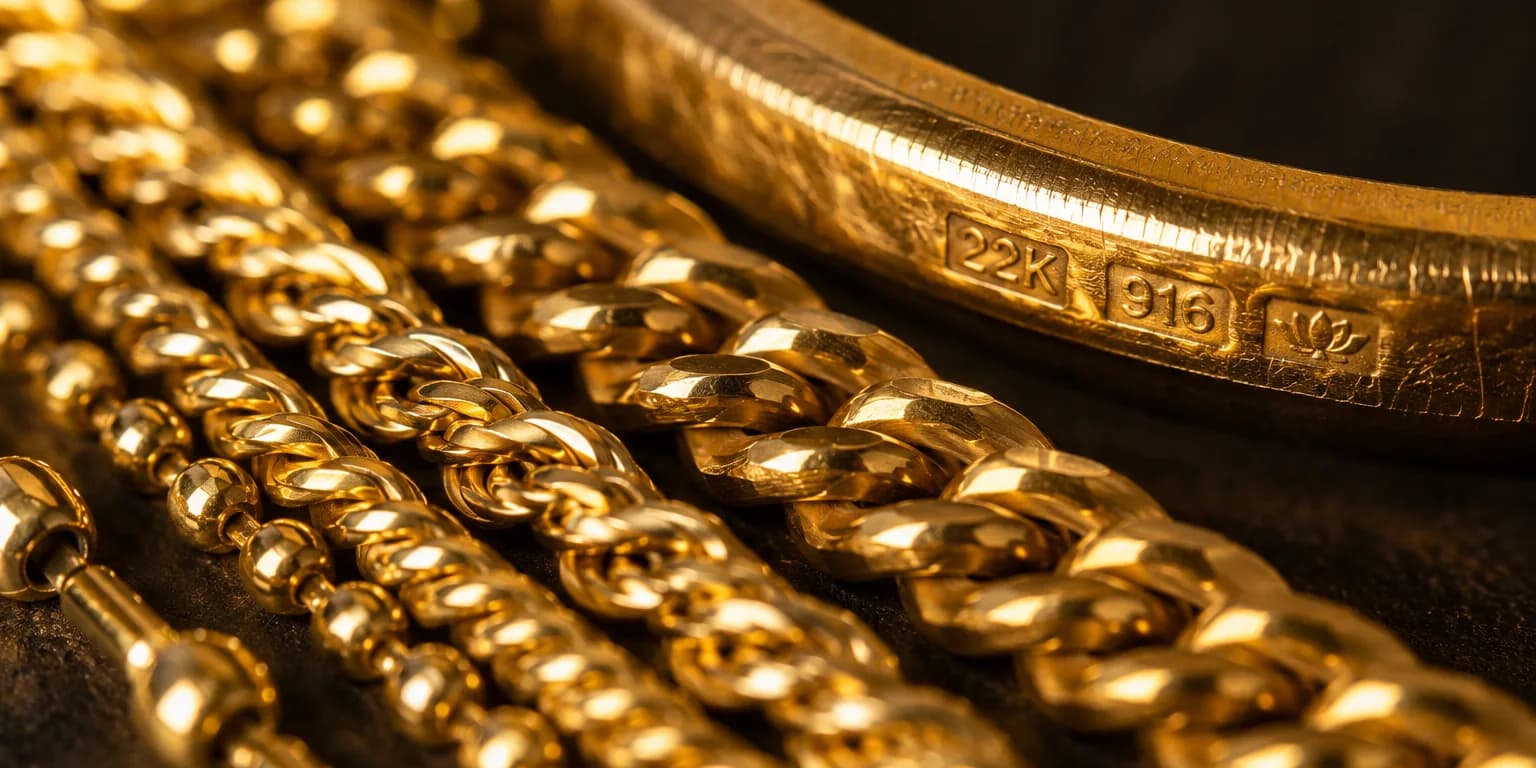
What Does 916 Mean on Gold?
Why gold is stamped 916, how the number equals 22-karat purity at 91.6% gold, where the mark appears, and why a stamp alone is not proof of fineness.
2 min read
Independent information platform about jewellery, gemstones, gold and the jewellery industry in Sri Lanka.
The chain from the international market to a Sri Lankan shop counter, explained step by step. This page contains no market quotations: it shows you how any quote you receive is built, and how to check it.
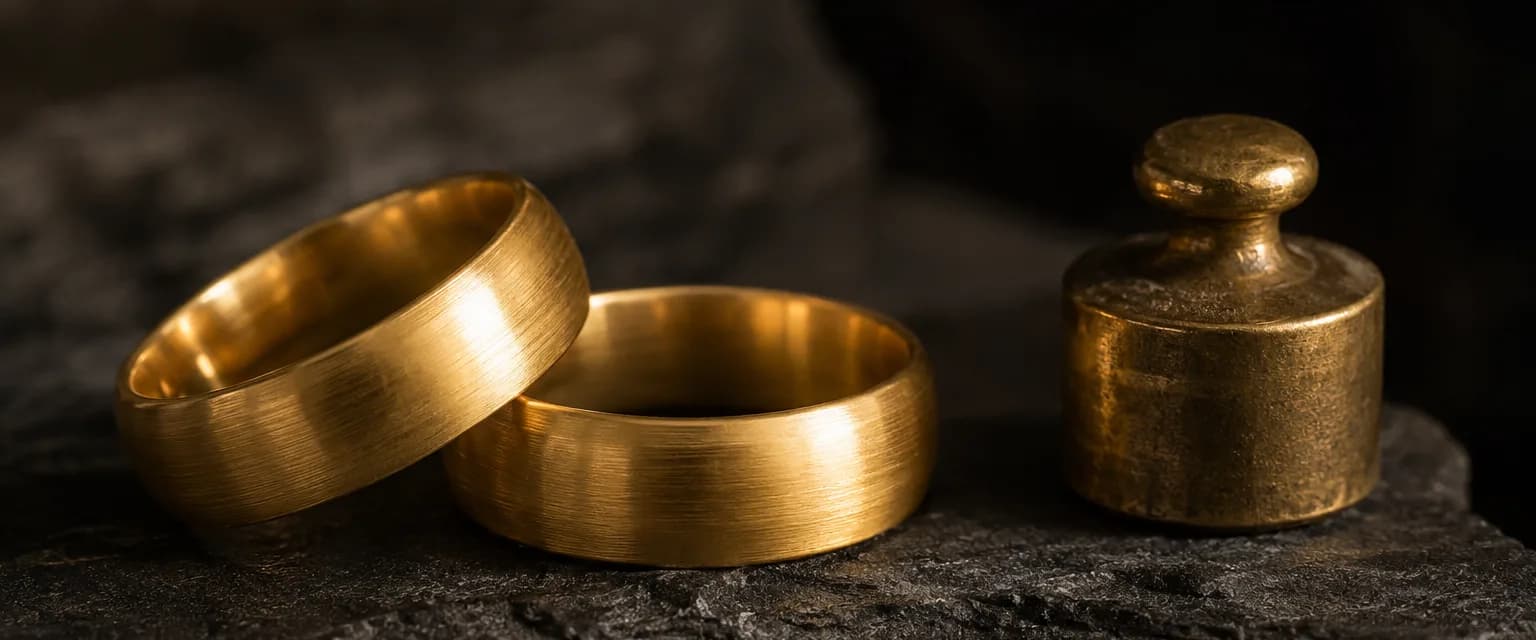
A Sri Lankan gold price starts with the international spot price of pure gold, quoted in US dollars per troy ounce. Convert that to grams, convert the dollars to rupees at the day’s exchange rate, and adjust for the purity of the alloy being sold, and you have the metal value. A finished piece of jewellery then adds making charges, sometimes wastage, any stone value and the shop’s margin. SriLankaJewellery.com does not publish market quotations; this page gives you the method instead.
Gold trades continuously on international markets, and the reference figure is the spot price for immediate delivery of pure gold, conventionally quoted in US dollars per troy ounce. No Sri Lankan shop sets this number; every honest local quote is downstream of it.
Sri Lankan retail quotes use grams (and the 8-gram sovereign), while the world market quotes troy ounces. One troy ounce is defined as 31.1034768 grams, so the per-gram price of pure gold is the spot price divided by that constant.
The dollar figure becomes a rupee figure at the day’s USD to LKR exchange rate. The Central Bank of Sri Lanka publishes official exchange rates; commercial rates applied in practice sit close to, but not exactly at, the published reference. A weaker rupee raises the local gold price even when the world market is flat.
Jewellery is almost never pure gold. The metal value of an alloy is the pure-gold value multiplied by its fineness:
| Karat | Fineness | Gold fraction |
|---|---|---|
| 24K | 999 | 0.999 |
| 22K | 916 | 0.916 |
| 21K | 875 | 0.875 |
| 18K | 750 | 0.750 |
| 14K | 585 | 0.585 |
The karat-to-fineness equivalences are the standard ones used in regulated hallmarking; our guides to 916 gold and karat versus fineness go deeper.
Only the gold is priced as gold. For a gem-set piece, the stone weight and any non-gold components are deducted from the gross weight to give the net gold weight. A proper quotation states gross weight, stone weight and net gold weight separately; a single undifferentiated number hides the arithmetic.
pure metal value = net gold weight × reference price per gram (pure gold)
purity adjusted metal value = pure metal value × fineness
finished jewellery price = metal value + making charge + documented additional charges
These are pedagogical formulas, not a price feed. Without an actual reference price, an actual exchange rate and a shop’s actual charges on the day, they produce no number, and that is the point: every figure in the calculation should come from a source you can name.
The metal value is the floor, not the price. A finished piece adds, in the usual order of size: making charges for the labour and workmanship, wastage where a shop applies it, the value of any stones, and the retailer’s margin. Taxes and duties may apply in particular situations; we do not state figures for them here because we will not publish rates we have not documented, and they change. Ask the shop to itemise anything added to the metal value, and verify tax questions with the responsible authorities.
Selling gold back reverses the chain but not the charges. A buyer typically pays around the metal value of the net gold weight, less a margin, and nothing for making charges, which are labour you already consumed. This is why resale proceeds are usually well below the original shop price, and why quotes for old gold differ from the same shop’s selling rate. Agree the basis (which purity, which weight, which deductions) in writing before handing anything over.
A real quotation needs the day’s reference price, the day’s exchange rate and a specific shop’s charges. None of those belongs to this platform, and inventing any of them would make the arithmetic look more certain than it is. What you can do with this page is check that a quote you receive decomposes cleanly into the parts above, and ask about any part that is missing or vague.
Our calculators apply exactly the method on this page to numbers you supply: your weight, your purity, the reference rate you have from a bank or jeweller. Nothing is prefilled with market data.
It changes continuously, and this platform publishes no quotations. The rupee price follows the international spot price, the USD to LKR exchange rate and the purity being quoted: multiply the day’s pure-gold rate per gram by 0.916 for 22K, and by eight for a per-sovereign figure. Banks, bullion dealers and jewellers publish the day’s actual rates.
Because we do not currently have a documented, sourced price feed, and we will not present unsourced numbers as market information. This page explains how prices are calculated instead, so you can understand and check any quote you are given. For an actual rate, ask a bank, a bullion source or a jeweller on the day.
Shops set their own buying and selling rates around the market price, and finished jewellery adds making charges and sometimes wastage. Two honest shops can therefore quote different figures for the same bangle. Comparing itemised quotations, metal, stones and charges separately, is the only reliable comparison.
In the Sri Lankan and wider South Asian trade, a sovereign conventionally refers to 8 grams of gold, so a per-sovereign quote is the per-gram rate multiplied by eight. Always confirm whether a quote is per gram or per sovereign, and for which purity.
22 karat (916 fineness) is the traditional choice for South Asian gold jewellery, so per-gram and per-sovereign quotes for 22K are the ones you will meet most often. 24K rates are quoted for pure gold, and 18K or 14K appear for gem-set and contemporary pieces.
External references are provided for verification. Listing a source does not imply affiliation or endorsement.
Our approach to price information is set out in the data methodology: SriLankaJewellery.com does not currently publish live, indicative or manually compiled gold prices.
Gold & Metals
Why gold is stamped 916, how the number equals 22-karat purity at 91.6% gold, where the mark appears, and why a stamp alone is not proof of fineness.
2 min read
Gold & Metals
What sterling silver is, why the 925 standard of 92.5% silver became universal, how to read silver marks, and how to care for sterling jewellery properly.
2 min read
Gold & Metals
What platinum is, why the naturally white metal is usually 950 fine in jewellery, how it differs from white gold in wear and weight, and what to check.
2 min read

Gold & Metals
How the gold price per gram is derived from the international spot price, adjusted for karat purity, and why the price you pay in a jewellery shop is higher.
3 min read