Alexandrite
Emerald by day, ruby by night
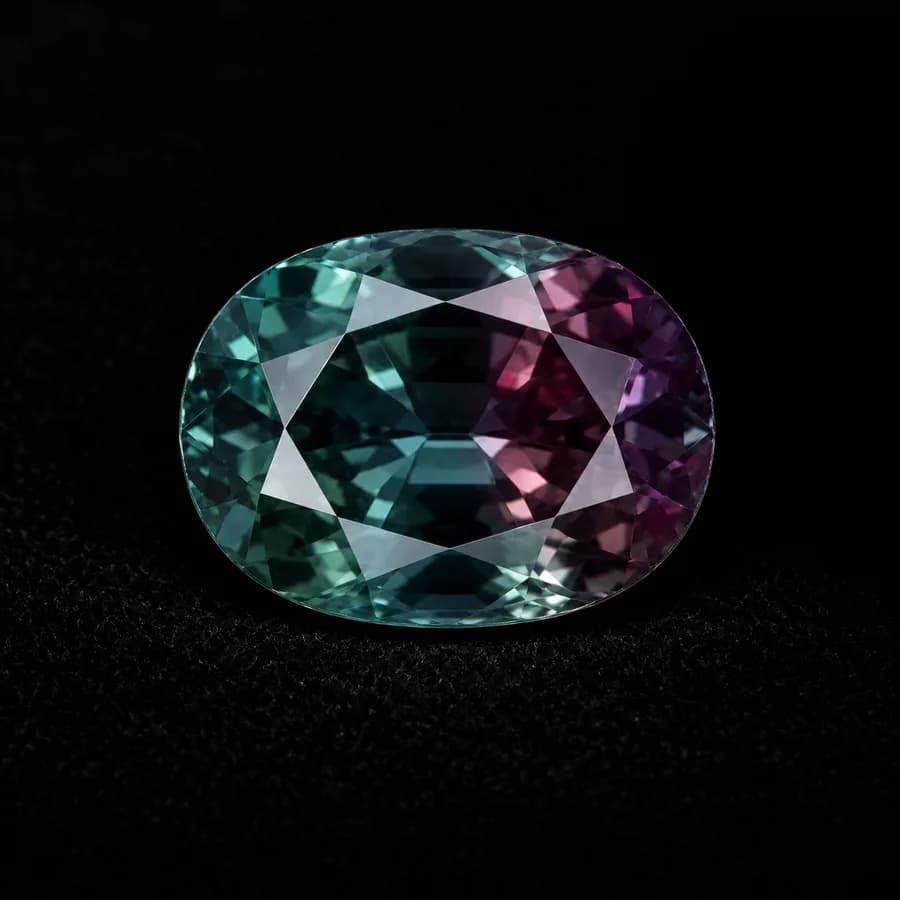
Alexandrite is the rare colour-change variety of chrysoberyl, shifting from greenish hues in daylight to purplish red under incandescent light, an effect caused by traces of chromium. First described from Russia's Ural Mountains in the nineteenth century, it has since been found in a handful of localities, and Sri Lanka is among the historically significant sources.
Updated:
Natural Beauty
From Sri Lanka
Durability
Mohs 8.5
Treatments
Typically untreated
Overview
Fine alexandrite is one of the rarest and most expensive of all gemstones.
Colours
Alexandrite's celebrated colour change, often summarised as emerald by day, ruby by night, arises because chromium in the chrysoberyl structure transmits both green and red light almost equally, letting the light source decide which dominates. Daylight and fluorescent light bring out bluish green to green; incandescent bulbs and candlelight reveal purplish red to raspberry hues. The strength and quality of the change vary enormously between stones: the finest show a distinct, dramatic swing between attractive colours, while lesser stones shift weakly between greyish or brownish hues. Sri Lankan alexandrites have historically included larger crystals than many sources, often with olive-toned greens. The colour change, not just the colours themselves, defines this gem.
Quality Factors
The dominant quality factor is the colour change: its completeness, the attractiveness of both colours and the absence of grey or brown. Laboratories and dealers often describe the percentage of colour change; a strong shift between pleasant green and purplish red marks a fine stone. Clarity comes next, eye-clean alexandrite is rare, and transparency should be good enough to display the colours vividly. Cut quality affects how convincingly each colour presents. Size matters greatly: fine alexandrite over a carat or two is exceptionally scarce, and prices escalate steeply. Certification from a recognised laboratory is essential, both to confirm natural origin and to distinguish alexandrite from the abundant colour-change synthetics and simulants.
Treatments
Alexandrite is typically untreated, no routine enhancement improves it, and its value rests on natural colour change. Any treatment that did occur would have to be disclosed, as with every gem, but the practical marketplace issue is different: synthetic alexandrite and colour-change simulants are widespread. Synthetic colour-change sapphire and synthetic colour-change spinel have been sold as 'alexandrite' for a century, especially in tourist markets and estate jewellery, and true synthetic alexandrite is also produced. A recognised gemmological laboratory can separate natural alexandrite from all of these. Given the gem's price level, no significant alexandrite should be purchased without a current laboratory report confirming natural origin.
CIBJO’s Gemstone Book, one of the Blue Book standards published by the World Jewellery Confederation, calls for every treatment to be disclosed at each sale, and consumer law in many countries separately requires material facts such as treatment to be disclosed. Undisclosed treatment is grounds to walk away, see our guide to heated versus unheated stones.
Origin in Sri Lanka
Alexandrite was first recognised in the emerald mines of Russia's Ural Mountains in the 1830s and named in honour of the future Tsar Alexander II. As Russian production declined, other sources emerged: Sri Lanka became an important supplier, and today Brazil, India, East Africa and Madagascar also produce the gem. Sri Lankan stones are recovered from the island's gem gravels, sharing localities with chrysoberyl and cat's eye around districts such as Ratnapura and Elahera. Origin can influence value, with fine Russian and Brazilian stones especially celebrated, but the individual stone's colour change ultimately matters more than its passport.
Origin describes where a stone was mined, it is not a grade, and trade terms such as “Ceylon” are origin descriptions, never an automatic premium. A fine stone from elsewhere can outclass a mediocre stone from a famous source; judge colour, clarity, cut and treatment first. Remember also that a laboratory origin determination is an expert opinion based on inclusions and chemistry, not an infallible guarantee, and a seller’s origin claim is not laboratory confirmation. Origin claims belong on the invoice and, for important stones, in a report.
Care
Alexandrite is an excellent wearing stone: hardness 8.5, exceeded only by corundum and diamond among common gems, with good toughness and no problematic cleavage. Clean with warm soapy water and a soft brush; ultrasonic and steam cleaners are generally safe given the gem's typically untreated state, though caution is sensible with included stones. Protect it from hard knocks as with any gem, and store it separately from diamonds and corundum that could scratch it. Given alexandrite's value, professional inspection of settings once or twice a year is a worthwhile habit, and insurance appraisals should be kept current with laboratory documentation.
As a Loose Stone
Where It Is Found in Sri Lanka
- Ratnapura
- Elahera
Common Treatments at a Glance
- Typically untreated
All treatments must be disclosed at sale. See our treatment guides and treatment reports.
Alexandrite: frequently asked questions
What makes alexandrite change colour?
Trace chromium in the chrysoberyl structure absorbs light in a way that balances green and red transmission almost evenly. Daylight, rich in blue and green wavelengths, tips the balance to green; incandescent light, rich in red, tips it to purplish red. The stone itself does not change, the light does.
How can I tell real alexandrite from fake?
Most 'alexandrite' offered cheaply is synthetic colour-change sapphire or spinel, and genuine synthetic alexandrite also exists. Reliable separation requires laboratory testing of inclusions, spectra and chemistry. Never buy alexandrite of any significance without a report from a recognised gemmological laboratory.
Why is alexandrite so expensive?
Fine alexandrite requires a rare geological coincidence, beryllium and chromium occurring together, so deposits are few and yields small. Strong colour change with attractive hues in clean stones above a carat is genuinely exceptional. Rarity plus fame keeps prices among the highest of all coloured gems.
Does Sri Lanka still produce alexandrite?
Alexandrite has historically been recovered from Sri Lanka's gem gravels alongside other chrysoberyl, and stones continue to appear in the trade, though fine material is scarce from every source. Availability at any given time varies; documented stones with laboratory reports are the reliable route for buyers.