Rules & Export
Customs Declarations for Gems and Jewellery: How They Work
What customs declarations are, when travellers and traders are generally expected to make them for gems and jewellery, and how to prepare one properly.
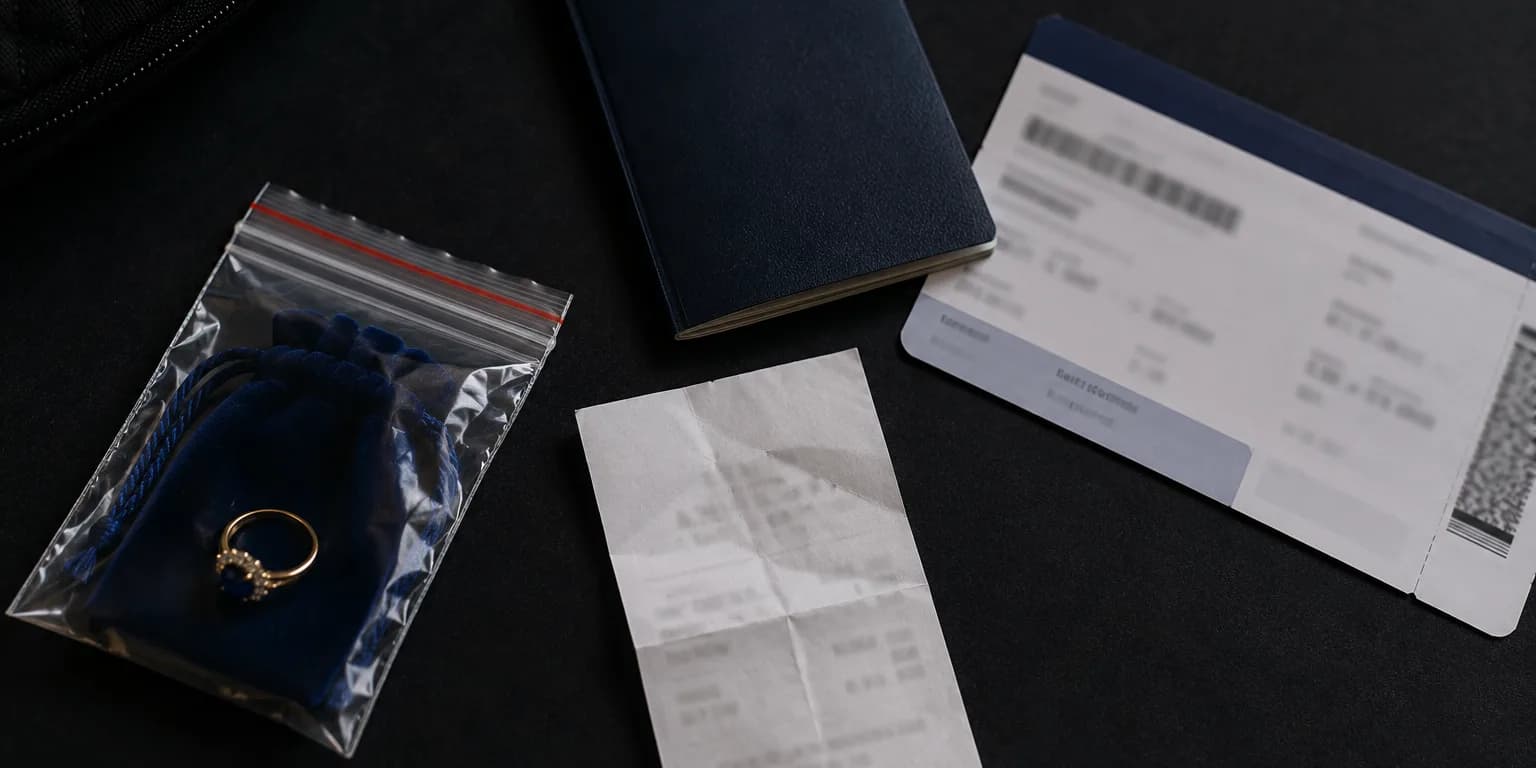
A customs declaration is a formal statement to a customs authority of what you are carrying or shipping, its value and its purpose. For gems and jewellery, travellers are generally expected to declare items where the rules require it, and commercial shipments are declared as a matter of course. Accurate, honest declarations supported by invoices and reports protect you; verify when a declaration is required with Sri Lanka Customs and your destination authority.
Few words cause travellers more unnecessary anxiety than "declaration". In reality, a customs declaration is simply a formal statement to a customs authority of what you are carrying or shipping, what it is worth and why it is moving. Understood that way, it stops being a threat and becomes what it actually is: the document that protects the honest traveller and trader.
What a Declaration Is, and What It Is For
Customs authorities exist to control what crosses a border and to collect whatever charges the law applies. The declaration is how they learn what is crossing. It is a legal statement, which is why accuracy is its most important quality: an honest declaration supported by documents rarely causes difficulty, while an inaccurate one, even a careless one, can.
For gems and jewellery, the declaration typically identifies the items, their value and their purpose: personal effects, a new purchase, a gift, or commercial goods. Sri Lanka Customs administers declarations at Sri Lanka's borders; your destination country's authority administers its own on arrival.
When Travellers Are Generally Expected to Declare
The general pattern across jurisdictions is consistent even where the details differ, and it is a pattern of official rules, not custom: authorities publish duties to declare newly acquired goods above whatever allowances currently apply, high-value items, and anything carried for commercial purposes. The specific thresholds are set by each authority and change; only the current official text defines them. Personal effects in normal use are generally treated more lightly, though significant valuables can still fall within the rules.
We deliberately quote no figures here, because thresholds and allowances change and vary. The reliable method is to check the current position with Sri Lanka Customs before departure and with your destination authority before arrival, see destination country import rules for how to approach the latter.
What a Good Declaration Rests On
A declaration is only as strong as the documents behind it. For a gemstone or jewellery purchase, that means the itemised invoice, payment evidence and any laboratory report, all telling the same story: the same stone, the same weight, the same price.
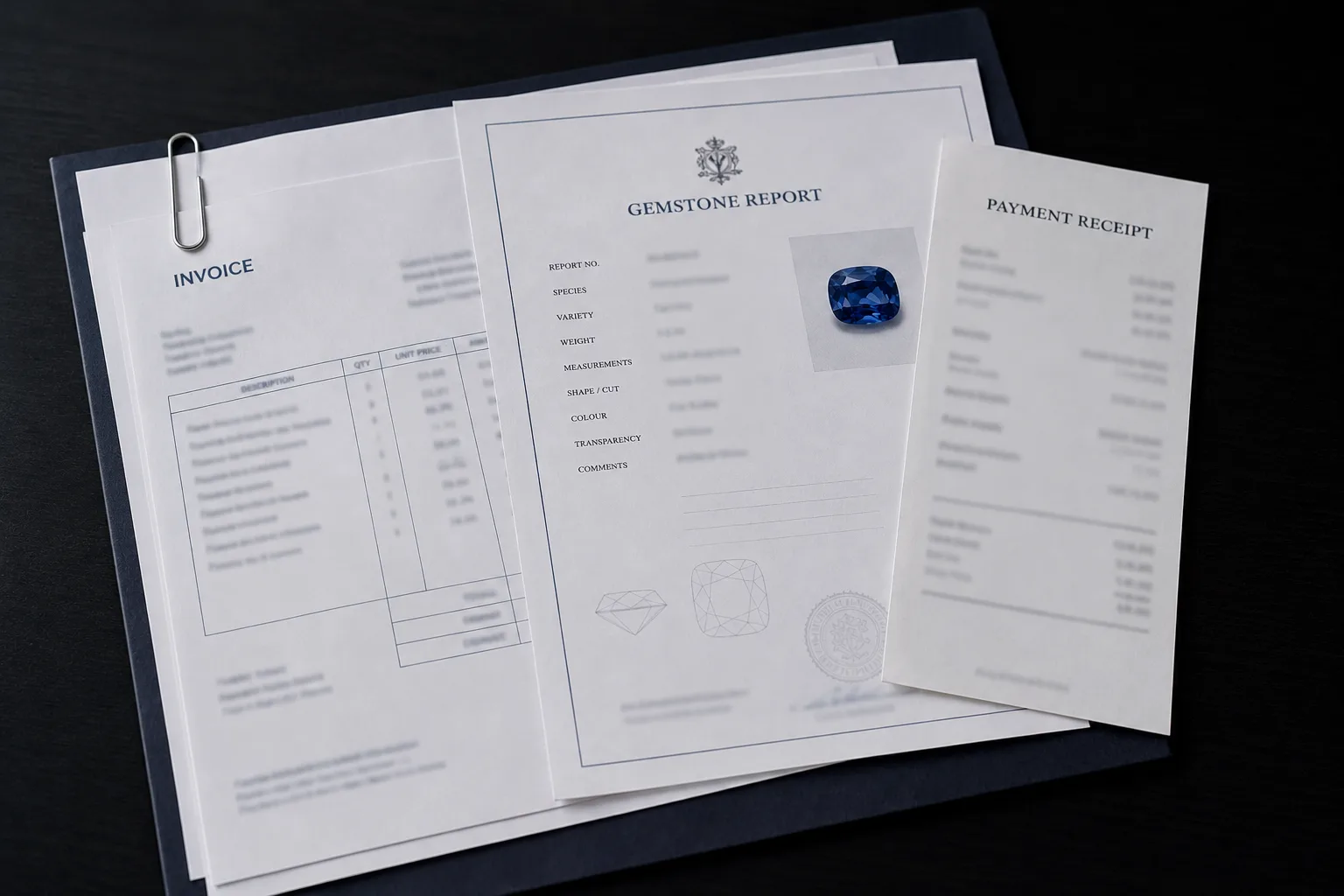
Assemble these at the point of purchase, not at the airport. Our guides to documents required and taking jewellery through customs cover the full set, and reading a gem report explains how to confirm a report matches its stone.
Declarations for Commercial Consignments
Commercial exports and imports are declared as a matter of course, usually with a fuller set of paperwork: commercial invoices, packing details, and whatever licences or approvals the responsible authorities require. In Sri Lanka, commercial gem and jewellery exports typically involve both the National Gem and Jewellery Authority and Sri Lanka Customs. The process is outlined in our guides to export procedures and personal purchase versus commercial export.
The Golden Rules
- Declare honestly and completely; never understate a value.
- Match the declaration to your documents exactly.
- Keep documents with the goods, in hand luggage or attached to the shipment.
- If you are unsure whether something needs declaring, use the declaration channel and ask.
- Check the current rules before every trip, last year's answer may be wrong this year.
Verify Before You Rely on This
This explainer describes declarations in general terms and is not legal advice. Requirements, forms, channels and thresholds change. Verify the current position directly with Sri Lanka Customs, the National Gem and Jewellery Authority for trade matters, and your destination customs authority. Official references are collected on our sources page.
Frequently asked questions
When do I have to make a customs declaration for jewellery?
Declaration requirements depend on what you carry, its value and the direction of travel, and they are set by each customs authority. Rather than relying on thresholds quoted online, confirm the current rules with Sri Lanka Customs and your destination authority shortly before travelling.
What value should I declare for a gemstone I bought?
Declare the true price you paid, supported by your invoice and payment evidence. Declaring a lower figure than you actually paid is misdeclaration and can lead to seizure and penalties in most jurisdictions.
Do gifts and inherited jewellery need to be declared?
Gifts and inherited items can still fall within declaration requirements even though you did not pay for them. Carry whatever evidence of origin and value you have, and ask the customs authority how such items are currently treated.
Is declaring something the same as paying duty on it?
No. A declaration is a statement of what you are carrying; whether anything is payable depends on the rules and allowances the authority applies to it. Many properly declared items attract nothing at all.
Sources
- Sri Lanka Customs, Responsible authority for declarations at Sri Lanka's borders. Verify current requirements directly.
- National Gem and Jewellery Authority of Sri Lanka (NGJA), Regulator of the gem and jewellery trade. Verify current requirements directly.
- Sri Lanka Customs: Travellers, Declaration duties and penalties for false declaration
External references are provided for verification. Listing a source does not imply affiliation or endorsement.
Seen something that needs correcting? Read how corrections work or contact the editorial team.
Related Guides
Rules & Export
Taking Jewellery Through Customs: A Traveller's Guide
How travellers generally carry jewellery through customs when entering or leaving Sri Lanka, declarations, documentation, and what to verify beforehand.
2 min read
Rules & Export
Taking Gemstones Out of Sri Lanka: What Travellers Should Know
How travellers generally take purchased gemstones out of Sri Lanka, declarations, documentation and the official bodies to check with before departure.
3 min read
Rules & Export
Documents Required for Gems and Jewellery: The Complete Paper Trail
The documents that generally support buying, carrying, exporting and insuring gems and jewellery from Sri Lanka, and why each one earns its place.
3 min read

Rules & Export
Destination Country Import Rules for Gems and Jewellery
Why the country you fly home to sets its own import rules for gems and jewellery, the common themes to expect, and how to check before you travel.
3 min read