Rules & Export
Gem and Jewellery Export Procedures in Sri Lanka: An Overview
The general shape of commercial gem and jewellery export from Sri Lanka, licensing, declarations, valuation and clearance through the NGJA and Customs.

Commercial gem and jewellery exports from Sri Lanka typically involve licensing and documentation through the responsible authorities: the National Gem and Jewellery Authority on the trade side and Sri Lanka Customs at the border. The general sequence runs from exporter registration or licensing, through documentation and any required valuation or inspection, to formal export declaration and clearance. Exact steps and fees change, confirm the current procedure with both authorities before shipping.
Sri Lanka has exported gemstones for as long as it has mined them, and the modern trade moves through a formal, regulated channel. This article sketches the general shape of that channel so that a new exporter knows what kind of process to expect and which authorities to approach, it is a map of the terrain, not the current rulebook.
The Two Authorities at the Centre
Commercial export runs through two public bodies. The National Gem and Jewellery Authority (NGJA) governs the trade side: who may export, under what licences, and with what sector-specific formalities. Sri Lanka Customs governs the border: the export declaration, clearance and the movement of the goods out of the country.
A workable mental model is that the NGJA authorises you to be an exporter and the goods to be exported, while Customs processes the actual departure. The current interaction between the two, which approvals come first, which documents each requires, is exactly what you should confirm with them directly.
Stage One: Becoming an Exporter
Before any parcel moves, the exporter generally needs standing: a registered business and the licence or registration that commercial gem and jewellery export typically requires. This is covered in more depth in gem dealer licences and jewellery business registration. Attempting to ship commercially without this standing is the costliest mistake a new entrant can make; if you are unsure whether your activity is commercial at all, start with personal purchase versus commercial export.
Stage Two: Documenting the Shipment
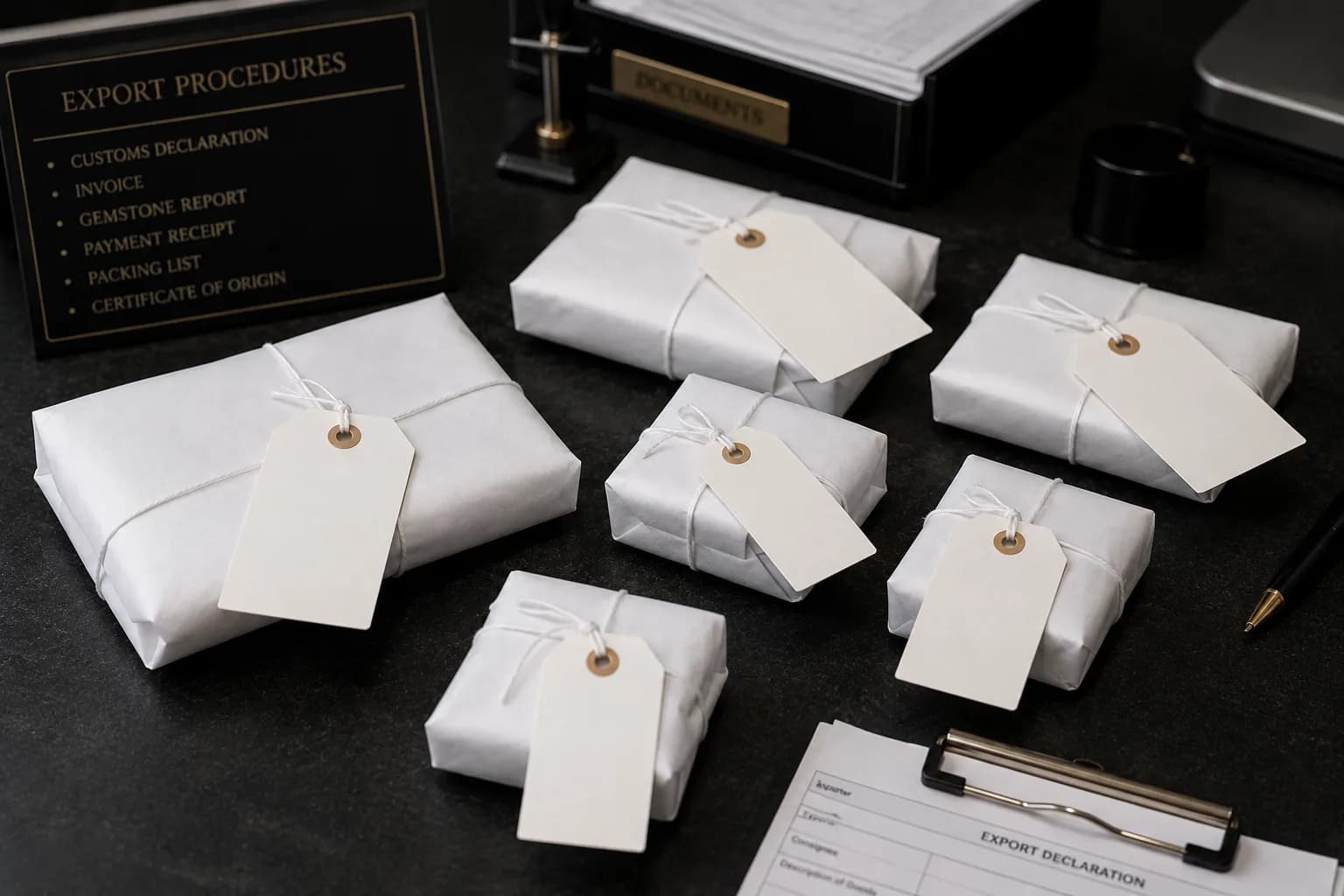
Commercial shipments travel on paper as much as in parcels. The general set includes commercial invoices identifying each stone or piece, packing details, the export declaration, and whatever sector approvals the NGJA requires for the consignment. Export processes for gems also commonly include verification steps, inspection or valuation by the responsible authorities, before goods are cleared to leave.
Accuracy across this paperwork is not bureaucratic decoration: discrepancies between invoice, declaration and contents are what delay shipments and attract scrutiny. Our guide to documents required covers the wider documentation habit.
Stage Three: Declaration, Clearance and Despatch
The final stage is the formal export declaration to Sri Lanka Customs and clearance of the consignment, after which the goods travel by whatever secure method the exporter has arranged, accompanied, by courier or by specialist valuables carrier. The practicalities of moving high-value goods safely are covered in shipping jewellery internationally and insurance.
Clearance out of Sri Lanka is only half the journey: the destination country applies its own import procedures and charges on arrival, which is the subject of import procedures and destination country import rules.
What the NGJA's export process page describes
The NGJA's published export process includes examination of goods by gemmologists together with customs officers, fee schedules tied to export value, and provisions for exhibition and consignment exports. The authority operates export centres in Colombo, Ratnapura and Katunayake. As with everything regulatory on this platform, the NGJA's current page is the reference; procedures, fees and locations are theirs to change.
Practical Advice for First-Time Exporters
- Engage the NGJA and Sri Lanka Customs before your first consignment, not during it.
- Get the current procedure in writing and follow it exactly, do not rely on how things worked for someone else last year.
- Build authority processing time into delivery commitments to overseas buyers.
- Keep complete records of every consignment; they are the foundation of every future one.
Verify Before You Rely on This
This overview describes the general shape of the export process and is not legal or trade advice. Steps, forms, fees and sequencing change. Before shipping, verify the current procedure directly with the National Gem and Jewellery Authority and Sri Lanka Customs, their details are on our sources page.
Frequently asked questions
Can I export gems commercially without a licence?
Commercial export typically sits within a licensing and registration framework administered by the National Gem and Jewellery Authority, alongside customs formalities. Confirm with the NGJA which categories apply to your activity before attempting any shipment.
What documents does a commercial gem export generally need?
Commercial shipments are generally supported by commercial invoices, packing details, export declarations and whatever licences or approvals the authorities require, with the destination country adding its own import requirements. The authorities can list the current set.
Are export shipments inspected or valued?
Export processes for gems commonly include verification steps such as inspection or valuation by the responsible authorities, though the current mechanics are for the NGJA and Sri Lanka Customs to state. Build time for such steps into your shipping plans.
Does the destination country affect the export process?
Yes. The Sri Lankan side governs the goods leaving; the destination country governs their arrival, with its own declarations and charges. Check both ends before shipping, see our guide to destination country import rules.
Sources
- National Gem and Jewellery Authority of Sri Lanka (NGJA), Trade-side authority for export licensing and related procedures. Verify current requirements directly.
- Sri Lanka Customs, Border authority for export declarations and clearance. Verify current requirements directly.
- NGJA: Gem & Jewellery Export Process, The NGJA-administered export process, centres and provisions
External references are provided for verification. Listing a source does not imply affiliation or endorsement.
Seen something that needs correcting? Read how corrections work or contact the editorial team.
Related Guides
Rules & Export
Importing Gems and Jewellery Into Sri Lanka: How It Generally Works
The general process for bringing gems and jewellery into Sri Lanka, traveller arrivals, commercial imports, declarations and the authorities to consult.
3 min read
Rules & Export
Documents Required for Gems and Jewellery: The Complete Paper Trail
The documents that generally support buying, carrying, exporting and insuring gems and jewellery from Sri Lanka, and why each one earns its place.
3 min read
Rules & Export
Shipping Jewellery Internationally: Methods, Paperwork and Risk
How jewellery is generally shipped across borders, carrier options, declared value, customs paperwork at both ends, and managing risk in transit.
3 min read
Rules & Export
NGJA Gem Dealer Licences in Sri Lanka: How Licensing Works
How gem dealer licensing generally works in Sri Lanka, why buying from licensed dealers matters, and how to check a dealer's status with the NGJA.
3 min read