Rules & Export
Taking Gemstones Out of Sri Lanka: What Travellers Should Know
How travellers generally take purchased gemstones out of Sri Lanka, declarations, documentation and the official bodies to check with before departure.
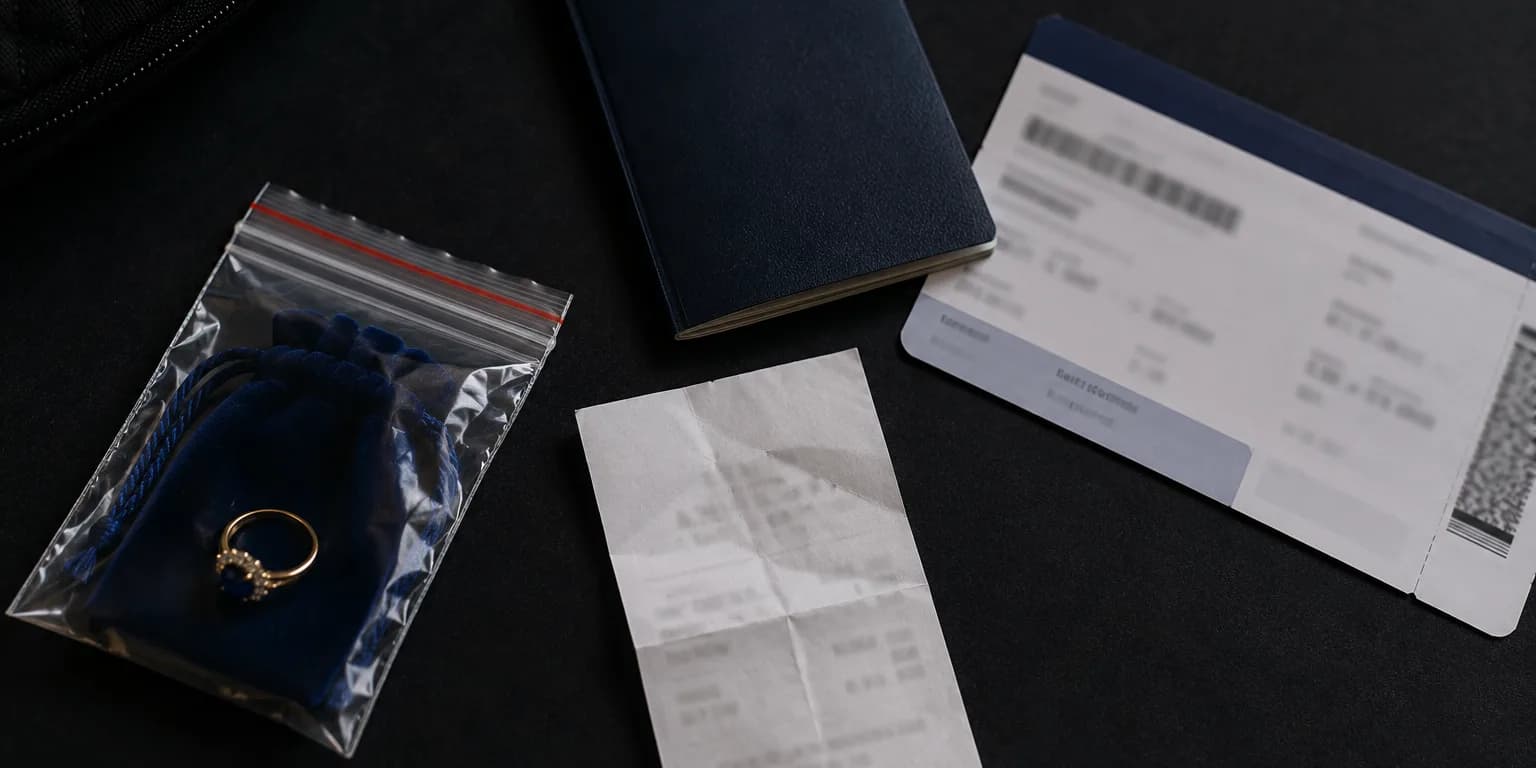
Sri Lanka Customs publishes traveller guidance naming gems among the items passengers must declare in defined circumstances, with declarations handled through Sri Lanka Customs at departure. Personal purchases with full documentation, invoice, payment evidence and any laboratory report, are usually straightforward, but requirements change, so verify the current position with Sri Lanka Customs and the National Gem and Jewellery Authority before you travel.
For most visitors, taking a purchased gemstone home is the final step of a memorable transaction, and, handled properly, it is usually an uneventful one. The key is to treat departure not as an afterthought but as something you prepare for at the moment of purchase, when the documents that matter are easiest to obtain.
Who Governs the Journey Out
Two public bodies matter here. Sri Lanka Customs administers the border: it is the authority on what travellers must declare when leaving the country and on how commercial exports are processed. The National Gem and Jewellery Authority (NGJA) regulates the gem trade itself, including the licensing framework within which stones are sold and exported.
Between them, these bodies, not dealers, guides or websites, hold the current, binding answers. Everything below describes the general shape of the process so that you know what to ask them.
The General Expectation: Be Able to Account for What You Carry
Sri Lanka Customs' published traveller guidance names gems, gold jewellery and currency among the things passengers must declare in defined circumstances; the thresholds and forms are the authority's own. Beyond those defined duties, being able to account for valuables you carry is our practical recommendation rather than a stated rule. The practical consequence is simple: carry your stone with its complete paper trail, and know before you reach the airport whether the current rules require you to declare it.
A well-documented personal purchase, one stone or a small number of stones, bought from a licensed dealer, with an itemised invoice, is the easy case. Ambiguity arises when documentation is missing, when quantities look commercial, or when the traveller cannot explain where the stones came from.
What the customs traveller guidance actually says
Sri Lanka Customs publishes traveller guidance that names gems, gold jewellery and foreign currency among the things passengers must declare in defined circumstances, sets baggage allowances that vary with residency and time spent abroad, and warns that false declarations are punishable under the Customs Ordinance. The details, thresholds and forms are the authority's and change over time; read the current Travellers page on the Sri Lanka Customs website close to your departure rather than relying on any summary, including this one.
Documents That Make Departure Straightforward
Keep the following together, in hand luggage, with the stone itself:
- The itemised invoice stating species, variety, weight, treatments and price
- Evidence of payment matching the invoice
- Any laboratory report for the stone
- The seller's full business details
Our dedicated guide to documents required covers each item, and reading a gem report explains how to check that a report actually matches the stone in front of you.
Personal Carriage Versus Commercial Export
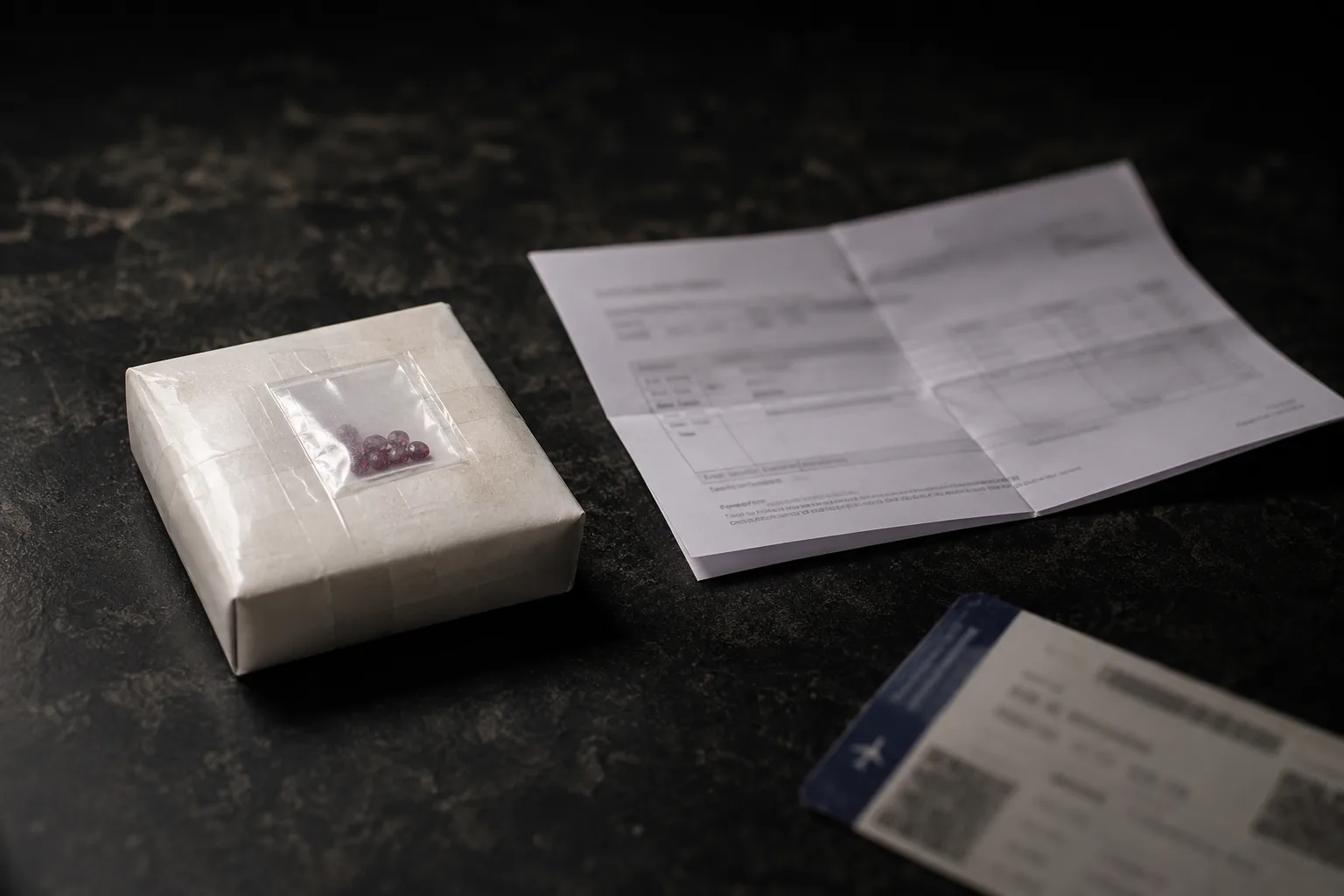
Quantity and intent change the picture entirely. Carrying home a stone for personal use is one thing; carrying parcels of stones for resale is a commercial export, which typically involves licensing and documentation through the responsible authorities before departure. If there is any doubt about which side of the line you are on, read personal purchase versus commercial export and then put the question directly to the NGJA and Sri Lanka Customs.
Remember, too, that arrival is a separate legal event: your destination country sets its own import rules, covered in destination country import rules.
Before You Fly: A Short Checklist
- Assemble invoice, payment evidence and any report in one folder, carried with the stone.
- Confirm current departure declaration requirements with Sri Lanka Customs.
- Confirm your destination country's declaration and duty position for arriving travellers.
- If quantities could look commercial, seek guidance from the NGJA before booking travel.
- Consider cover for the journey, see our guide to insurance.
Verify Before You Rely on This
This article is general information, not legal advice, and it deliberately avoids stating figures or thresholds because they change. Before travelling with gemstones, verify the current requirements directly with Sri Lanka Customs and the National Gem and Jewellery Authority, contact details are collected on our sources page.
Frequently asked questions
Do I have to declare gemstones when leaving Sri Lanka?
Sri Lanka Customs sets out declaration duties for defined categories, including gems, in its traveller guidance. Whether a declaration is required in your specific case depends on the current rules, which you should confirm with Sri Lanka Customs before travelling; keeping full documentation to hand is practical advice that makes any check quick.
What documents should I carry with a purchased gemstone?
Carry the itemised invoice, payment evidence and any laboratory report together, ideally in hand luggage with the stone. A complete paper trail makes any customs conversation far simpler.
Is taking one stone home different from taking many?
Generally, yes. Personal purchases are treated differently from commercial quantities, which typically involve export licensing and formal procedures. If you are carrying more than clearly personal amounts, check the commercial export requirements first.
Who do I ask about the current export rules?
Sri Lanka Customs is the authority for what must be declared at the border, and the National Gem and Jewellery Authority regulates the gem trade, including exports. Contact both for current, binding answers.
Sources
- Sri Lanka Customs, Responsible authority for departure declarations and border formalities. Verify current requirements directly.
- National Gem and Jewellery Authority of Sri Lanka (NGJA), Responsible authority for gem trade regulation. Verify current requirements directly.
- Sri Lanka Customs: Travellers, Declaration duties for travellers
- NGJA: Gem & Jewellery Export Process, Commercial export process
External references are provided for verification. Listing a source does not imply affiliation or endorsement.
Seen something that needs correcting? Read how corrections work or contact the editorial team.
Related Guides
Rules & Export
Customs Declarations for Gems and Jewellery: How They Work
What customs declarations are, when travellers and traders are generally expected to make them for gems and jewellery, and how to prepare one properly.
3 min read
Rules & Export
Documents Required for Gems and Jewellery: The Complete Paper Trail
The documents that generally support buying, carrying, exporting and insuring gems and jewellery from Sri Lanka, and why each one earns its place.
3 min read
Rules & Export
Taking Jewellery Through Customs: A Traveller's Guide
How travellers generally carry jewellery through customs when entering or leaving Sri Lanka, declarations, documentation, and what to verify beforehand.
2 min read
Rules & Export
Personal Purchase vs Commercial Export: Where Is the Line?
How personal gemstone purchases differ from commercial exports in Sri Lanka, intent, quantity, documentation, and which authorities decide the boundary.
3 min read