Sapphire Centre
What Colours Do Sapphires Come In?
A guide to the full range of sapphire colours, blue, yellow, pink, padparadscha and more, and how hue, tone and saturation shape beauty and value.
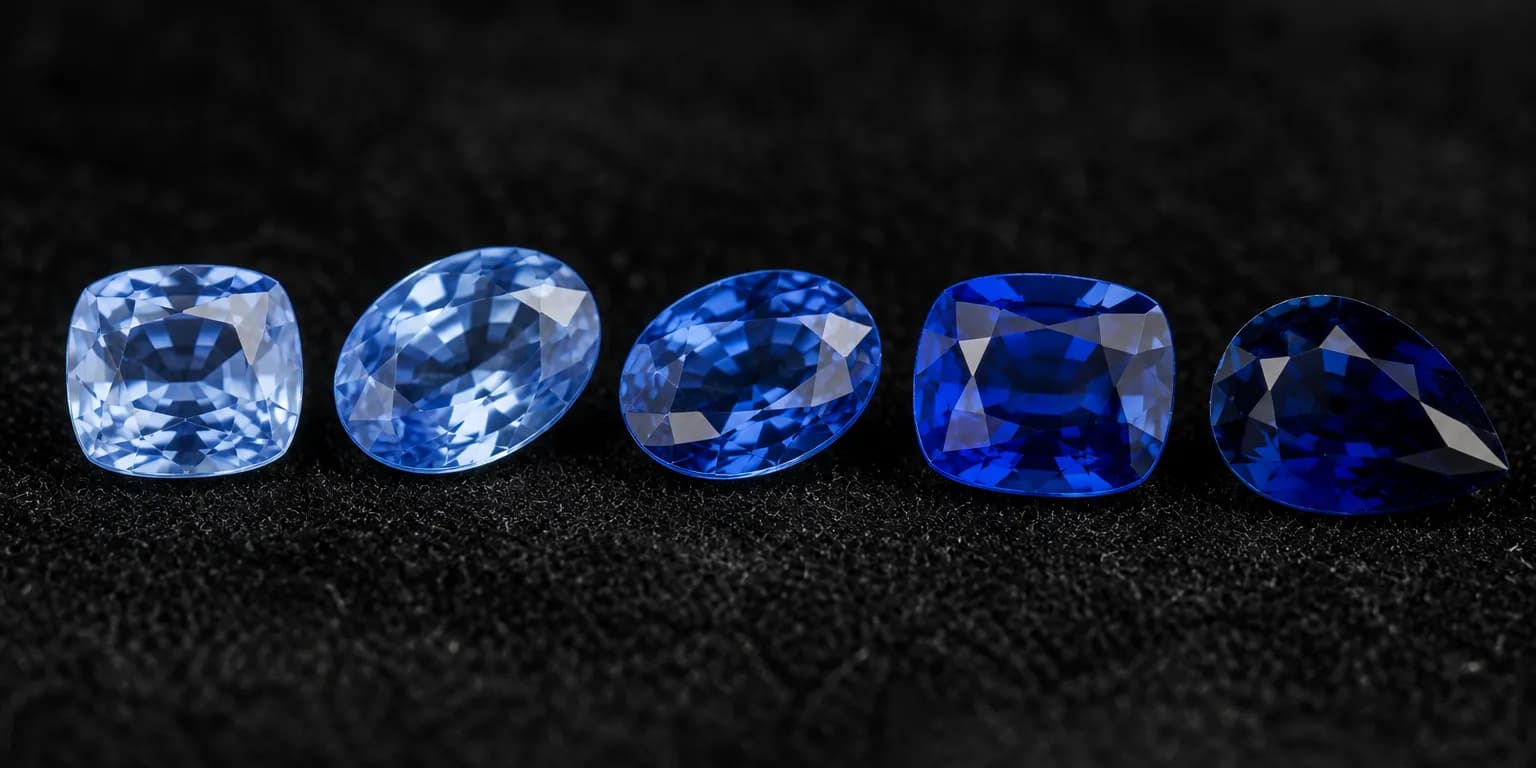
Sapphires occur in almost every colour: blue, yellow, pink, purple, violet, green, orange, colourless and the rare pinkish-orange padparadscha. Only red corundum is excluded, because red corundum is ruby by definition. In every colour, value is judged on three dimensions, hue, tone and saturation, with vivid, evenly distributed colour commanding the strongest interest.
Ask most people to picture a sapphire and they will see blue. Yet blue is only one chapter of the story. Sapphire, the gem form of the mineral corundum, occurs in nearly every colour, and Sri Lanka has historically produced one of the broadest palettes of any source. Understanding how colour is described and judged is the single most valuable skill a sapphire buyer can acquire.
Why Colour Dominates Sapphire Value
In coloured gemstones, colour typically outweighs every other quality factor. Two sapphires of identical weight and clarity can differ enormously in desirability purely on the strength and beauty of their colour. Clarity, cut and carat weight all matter, see our guide to sapphire price factors, but they refine a value that colour establishes first.
Hue, Tone and Saturation
Professionals break colour into three dimensions. Hue is the basic colour sensation, blue, violet-blue, yellow, pinkish orange. Tone describes how light or dark the colour is, from near-colourless to near-black. Saturation measures intensity, from greyish or brownish at the weak end to vivid at the strong end.
The most admired sapphires in any hue combine medium to medium-dark tone with strong to vivid saturation. Stones that are too dark trade brilliance for depth; stones that are too light can look washed out. Learning to see these three dimensions separately makes comparisons between stones far more objective.
Blue Sapphire
Blue remains the reference colour, and the qualities the trade prizes are a pure to violetish blue hue, medium tone and vivid saturation. Sri Lankan blues are traditionally associated with lighter, brighter tones and high transparency, a luminous character many buyers actively prefer. Our profile of blue sapphire explores the variety in depth.
Fancy Colours
Every non-blue sapphire is a "fancy" sapphire. Yellow sapphires range from pale lemon to rich golden hues and are a Sri Lankan speciality. Pink sapphires, coloured chiefly by chromium, run from delicate pastels to intense near-red, where the trade's long debate over the ruby boundary begins. Purple and violet stones sit between blue and pink, while green sapphires typically show a blue-yellow mixture, and white sapphire is the colourless end of the same species.
Two rarities deserve special mention. Padparadscha, the delicate pinkish-orange sapphire named after the lotus blossom, is intimately associated with Sri Lanka. Colour-change sapphires shift hue between daylight and incandescent light, most often from blue towards violet-purple.
Colour Zoning and Pleochroism
Sapphire colour is rarely perfectly uniform through the crystal. Colour zoning, bands or patches of stronger and weaker colour, is common, and skilled cutters orient the rough so the face-up view appears even. Sapphire is also pleochroic: it shows slightly different colours along different crystal directions. Pleochroism is another reason cut orientation matters so much, and why a stone should always be judged face-up rather than through the side.
Judging Colour When Buying
Light changes everything. Shop lighting is chosen to flatter, so examine any serious stone in natural daylight as well as under artificial light, and view it against a neutral white background. Check that the colour holds across the whole face of the stone rather than pooling in one area, and be wary of a pale centre, the "window" effect discussed in our guide to sapphire cut.
Finally, remember that treatments can alter colour, and heating in particular is widespread. Ask for written treatment disclosure with any purchase, and read our comparison of heated and unheated sapphires before you weigh a colour claim against a price.
Frequently asked questions
What is the most valuable sapphire colour?
Fine blue with vivid saturation and medium tone is the traditional benchmark, and top padparadscha stones are also among the most sought-after. Within any colour, the strength and evenness of the colour matter more than the hue label itself.
Why is there no red sapphire?
By gemmological convention, red gem corundum is called ruby. Corundum of every other colour, including pink, is called sapphire, which is why the pink-red boundary is one of the trade's long-running debates.
What is a fancy sapphire?
Any sapphire that is not blue, yellow, pink, purple, green, orange, colourless and others, is described in the trade as a fancy sapphire.
Do sapphires change colour in different lighting?
All sapphires shift somewhat between daylight and artificial light, which is why stones should be viewed under more than one source. A distinct group of colour-change sapphires shows a pronounced shift, typically from blue in daylight to violet-purple under incandescent light.
Related terms
Sources
- Gemological Institute of America (GIA), Corundum colour causes and colour description conventions
- International Gem Society (IGS), Overview of fancy sapphire colours and value factors
- International Colored Gemstone Association (ICA), Trade terminology for coloured sapphires
- GIA: Sapphire Description, Trace-element colour causes in sapphire
- GIA: Sapphire Quality Factors, Colour as the dominant value factor
External references are provided for verification. Listing a source does not imply affiliation or endorsement.
Seen something that needs correcting? Read how corrections work or contact the editorial team.
Related Guides
Sapphire Centre
What Exactly Is a Padparadscha Sapphire?
How padparadscha is defined, why laboratories draw its pink-orange boundaries differently, and why treatment disclosure matters so much in this rare variety.
3 min read
Sapphire Centre
What Determines the Price of a Sapphire?
The factors that set sapphire prices, colour, clarity, cut, carat weight, treatment status, origin and documentation, and how they interact.
3 min read
Sapphire Centre
What Is a Ceylon Sapphire?
What a Ceylon sapphire actually is, where Sri Lankan sapphires are mined, how laboratories assess origin and why the name alone never guarantees quality.
3 min read
Sapphire Centre
Heated vs Unheated Sapphire: What Is the Difference?
How heat treatment changes sapphires, how laboratories detect it, why unheated stones carry premiums and what disclosure you should insist on.
4 min read