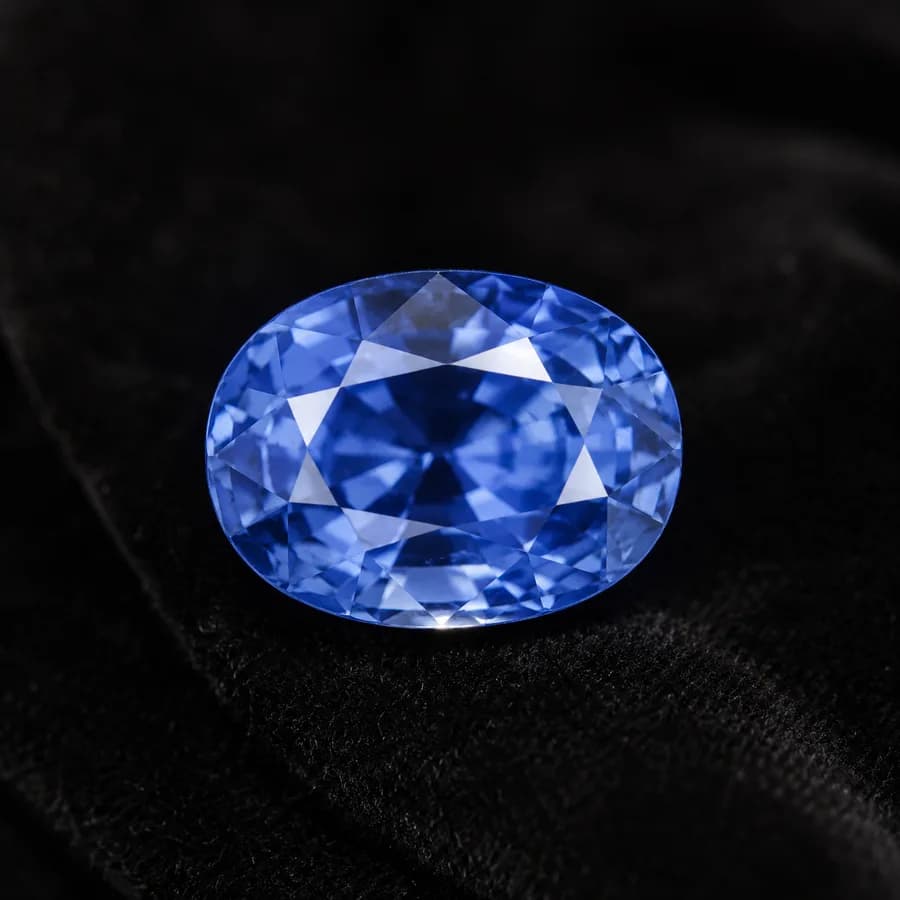
White Sapphire
Pure corundum, brilliant and understated
Also known as: Colourless sapphire
White sapphire is colourless corundum, the same mineral as blue sapphire and ruby, but essentially free of the trace elements that create colour. Sri Lanka's gem gravels are a well-known source of colourless and near-colourless sapphire.
Updated:
Natural Beauty
From Sri Lanka
Durability
Mohs 9
Treatments
Often untreated
Overview
The stone is popular as a durable, natural alternative to diamond in engagement and everyday jewellery.
Colours
White sapphire is prized for the absence of colour: the best stones are fully colourless with high transparency, while more affordable material shows faint tints of yellow, grey or blue. Because corundum is allochromatic, coloured only by impurities, truly colourless crystals represent notably pure material. Compared with diamond, white sapphire has lower refractive index and much lower dispersion, so it shows a softer, more silvery brilliance with less fire; many wearers appreciate this quieter character. Faint colour becomes more apparent in larger stones, so colour grading matters more as size increases. Under some lighting a slight milkiness can appear in included stones, which is why clarity and cutting deserve close attention in this variety.
Quality Factors
Quality in white sapphire rests on colourlessness, clarity and, above all, cut. With no body colour to admire, brilliance carries the stone, and a precisely cut white sapphire looks dramatically livelier than a poorly proportioned one; windowed or overly deep stones appear glassy and dull. Eye-clean clarity is the expectation, since inclusions are more visible in a colourless gem. Faint tints reduce value, and stones are best compared side by side against a white background. White sapphire remains far more affordable than diamond of similar size, which is part of its appeal. As with all corundum, laboratory confirmation of natural origin and treatment status is recommended for significant stones, since colourless synthetic sapphire is inexpensive and widely available.
Treatments
Much white sapphire is untreated, since there is no colour to improve, but heating occurs, sometimes to remove faint tints or silky inclusions and improve transparency. Any heating or other treatment must be disclosed by the seller. The more pressing market issue is substitution: colourless synthetic sapphire has been manufactured cheaply for over a century, and other diamond substitutes are sometimes mixed into parcels. A gemmological laboratory can separate natural from synthetic corundum using inclusions and growth features, and can confirm whether a stone has been heated. For any white sapphire of meaningful value, documentation from a recognised laboratory protects the buyer and supports resale.
CIBJO’s Gemstone Book, one of the Blue Book standards published by the World Jewellery Confederation, calls for every treatment to be disclosed at each sale, and consumer law in many countries separately requires material facts such as treatment to be disclosed. Undisclosed treatment is grounds to walk away, see our guide to heated versus unheated stones.
Origin in Sri Lanka
Sri Lanka has long yielded colourless sapphire from the same alluvial gravels that produce its famous blues, with recovery in areas including Ratnapura, Balangoda and Rakwana. Historically, some pale Sri Lankan corundum was also the raw material that responded well to heat treatment, but fine naturally colourless crystals are appreciated in their own right. Other sources of white sapphire include Madagascar and various corundum-producing regions. In Sri Lanka the stone is often cut locally and sold alongside fancy sapphires. Origin has less price impact for white sapphire than for blue, but a documented natural Ceylon stone carries a heritage many buyers value.
Origin describes where a stone was mined, it is not a grade, and trade terms such as “Ceylon” are origin descriptions, never an automatic premium. A fine stone from elsewhere can outclass a mediocre stone from a famous source; judge colour, clarity, cut and treatment first. Remember also that a laboratory origin determination is an expert opinion based on inclusions and chemistry, not an infallible guarantee, and a seller’s origin claim is not laboratory confirmation. Origin claims belong on the invoice and, for important stones, in a report.
Care
White sapphire is one of the most practical gems for everyday wear: hardness 9, no cleavage and good toughness. Its main enemy is grime, skin oils and soap film dull a colourless stone faster than a coloured one, so clean it often with warm soapy water and a soft brush, and rinse well. Ultrasonic and steam cleaning are generally safe for untreated and heated white sapphire. Keep the pavilion clean, since dirt behind the stone kills brilliance. Protect facet edges from knocks, store separately from other jewellery, and have prongs checked periodically. With simple care a white sapphire will stay bright for a lifetime of wear.
As a Loose Stone
Where It Is Found in Sri Lanka
- Ratnapura
- Balangoda
- Rakwana
Common Treatments at a Glance
- Often untreated
- Heating (occurs; must be disclosed)
All treatments must be disclosed at sale. See our treatment guides and treatment reports.
White Sapphire: frequently asked questions
Is white sapphire a good diamond alternative?
White sapphire is natural, very durable and considerably more affordable than diamond, making it a legitimate alternative for engagement rings. It shows less fire and a softer brilliance than diamond, and it needs more frequent cleaning to stay bright. Seeing both side by side is the best way to decide which look you prefer.
How can I tell white sapphire from diamond or cubic zirconia?
The three differ in hardness, refractive index, dispersion and density, but separating them reliably requires proper testing. A gemmological laboratory or qualified gemmologist can identify the material quickly with standard instruments. Never rely on appearance alone, and be cautious of colourless stones sold without documentation.
Does white sapphire lose its sparkle?
The stone itself does not degrade, but oils and dirt cling to its surface and noticeably dull a colourless gem. Regular cleaning restores full brilliance. If a professionally cleaned stone still looks glassy, the cause is usually cut quality rather than the material.
Are white sapphires treated?
Many are untreated, though heating is sometimes used to improve transparency or remove faint tints, and it must be disclosed. The bigger concern is synthetic colourless sapphire, which is common and inexpensive; laboratory testing confirms natural origin and treatment status.