Ruby
The king of gems in its rarest red form
Also known as: Ratnaraj
Ruby is the red variety of corundum, coloured by chromium, and one of the most valuable of all coloured gemstones. In ancient Sanskrit tradition it was called ratnaraj, the king of gems.
Updated:
Natural Beauty
From Sri Lanka
Durability
Mohs 9
Treatments
Heating (very common)
Overview
Sri Lanka produces rubies from its gem gravels, typically in pinkish to purplish reds, alongside its more abundant sapphires, and the island has traded red corundum for centuries.
Colours
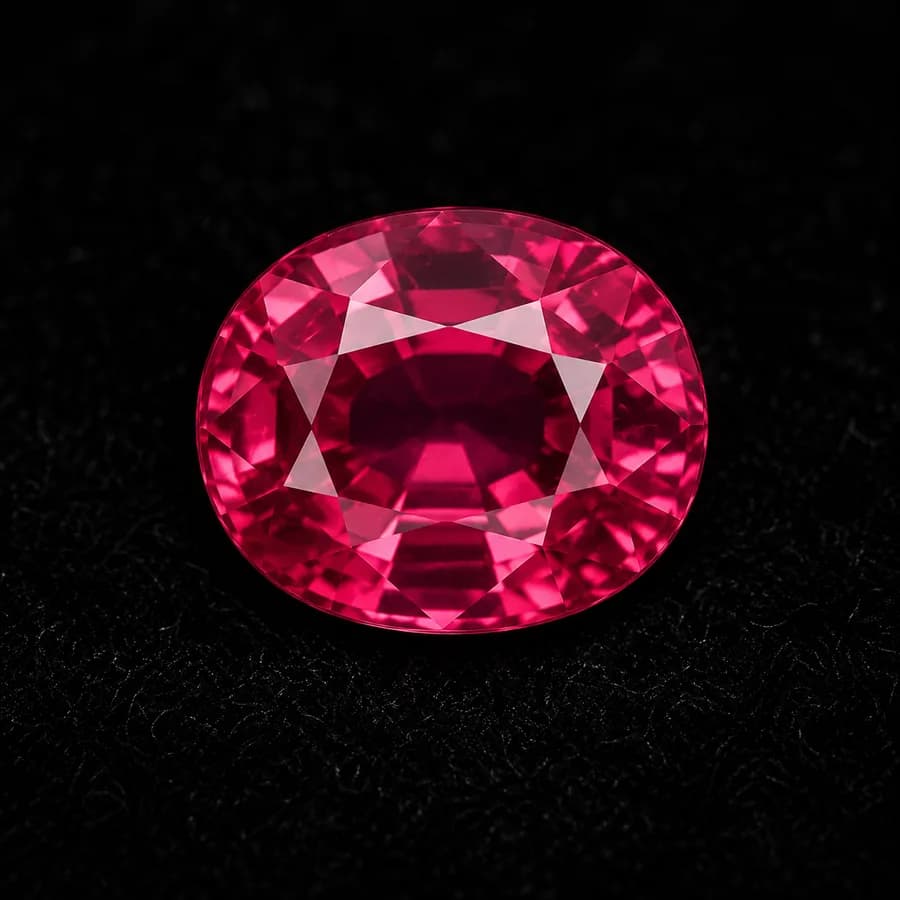
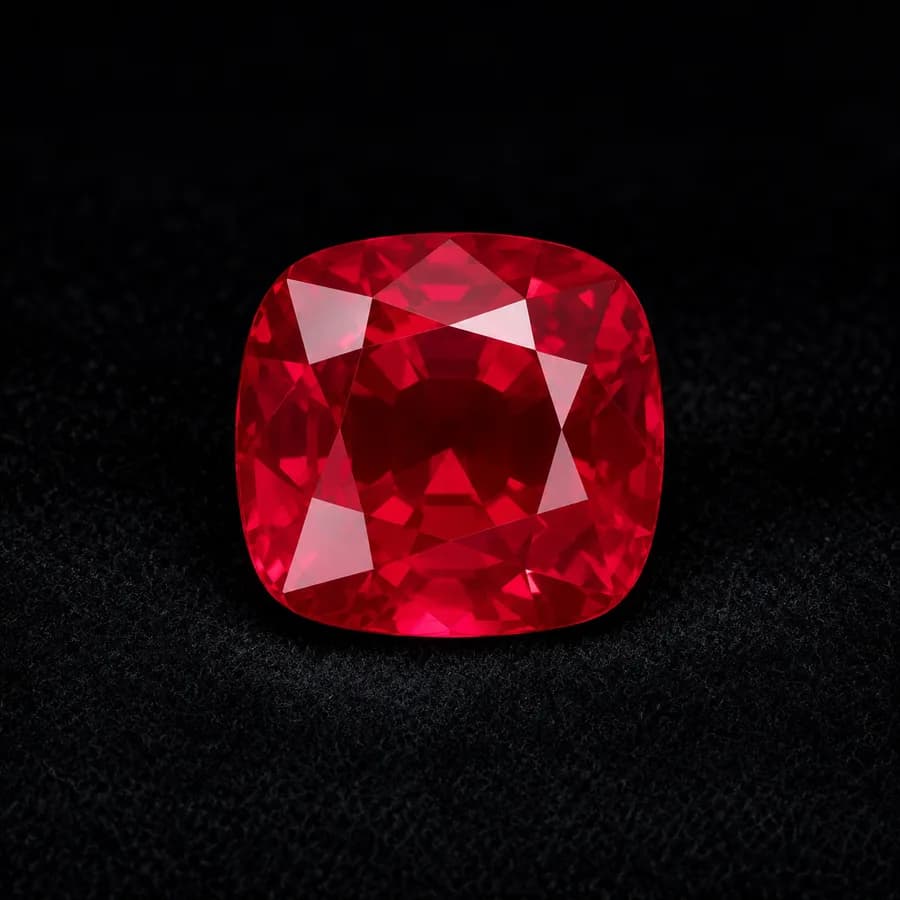
Ruby's red comes from chromium replacing aluminium in the corundum structure; more chromium generally means stronger red and stronger red fluorescence, which can make fine rubies appear to glow. Hues range from purplish red through pure red to slightly orangey red, with the vivid pure reds most prized. Sri Lankan rubies tend towards pinkish and purplish reds rather than the deepest crimson associated with classic Myanmar stones, and lighter Sri Lankan material grades into pink sapphire. The boundary between ruby and pink sapphire is not universally fixed, so laboratory descriptions matter for borderline stones. Fluorescence, tone and saturation together give each ruby its individual character, best judged under several light sources.
Quality Factors
Colour dominates ruby valuation: vivid saturation, medium to medium-dark tone and a pure red hue are the ideal. Clarity expectations are more relaxed than for sapphire, some inclusions are normal and fine silk can even improve colour distribution, but fractures that threaten durability or transparency reduce value sharply. Cut affects brilliance and colour return, and well-proportioned rubies are scarce because cutters maximise weight from costly rough. Treatment status is critical: unheated rubies of fine colour are exceptionally rare and command large premiums, while lead-glass filled rubies sit at the opposite end of the market. For any significant ruby, a report from a recognised gemmological laboratory is indispensable.
Treatments
Most rubies on the market are heated to improve colour and clarity, an accepted practice when disclosed. Two further treatments demand particular attention. Lead-glass fracture filling transforms heavily fractured, low-grade corundum into saleable-looking stones; such composites are fragile, damaged by household chemicals and jeweller's tools, and must be sold clearly identified as filled or composite rubies at appropriately low prices. Lattice diffusion also occurs. Under international trade standards, notably CIBJO's Gemstone Book, one of the Blue Book standards published by the World Jewellery Confederation, treatments should be disclosed at every stage of sale, and consumer-protection law in many jurisdictions separately requires material facts such as treatment to be disclosed. Because filled rubies can look convincing, and the price difference between treated and untreated stones is enormous, laboratory testing is the only safe basis for buying any ruby of consequence.
CIBJO’s Gemstone Book, one of the Blue Book standards published by the World Jewellery Confederation, calls for every treatment to be disclosed at each sale, and consumer law in many countries separately requires material facts such as treatment to be disclosed. Undisclosed treatment is grounds to walk away, see our guide to heated versus unheated stones.
Origin in Sri Lanka
Sri Lanka recovers ruby from the same alluvial gravels that yield its sapphires, in districts such as Ratnapura and Elahera and southwards towards Embilipitiya. The island's red corundum has entered world trade since antiquity, and historical accounts of Ceylon's gems frequently mention red stones, though some early references confused ruby with spinel. Today the most celebrated ruby origins include Myanmar and Mozambique, with Sri Lankan stones respected for bright, lively pinkish reds. Laboratories can often support origin opinions from inclusions and trace-element chemistry. For buyers, origin influences price meaningfully in ruby, but colour, clarity and treatment status remain the first considerations.
Origin describes where a stone was mined, it is not a grade, and trade terms such as “Ceylon” are origin descriptions, never an automatic premium. A fine stone from elsewhere can outclass a mediocre stone from a famous source; judge colour, clarity, cut and treatment first. Remember also that a laboratory origin determination is an expert opinion based on inclusions and chemistry, not an infallible guarantee, and a seller’s origin claim is not laboratory confirmation. Origin claims belong on the invoice and, for important stones, in a report.
Care
Ruby shares corundum's outstanding durability, hardness 9, no cleavage, and untreated or simply heated rubies handle daily wear and ultrasonic cleaning well. Lead-glass filled rubies are the important exception: the filler is attacked by common substances including household cleaners and can be damaged by heat from a jeweller's torch, so such stones need gentle hand washing only and their treated status must be told to any jeweller working on the piece. When in doubt about treatment, clean gently with warm soapy water and a soft brush. Store rubies separately from softer gems, protect edges from knocks, and have settings inspected periodically.
As a Loose Stone
Where It Is Found in Sri Lanka
- Ratnapura
- Elahera
- Embilipitiya
Common Treatments at a Glance
- Heating (very common)
- Lead-glass fracture filling (common in low grades; must be disclosed)
- Lattice diffusion (occurs; must be disclosed)
All treatments must be disclosed at sale. See our treatment guides and treatment reports.
Ruby: frequently asked questions
What is the difference between ruby and pink sapphire?
Both are chromium-coloured corundum; stones with dominant red are rubies, lighter or pinker stones are pink sapphires. The dividing line varies between markets and laboratories, which matters because the ruby name commands higher prices. For borderline stones, the classification on a recognised laboratory report is the practical arbiter.
How can I tell if a ruby is real?
Imitations, synthetic rubies and lead-glass filled composites are all widespread. Only laboratory examination can reliably confirm natural corundum, identify filling and other treatments, and comment on origin. Insist on a report from a recognised gemmological laboratory for any ruby of meaningful value.
Are rubies from Sri Lanka good quality?
Sri Lanka produces attractive rubies, typically in bright pinkish to purplish reds, and the island's cutting and trading expertise is long established. The deepest classic reds are more associated with other origins, but fine Sri Lankan stones stand on their own merits. Judge each stone individually with proper documentation.
Is ruby a good investment?
Top-quality rubies are among the rarest coloured gems and have a long trading history, but gems are illiquid, unregulated assets and most commercial-grade stones should not be expected to appreciate. Buy for beauty with full laboratory documentation and treat investment potential cautiously. This is not financial advice.