Sapphire Centre
Why Does Cut Matter So Much in a Sapphire?
How sapphire cutting works, colour orientation, pleochroism, windows, extinction and cabochons, and how to judge whether a stone is well cut.
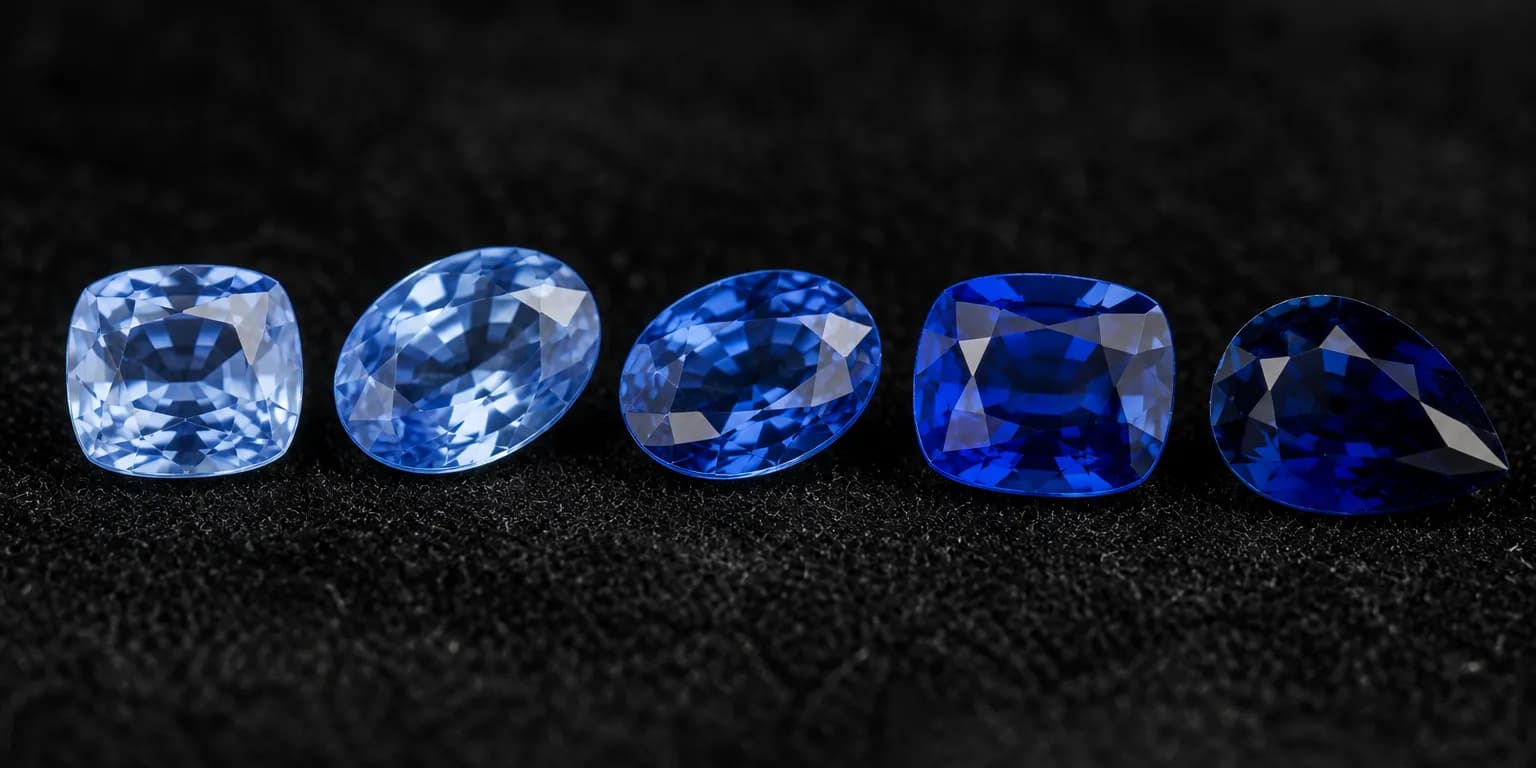
Cut determines how a sapphire returns light and displays its colour. Because sapphire rough is costly and pleochroic, cutters balance beauty against weight retention, and the result varies widely. A well-cut sapphire shows even colour and brightness across the whole face; a poorly cut one shows a washed-out window in the centre or large dark extinction areas.
Cut is the quality factor the buyer can see most easily and the one the trade talks about least. Unlike colour or weight, it carries no famous vocabulary, yet it decides how much of a sapphire's potential actually reaches the eye. Two stones of identical colour and weight can look strikingly different, purely because of the decisions made at the cutting wheel.
What Cut Actually Does
A faceted gem is an arrangement of tiny mirrors. Light enters through the crown, reflects within the pavilion and returns to the eye carrying the stone's colour. When proportions are right, the whole face appears bright and saturated. When they are wrong, light leaks out of the back or dies in dark zones, and no amount of fine colour in the rough can rescue the result. Cut is therefore not decoration; it is the delivery mechanism for everything else you are paying for.
Why Sapphires Are Cut Differently from Diamonds
Diamond cutting pursues brilliance through standardised proportions. Sapphire cutting pursues colour, and colour imposes different rules. Sapphire is pleochroic, it shows different colours along different crystal directions, so the cutter must orient the table to present the most attractive hue face-up. Pleochroism alone can decide whether a blue sapphire faces up pure blue or greenish.
The cutter must also manage colour zoning, placing concentrated bands of colour where they flood the whole face rather than sit visibly to one side. And because fine rough is scarce and sold by weight, every decision is a negotiation between ideal proportions and saleable carats. That negotiation explains most of the cutting quirks you will meet in the market.
Windows and Extinction
The two most common cut faults have names worth learning. A window is a pale, washed-out area in the centre of the face-up view, where a shallow pavilion lets light pass straight through the stone. Hold the stone over a printed page: if you can read text through the middle, the window is real. Extinction is the opposite fault, large areas that stay dark whatever the lighting, typical of stones cut too deep or too dark in tone.
Small windows and modest extinction are common and survivable at ordinary quality levels. In a stone offered as fine, they are grounds for a lower price or a longer search.
Proportions, Depth and Hidden Weight
Because sapphires are priced per carat, weight hidden below the girdle costs real money. A stone with an oversized belly can weigh dramatically more than its face-up size suggests, so you pay for carats no one will ever see. The reverse problem, a shallow "spread" stone cut for maximum face-up area, usually pays for its size with a window. Our guide to sapphire carat weight explains how to think about weight against face-up size.
Cabochons and Other Styles
Not every sapphire should be faceted. Translucent material, and above all star sapphire, is cut as a cabochon, a smooth dome that displays asterism and silky lustre rather than brilliance. A well-made cabochon has an even, symmetrical dome and a base that lets light animate the stone; see our guide to star sapphires for how the star itself is judged.
How to Judge Cut When Buying
Keep the assessment simple and face-up. Look for colour and brightness that hold across the entire face; check for a readable window over print; rock the stone to see how much of it goes dark; and view the profile to catch excessive depth or a very thick girdle. Symmetry should be pleasing rather than perfect, hand-cut coloured stones are allowed personality. What they are not allowed is a cut that visibly costs them their colour, because that cost will still be there every day you wear the stone.
Frequently asked questions
What is a window in a sapphire?
A window is a pale, see-through area in the centre of a face-up stone where light passes straight through instead of reflecting back. It usually results from a pavilion cut too shallow, often to preserve weight or spread, and it noticeably weakens the stone's colour.
Why are so many sapphires cut as ovals and cushions?
Ovals and cushions retain weight well from typical sapphire rough shapes and display colour attractively, so they dominate the market. Rounds waste more rough, which is why they are less common in larger sapphires.
Is a deep sapphire a bad thing?
Moderate depth is normal and often improves colour, but excessive depth hides weight below the girdle. You pay by the carat for material that adds nothing to the face-up view, and deep stones can be harder to set.
Are cabochon-cut sapphires lower quality?
Not necessarily. Cabochon cutting is essential for star sapphires, where the dome displays the star, and is a legitimate choice for translucent material. Quality is judged by the standards of that style, not against faceted stones.
Related terms
Sources
- Gemological Institute of America (GIA), Coloured stone cutting concepts, windowing and extinction
- International Gem Society (IGS), Practical cut evaluation for coloured gemstones
External references are provided for verification. Listing a source does not imply affiliation or endorsement.
Seen something that needs correcting? Read how corrections work or contact the editorial team.
Related Guides
Sapphire Centre
How Does Carat Weight Affect a Sapphire?
What carat weight really means for sapphires, weight versus face-up size, price-per-carat thresholds and how to compare stones sensibly.
3 min read
Sapphire Centre
What Determines the Price of a Sapphire?
The factors that set sapphire prices, colour, clarity, cut, carat weight, treatment status, origin and documentation, and how they interact.
3 min read
Sapphire Centre
What Is a Star Sapphire?
How star sapphires form, why the star moves, how to judge a fine star and body colour, and the treatments and synthetics buyers should know about.
3 min read
Sapphire Centre
What Is a Ceylon Sapphire?
What a Ceylon sapphire actually is, where Sri Lankan sapphires are mined, how laboratories assess origin and why the name alone never guarantees quality.
3 min read