Sapphire Centre
What Determines the Price of a Sapphire?
The factors that set sapphire prices, colour, clarity, cut, carat weight, treatment status, origin and documentation, and how they interact.
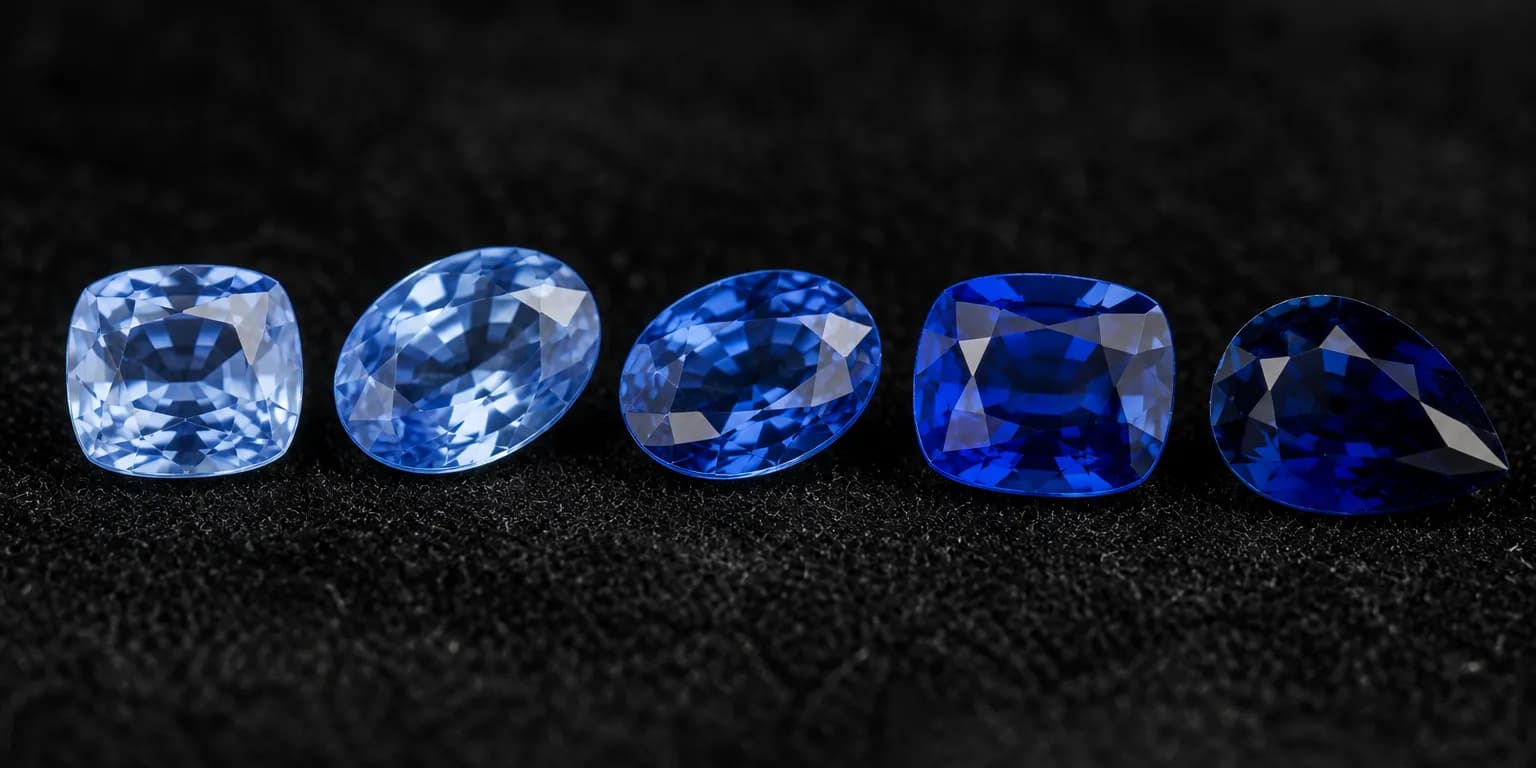
Sapphire prices are set by the interaction of colour, clarity, cut and carat weight, then adjusted by treatment status, geographic origin and the quality of supporting documentation. Colour is the dominant factor; unheated stones command premiums over heated equivalents; and origin claims add value only when supported by an independent laboratory opinion. No single factor sets the price, the combination does.
Ask why one sapphire costs a hundred times more than another of the same weight and you have asked the central question of the coloured stone market. The answer is not a secret formula but an interaction: a handful of quality factors, each understandable on its own, multiplying together. This guide sets out the factors and how they combine, deliberately without price figures, because there is no universal sapphire price list and any specific number would mislead.
Colour Comes First
Colour dominates sapphire value. The market rewards vivid saturation, medium to medium-dark tone and attractive, even hue, and punishes greyness, over-darkness and washed-out pallor. Evenness matters too: colour that holds across the whole face-up view outvalues colour that pools in zones. Because the differences can be subtle to an untrained eye, always compare stones side by side and in more than one light. Our guide to sapphire colours explains how hue, tone and saturation are judged.
Clarity and Cut Refine the Price
Expectations for sapphire clarity are demanding: fine stones are expected to be eye-clean, and inclusions visible to the naked eye push a stone down the price ladder faster than they would in emerald. Details are in our sapphire clarity guide.
Cut is the most underpriced factor, and therefore the buyer's best hunting ground. A well-proportioned stone delivers its full colour to the eye; a stone with a pale window or heavy extinction wastes some of what you are paying for. Two stones of equal colour and weight can differ meaningfully in value on cut alone, as explained in sapphire cut.
Carat Weight Multiplies Everything
Sapphires are priced per carat, and the per-carat rate itself rises with size for fine material, stepping upward at popular size thresholds because large clean rough is rare. Weight multiplies quality; it never substitutes for it. See sapphire carat weight for the mechanics.
Treatment Status
Whether and how a sapphire has been treated moves its market tier. Ordinary heating is widespread and accepted with disclosure, but comparable unheated stones command premiums because untouched fine material is rarer. More intrusive treatments, beryllium or titanium diffusion and fracture filling, place stones in distinctly lower price tiers and must always be disclosed. The full comparison is in heated vs unheated sapphire.
Origin
A supported origin opinion, Ceylon, Kashmir, Burma and others, can add real value at the fine end of the market, where provenance and romance meet rarity. Two cautions apply. Origin premiums belong to stones whose quality already justifies them, and an origin claim is worth little without an origin report from a respected laboratory. Origin is an opinion, not a guarantee, and it should be priced as such.
Documentation and Market Reality
Finally, the paperwork. A stone accompanied by a report from a respected independent laboratory carries less uncertainty, and markets pay for certainty, particularly where unheated status or origin is part of the price. Learn to read the documents with our guide to reading a gem report.
Because no price list exists, calibration comes from comparison: view several stones of similar description before committing, and treat any quoted "discount" from an unverifiable starting price with scepticism. A price only means something when you know which combination of factors it is paying for, which is why the invoice should record every claim, from weight to treatment to origin, exactly as the seller made it. The practical buying process is covered step by step in buying a loose sapphire.
Frequently asked questions
What matters most in a sapphire's price?
Colour. A sapphire with vivid, even, attractive colour will outvalue larger or cleaner stones with weak colour. Clarity, cut and carat weight then refine the price within that colour band, and treatment status and origin adjust it further.
Why do two sapphires of the same carat weight cost such different amounts?
Because weight is only a multiplier. Differences in colour, clarity, cut quality, treatment status and documented origin can move the per-carat rate across an enormous range, so identical weights routinely carry very different prices.
Do certificates increase a sapphire's price?
A report does not change the stone, but it removes uncertainty, and uncertainty is priced. Stones with reports from respected laboratories sell more readily and support stronger prices, particularly where unheated status or origin is claimed.
Is origin or treatment status more important to price?
Treatment status usually has the broader effect, since it applies to every stone: unheated material carries a premium across the market. Origin premiums concentrate at the fine end, where documented provenance meaningfully affects desirability.
Related terms
Sources
- Gemological Institute of America (GIA), Quality factors for corundum and treatment disclosure context
- CIBJO, The World Jewellery Confederation, Trade standards for disclosure that underpin price differences
- International Colored Gemstone Association (ICA), Market context for origin and treatment premiums
- GIA: Sapphire Quality Factors, Quality factors for sapphire
- IGS: Sapphire value and information, Consumer-level value factors
External references are provided for verification. Listing a source does not imply affiliation or endorsement.
Seen something that needs correcting? Read how corrections work or contact the editorial team.
Related Guides
Sapphire Centre
Heated vs Unheated Sapphire: What Is the Difference?
How heat treatment changes sapphires, how laboratories detect it, why unheated stones carry premiums and what disclosure you should insist on.
4 min read
Sapphire Centre
What Is a Sapphire Origin Report?
How laboratories form opinions on where a sapphire was mined, why origin conclusions are opinions rather than guarantees, and how to use them when buying.
3 min read
Sapphire Centre
What Colours Do Sapphires Come In?
A guide to the full range of sapphire colours, blue, yellow, pink, padparadscha and more, and how hue, tone and saturation shape beauty and value.
3 min read
Sapphire Centre
How Do You Buy a Loose Sapphire?
A practical process for buying a loose sapphire, examining the stone, questioning the seller, verifying claims and securing the right documents.
3 min read