Sapphire Centre
How Is Sapphire Clarity Judged?
How clarity works in sapphires, the eye-clean standard, common inclusions, silk, and when internal features lower value or actually add to it.
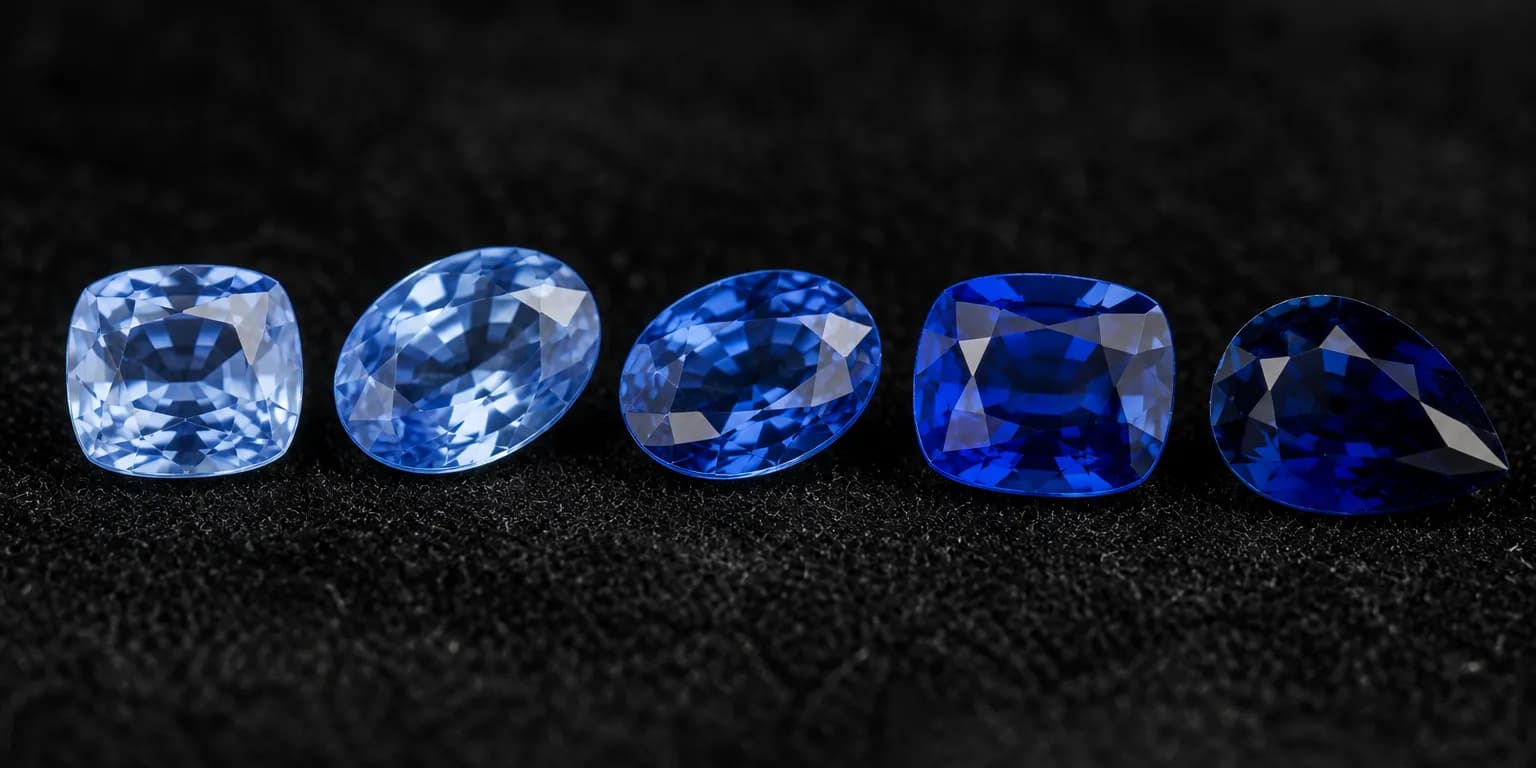
Sapphire clarity is judged by how visible internal features are to the unaided eye in the face-up position, not against a formal laboratory scale as with diamonds. The practical benchmark is 'eye-clean', no inclusions visible without magnification. Inclusions are not automatically defects: they can prove natural origin, indicate an absence of heating, and in oriented silk, create the star effect.
Clarity is the quietest of the sapphire quality factors. It rarely announces itself the way colour does, yet it separates stones that merely look attractive in a shop from stones that stand up to a loupe, a laboratory and the years of wear ahead. This guide explains how the trade actually judges sapphire clarity, and why some inclusions deserve more welcome than fear.
Why Sapphires Are Not Graded Like Diamonds
Diamonds are graded for clarity on a formal scale under 10x magnification. Coloured stones are treated differently: there is no single universal clarity grade for sapphire, because different gem species form in different geological environments and carry different natural levels of inclusion. Sapphire belongs among the species for which relatively high clarity is expected, so the market's expectations are demanding, but they are expressed through the eye, not a certificate grade.
The Eye-Clean Standard
The working benchmark for fine sapphire is eye-clean: no inclusions visible to the unaided eye when the stone is viewed face-up at a normal distance. A sapphire can be full of character under the microscope and still be eye-clean, and that combination is entirely normal in high-quality natural stones.
Two practical points follow. First, judge clarity face-up, because that is how the stone will be seen when worn; features hidden under the crown facets or near the girdle matter less than a crystal sitting beneath the table. Second, judge at arm's length as well as close up, a feature you must hunt for is not the same as one that interrupts the stone's beauty.
Common Inclusions in Sapphire
Natural sapphires carry a recognisable family of internal features. Fine needles of rutile, known as silk, often intersect in oriented patterns. Small mineral crystals of other species may sit within the stone, sometimes surrounded by tension halos. Partially healed fractures create the delicate patterns the trade calls fingerprints, and negative crystals, growth zoning and colour zoning are all frequently seen. Our companion article on sapphire inclusions illustrates each type.
When Inclusions Add Value
It is tempting to treat every inclusion as a flaw, but the reality is more interesting. Inclusions are a laboratory's primary evidence: intact silk and unaltered crystals can indicate that a stone has not been heated, and inclusion suites help support opinions on geographic origin. In a market where unheated stones command premiums, the right inclusions are effectively documentation written inside the gem.
Silk has a second gift. When dense, fine silk is oriented through a stone cut as a cabochon, it produces the star effect described in our guide to star sapphires. There, the "inclusions" are the entire point of the gem.
Clarity and Durability
Not all clarity features are equal. A small crystal locked deep in the stone is cosmetic; a fracture reaching the surface is structural. Surface-reaching breaks can weaken a stone at the setter's bench and in wear, and they are also the features most likely to have been disguised by filling, see our article on fracture-filled sapphires. When you see a distinct break at the surface, slow down and ask questions.
Examining a Stone Yourself
Ask to view the stone loose where possible, clean it, and examine it with a 10x loupe against both dark and light backgrounds, letting light rake across the surface to reveal fractures. Then put the loupe down and look again with the naked eye, face-up, in daylight. The loupe tells you what is inside; the eye tells you whether it matters. For how clarity trades off against the other quality factors, see sapphire price factors.
Frequently asked questions
What does eye-clean mean for a sapphire?
Eye-clean means no inclusions are visible to the unaided eye when the stone is viewed face-up at a normal viewing distance. It is the practical clarity benchmark for fine sapphire, even though inclusions will still be visible under magnification.
Are inclusions in a sapphire always bad?
No. Minor inclusions rarely affect beauty, and they carry valuable information: they help laboratories confirm that a stone is natural, whether it has been heated, and where it may have formed. Oriented silk inclusions are also what create star sapphires.
Do sapphires have better clarity than emeralds?
Buyer expectations are higher for sapphire. Eye-visible inclusions are normal and accepted in emerald, whereas fine sapphires are generally expected to be eye-clean, so visible inclusions reduce sapphire value more sharply.
Should I worry about a fracture in a sapphire?
A fracture that reaches the surface deserves more caution than a small internal crystal, because it can affect durability and may have been concealed by filling. Ask for disclosure and, for a significant stone, an independent laboratory report.
Related terms
Sources
- Gemological Institute of America (GIA), Coloured stone clarity concepts and corundum inclusion types
- International Gem Society (IGS), Practical clarity assessment for sapphire buyers
External references are provided for verification. Listing a source does not imply affiliation or endorsement.
Seen something that needs correcting? Read how corrections work or contact the editorial team.
Related Guides
Sapphire Centre
What Are the Inclusions Found in Sapphires?
A guide to sapphire inclusions, silk, crystals, fingerprints and zoning, and how these internal features reveal origin, treatment and authenticity.
3 min read
Sapphire Centre
What Determines the Price of a Sapphire?
The factors that set sapphire prices, colour, clarity, cut, carat weight, treatment status, origin and documentation, and how they interact.
3 min read
Sapphire Centre
What Is a Star Sapphire?
How star sapphires form, why the star moves, how to judge a fine star and body colour, and the treatments and synthetics buyers should know about.
3 min read
Sapphire Centre
What Is a Ceylon Sapphire?
What a Ceylon sapphire actually is, where Sri Lankan sapphires are mined, how laboratories assess origin and why the name alone never guarantees quality.
3 min read