Sapphire Centre
How Do You Buy a Loose Sapphire?
A practical process for buying a loose sapphire, examining the stone, questioning the seller, verifying claims and securing the right documents.
To buy a loose sapphire well, examine the stone face-up in daylight for colour, clarity and cut; ask in writing whether it is natural, whether and how it has been treated, and what it weighs; compare several stones before committing; and for any significant purchase make the sale conditional on an independent laboratory report. The invoice should state every claim that influenced the price, identity, weight, treatment status and any origin.
A loose sapphire is the honest way to buy: nothing hidden under prongs, the weight verifiable on a scale, every facet open to inspection. It is how the trade itself buys, and a private buyer who adopts the same discipline enjoys most of the same protection. This guide walks through that discipline from first look to final invoice.
Why Buy Loose
A mounted stone keeps secrets. Settings conceal girdles and pavilions, prongs sit conveniently over inclusions or chips, and a closed back can transform apparent colour. A loose stone concedes nothing, you see the whole gem, weigh it yourself and match it against any report. Buying loose also separates two decisions that deserve separating: the stone's quality and the jewellery it will become.
Examine the Stone
Work face-up first, because that is how the stone will live. In daylight and again under artificial light, judge the colour for hue, tone, saturation and evenness across the face, using the framework in sapphire colours. Check for a washed-out window over printed text and for dead, dark extinction areas as described in sapphire cut.
Then go close. With a 10x loupe, survey the interior against light and dark backgrounds, the features you meet are catalogued in sapphire inclusions, and pay special attention to anything reaching the surface. Finally, have the stone weighed in front of you and note its millimetre measurements; weight and face-up size are different facts, as sapphire carat weight explains.
Question the Seller
Five questions, all answered in writing, form the spine of a safe purchase. Is the stone natural or synthetic? Has it been treated in any way, including heating? What is its exact weight? Is any origin claim supported by a laboratory report? Will every answer appear on the invoice?
A reputable dealer hears these daily and answers without friction. Hesitation over the written part, not the questions themselves, is the meaningful warning sign, along with the others catalogued in red flags when buying gemstones.
Compare Before You Commit
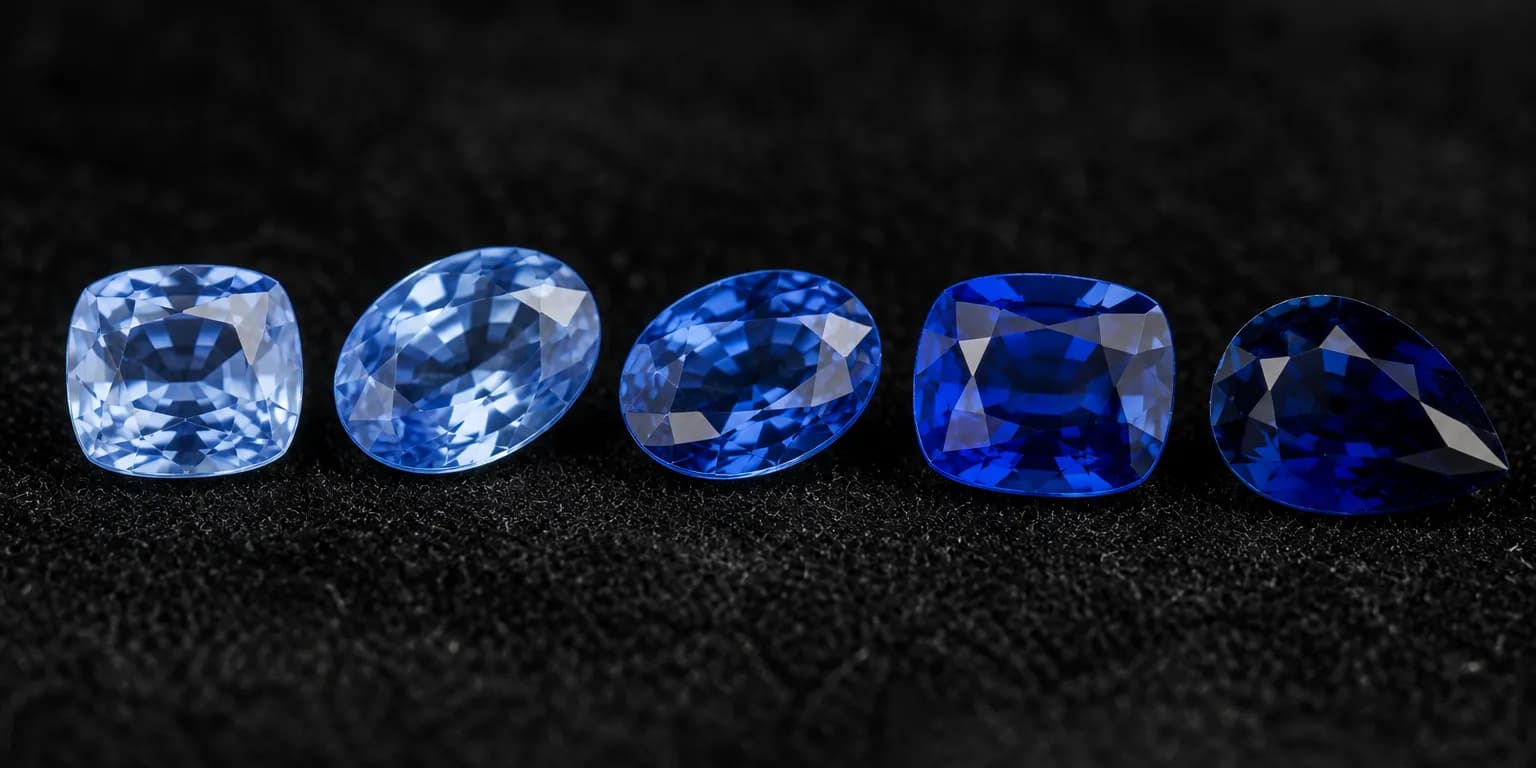
No price list exists for sapphires, so calibration comes only from comparison. View several stones of similar weight and described quality, ideally across more than one seller, before deciding. Side-by-side viewing sharpens the eye remarkably: differences in saturation, windowing and zoning that hide in a single stone become obvious in a row of them. The factors moving each price are set out in sapphire price factors.
Verify with a Laboratory
For any significant stone, make the purchase conditional on an independent laboratory report confirming identity, natural origin and treatment status, and, where the price depends on it, origin. Match the report's weight and measurements to the stone in front of you, and use the laboratory's verification service to confirm the document itself. Our guides to reading a gem report and sapphire origin reports cover the details, and honest sellers accommodate verification as routine.
Complete the Paperwork
The invoice is your permanent record and should describe the stone as precisely as the seller did: species and variety, natural or synthetic, weight, measurements, treatment status and any origin claim, along with the seller's full business details and return terms. Keep it with the laboratory report and payment evidence as one file, you will want the set for insurance, resale and any customs formalities. If you are buying in Sri Lanka, the wider context in how to buy a sapphire applies from here. Then, with the stone safely yours, let sapphire care keep it as you bought it.
Frequently asked questions
Is it better to buy a loose sapphire than one already set?
For any significant stone, yes. A loose sapphire can be weighed in front of you, examined from every angle and checked against a laboratory report. Settings can hide inclusions, damage and colour faults, and they make weight a matter of trust.
What questions should I ask when buying a sapphire?
Ask whether the stone is natural or synthetic; whether and how it has been treated, including heating; its exact weight and measurements; whether any origin claim is supported by a laboratory report; and whether all of this will appear on the invoice. Expect clear written answers to every one.
Do I need a laboratory report for every sapphire?
Not for modest stones, where the cost is out of proportion. For any significant purchase, and always where unheated status, origin or padparadscha colour affects the price, an independent report is essential protection.
How do I know if the price of a sapphire is fair?
By comparison. View several stones of similar size and described quality from different sellers before committing. A single quoted price is not a market price, and a dramatic discount from an unverifiable starting figure is not a saving.
Related terms
Sources
- Gemological Institute of America (GIA), Sapphire quality factors underpinning examination advice
- CIBJO, The World Jewellery Confederation, Disclosure standards buyers are entitled to expect
- International Colored Gemstone Association (ICA), Trade guidance on buying coloured gemstones
- IGS: Sapphire value and information, Consumer-level value and buying context
- GIA: Sapphire Quality Factors, Quality factors for sapphire
External references are provided for verification. Listing a source does not imply affiliation or endorsement.
Seen something that needs correcting? Read how corrections work or contact the editorial team.
Related Guides
Sapphire Centre
What Determines the Price of a Sapphire?
The factors that set sapphire prices, colour, clarity, cut, carat weight, treatment status, origin and documentation, and how they interact.
3 min read
Sapphire Centre
Heated vs Unheated Sapphire: What Is the Difference?
How heat treatment changes sapphires, how laboratories detect it, why unheated stones carry premiums and what disclosure you should insist on.
4 min read
Sapphire Centre
What Is a Sapphire Origin Report?
How laboratories form opinions on where a sapphire was mined, why origin conclusions are opinions rather than guarantees, and how to use them when buying.
3 min read
Sapphire Centre
How Should You Care for a Sapphire?
How to clean, wear and store sapphire jewellery safely, including the extra care rules for fracture-filled, diffusion-treated and star sapphires.
3 min read