Sapphire Centre
How Does Carat Weight Affect a Sapphire?
What carat weight really means for sapphires, weight versus face-up size, price-per-carat thresholds and how to compare stones sensibly.
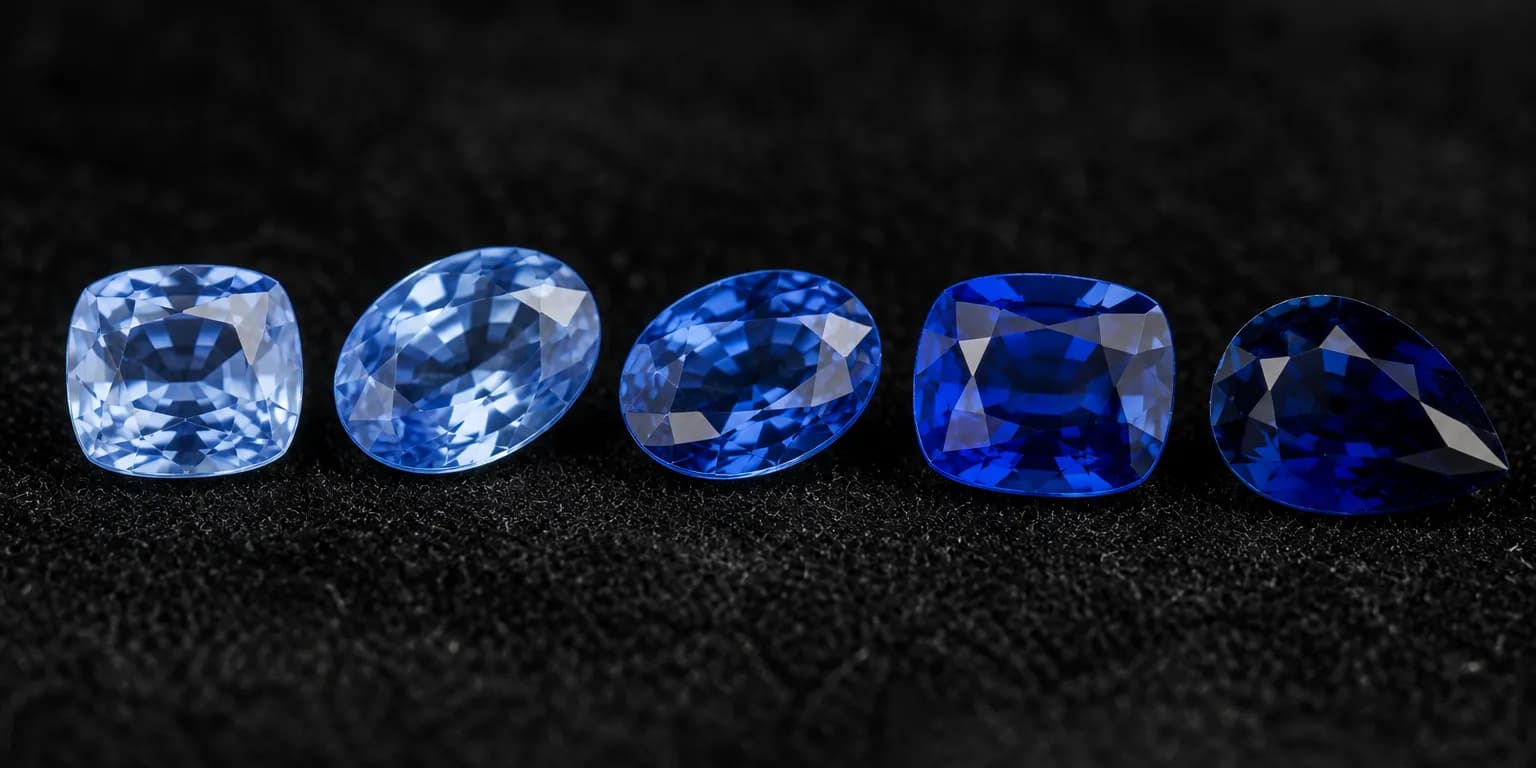
A carat is a unit of weight equal to one fifth of a gram, and sapphire prices are quoted per carat. Because corundum is denser than diamond, a one-carat sapphire looks smaller than a one-carat diamond, so weight and face-up size must be judged separately. Price per carat rises steeply at size thresholds for fine stones, because large clean rough is genuinely rare.
Carat weight is the most objective of the four sapphire quality factors, a number on a calibrated scale, beyond argument. Yet it is also the factor most often misunderstood, because weight, size and value relate to each other in ways that are not intuitive. This guide explains what a carat really tells you about a sapphire, and what it does not.
What a Carat Is
A carat is a unit of mass: one carat equals 0.2 grams, and each carat divides into one hundred points. The term descends from the carob seeds once used as balance weights in ancient gem trading. Two things follow immediately. First, carat weight can be verified on the spot, ask any seller to weigh a loose stone in front of you. Second, weight is not size: how large a stone looks depends on its density and its cutting.
Weight Is Not Face-Up Size
Corundum is a dense mineral, noticeably denser than diamond. A one-carat sapphire therefore has a smaller face-up diameter than a one-carat diamond, and mental habits formed around diamond sizes will mislead you in the sapphire market. The practical remedy is simple: always ask for the stone's millimetre measurements alongside its weight, and judge the face-up size with your own eyes.
Cutting compounds this. A deep-bellied stone carries weight below the girdle where it contributes nothing to the view from above, while a shallow stone spreads its weight wide and pays for it in performance. Two sapphires of identical weight can differ substantially in apparent size, which is why our guide to sapphire cut belongs beside this one.
Price Per Carat and Size Thresholds
Sapphires are priced per carat, and the per-carat rate itself rises with size for fine material, large, clean, well-coloured rough is genuinely rare, and rarity compounds. The rise is not smooth: the market concentrates demand at round-number thresholds, so per-carat rates tend to step upward as stones cross popular sizes rather than climbing evenly.
For buyers this creates a well-known opportunity. A stone weighing just under a threshold can be visually indistinguishable from one just over it, while sitting on the cheaper side of the step. Once a stone is set in jewellery, a few points of weight are invisible; the saving is not.
Weight Against the Other Factors
Carat weight multiplies value; it does not create it. A large sapphire with weak colour, visible inclusions or a heavy window is simply a large mediocre stone, and the market prices it accordingly. Colour remains the dominant factor, with clarity and cut close behind, the full interaction is set out in sapphire price factors.
There is also a quiet trade-off inside every cut stone. Cutters are paid in carats, so rough is often cut to retain weight at some cost to proportions. When you compare two stones, ask which one spent its weight on beauty and which one merely kept it.
Practical Advice for Buyers
Weigh your priorities before you shop. If face-up presence matters most, compare millimetre dimensions and choose well-proportioned stones rather than simply heavier ones. If long-term quality matters most, put colour first and let weight follow. Ask for the exact weight in writing on the invoice, confirm it on a scale for a loose stone, and check it against any laboratory report, the figures should match. For the full checklist of questions and documents, see our guide to buying a loose sapphire.
Frequently asked questions
Is a one-carat sapphire the same size as a one-carat diamond?
No. Sapphire is denser than diamond, so a one-carat sapphire has a smaller face-up diameter than a one-carat diamond. Always compare stones by their millimetre measurements as well as their weight.
Why does price per carat jump at certain sizes?
Fine sapphire rough becomes disproportionately rare as size increases, so demand concentrates at round-number thresholds. A stone just over a popular threshold can command a noticeably higher per-carat rate than one just under it.
Should I buy a slightly lighter sapphire to save money?
Often, yes. A stone just below a popular weight threshold can look almost identical face-up while being priced on the lower side of the step. The difference is rarely visible once the stone is set.
Does a heavier sapphire always cost more in total?
Usually, within the same quality, because total price is weight multiplied by the per-carat rate, and the rate itself rises with size. But quality dominates: a smaller stone of fine colour can cost far more than a much heavier dull one.
Related terms
Sources
- Gemological Institute of America (GIA), Carat weight definitions and corundum physical properties
- International Gem Society (IGS), Weight, size and value relationships in coloured stones
- GIA 4Cs: Carat weight, Definition of the metric carat (200 mg)
External references are provided for verification. Listing a source does not imply affiliation or endorsement.
Seen something that needs correcting? Read how corrections work or contact the editorial team.
Related Guides
Sapphire Centre
Why Does Cut Matter So Much in a Sapphire?
How sapphire cutting works, colour orientation, pleochroism, windows, extinction and cabochons, and how to judge whether a stone is well cut.
3 min read
Sapphire Centre
What Determines the Price of a Sapphire?
The factors that set sapphire prices, colour, clarity, cut, carat weight, treatment status, origin and documentation, and how they interact.
3 min read
Sapphire Centre
How Do You Buy a Loose Sapphire?
A practical process for buying a loose sapphire, examining the stone, questioning the seller, verifying claims and securing the right documents.
3 min read
Sapphire Centre
What Is a Ceylon Sapphire?
What a Ceylon sapphire actually is, where Sri Lankan sapphires are mined, how laboratories assess origin and why the name alone never guarantees quality.
3 min read