Sapphire Centre
What Is a Diffusion-Treated Sapphire?
How titanium and beryllium diffusion treatments colour sapphires, how laboratories detect them, and why disclosure and pricing differ so sharply.
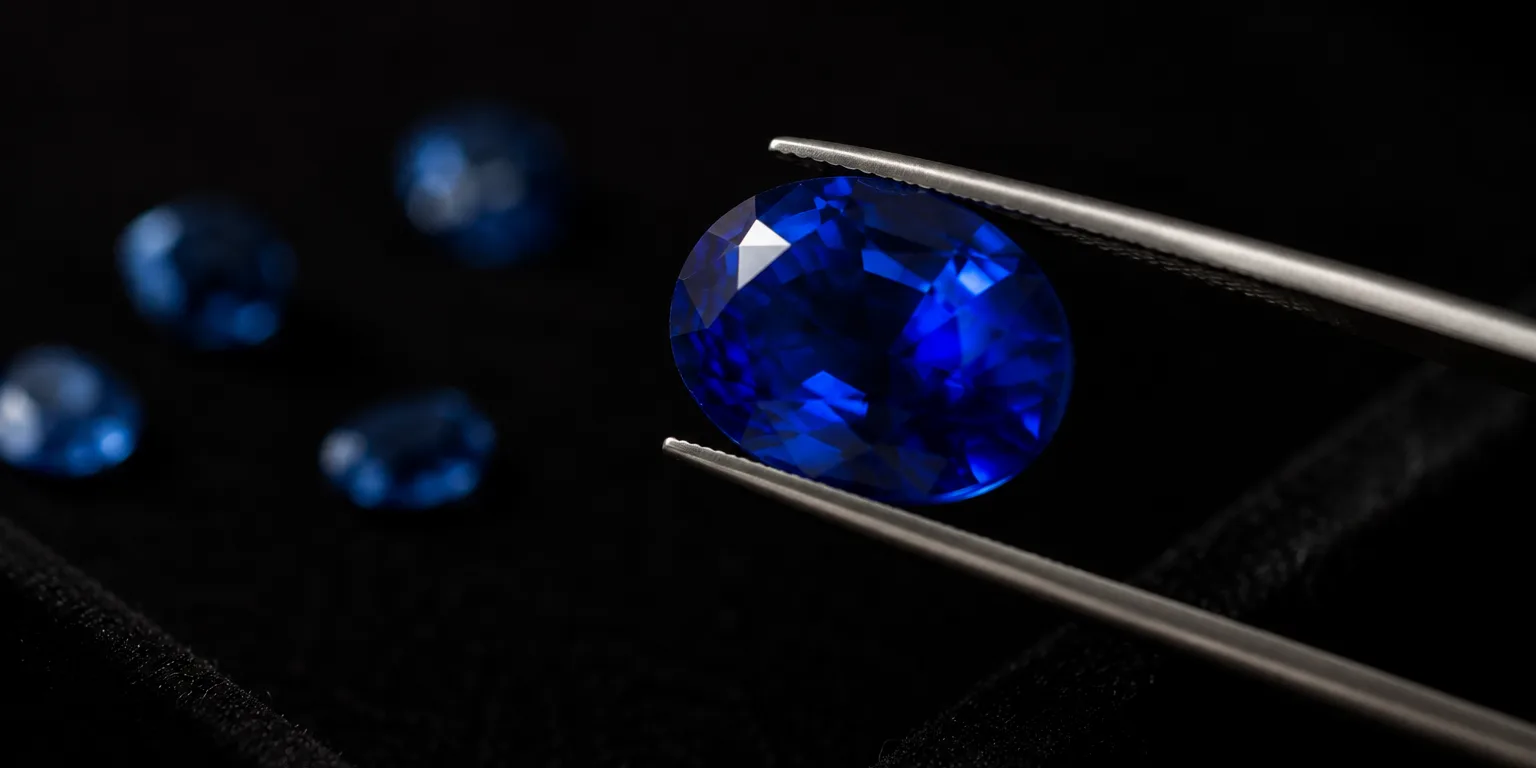
Diffusion treatment heats a sapphire in the presence of a foreign element, titanium or beryllium, so that the element penetrates the stone and creates or changes its colour. Titanium diffusion colours only a shallow surface layer, which repolishing can remove, while beryllium diffusion can penetrate much deeper or throughout the stone. Both must be fully disclosed, and diffusion-treated sapphires trade at a fraction of comparable untreated or conventionally heated stones.
Of all sapphire treatments, diffusion is the one that most changes what a buyer is actually holding. Ordinary heating rearranges what a crystal already contains; diffusion introduces something new from outside. The trade accepts diffusion-treated stones as legitimate merchandise, but only with full disclosure, and at prices far below untreated or conventionally heated material. This explainer covers both forms of the treatment and the caution each demands.
What Diffusion Treatment Means
Diffusion treatment heats corundum to very high temperatures in contact with a source of a colour-causing element, so that atoms of that element migrate into the crystal and create or alter colour. The two commercially significant versions differ in the element used and in how deep the change goes, and that depth difference drives everything else, from detection to price.
The essential distinction from ordinary heating is honesty of material: a conventionally heated sapphire's colour comes from within; a diffused stone's colour was, in part, put there. This is why trade bodies place diffusion in a stricter disclosure category than heat alone.
Titanium Diffusion: Colour Skin Deep
The earlier form of the treatment diffuses titanium into pale corundum to create blue. Because titanium migrates poorly through the crystal lattice, the induced colour forms only a thin layer at the surface. Under immersion in liquid, treated stones often betray themselves: colour concentrates along facet junctions and girdles, and the body of the stone may look pale by comparison.
The shallow colour layer creates a practical fragility. A chip, a recut or even vigorous repolishing can break through the skin and reveal the near-colourless stone beneath. A surface-diffused sapphire should therefore never be recut, and damage that would be cosmetic on an ordinary sapphire can be disfiguring here.
Beryllium Diffusion: Deeper and Harder to Detect
Around the turn of the millennium, the market was disrupted by stones treated with beryllium, a much smaller atom that penetrates far deeper, often throughout the entire stone. Beryllium diffusion is particularly associated with vivid yellow, orange and pinkish-orange colours, including stones that imitate the prized padparadscha, though it can affect other hues as well.
Because the colour can pervade the stone, immersion offers no easy verdict. Detection generally requires laboratory analysis capable of measuring trace amounts of beryllium in the stone's chemistry, alongside careful study of inclusions altered by the extreme temperatures involved. This is precisely the kind of question that justifies an independent report from a major laboratory.
Disclosure, Value and Market Position
International standards, including those published by CIBJO, require diffusion to be explicitly disclosed, a general word like "treated" is not enough for a process that adds colouring elements from outside. Honestly sold, diffusion-treated sapphires serve a real market: vivid colour at accessible prices for buyers who understand what they are purchasing.
The problems begin when disclosure fails. Because diffused stones can visually rival far costlier material, the incentive to omit the word "diffusion" is obvious. A vivid sapphire at a price dramatically below comparable stones is a signal to slow down, not to hurry, see our guide to red flags when buying gemstones.
Buying Cautions
Three habits protect you. First, ask directly and in writing whether a stone is diffusion-treated; the answer belongs on the invoice. Second, for any significant purchase, and for anything offered in padparadscha colours, require a report from a respected laboratory, and read it with our certificate explainer. Third, price the stone in its true category: a diffused sapphire is compared with other diffused sapphires, never with the untreated stones it resembles. For where diffusion sits among the other treatments, see heated vs unheated sapphire and fracture-filled sapphire.
Frequently asked questions
Is a diffusion-treated sapphire fake?
No, it is a natural sapphire whose colour has been created or changed by introducing a foreign element. It is genuine corundum, but it must be sold as diffusion-treated, and it is worth far less than an equivalent stone with natural or conventionally heated colour.
Can diffusion treatment be detected?
Yes. Surface diffusion often reveals itself under immersion, where colour concentrates along facet edges and girdles. Beryllium diffusion is subtler and generally requires advanced laboratory analysis of the stone's chemistry, which is one reason significant purchases warrant an independent report.
Does the colour of a diffusion-treated sapphire last?
The colour itself is stable in normal wear. The risk with surface diffusion is mechanical: the coloured layer is shallow, so chips, recutting or repolishing can cut through it and expose the paler stone beneath.
Why does beryllium diffusion matter for padparadscha buyers?
Beryllium diffusion can produce vivid orange and pinkish-orange stones that resemble padparadscha. Because natural padparadscha commands high prices, any stone offered in that colour range deserves a laboratory report confirming its colour is not the result of diffusion.
Related terms
Sources
- Gemological Institute of America (GIA), Diffusion treatment mechanisms and identification
- SSEF, Swiss Gemmological Institute, Laboratory detection of beryllium-diffused corundum
- CIBJO, The World Jewellery Confederation, Disclosure requirements for diffusion-treated gemstones
- GIA: Sapphire Care and Cleaning Guide, Lattice diffusion listed among corundum treatments
- CIBJO: The Blue Books, Disclosure standards for treatments
External references are provided for verification. Listing a source does not imply affiliation or endorsement.
Seen something that needs correcting? Read how corrections work or contact the editorial team.
Related Guides
Sapphire Centre
Heated vs Unheated Sapphire: What Is the Difference?
How heat treatment changes sapphires, how laboratories detect it, why unheated stones carry premiums and what disclosure you should insist on.
4 min read
Sapphire Centre
What Is a Fracture-Filled Sapphire?
How fracture filling with glass disguises breaks in corundum, the signs laboratories look for, and why filled stones need careful handling and full disclosure.
3 min read
Sapphire Centre
What Exactly Is a Padparadscha Sapphire?
How padparadscha is defined, why laboratories draw its pink-orange boundaries differently, and why treatment disclosure matters so much in this rare variety.
3 min read
Sapphire Centre
What Determines the Price of a Sapphire?
The factors that set sapphire prices, colour, clarity, cut, carat weight, treatment status, origin and documentation, and how they interact.
3 min read