Sapphire Centre
What Are the Inclusions Found in Sapphires?
A guide to sapphire inclusions, silk, crystals, fingerprints and zoning, and how these internal features reveal origin, treatment and authenticity.
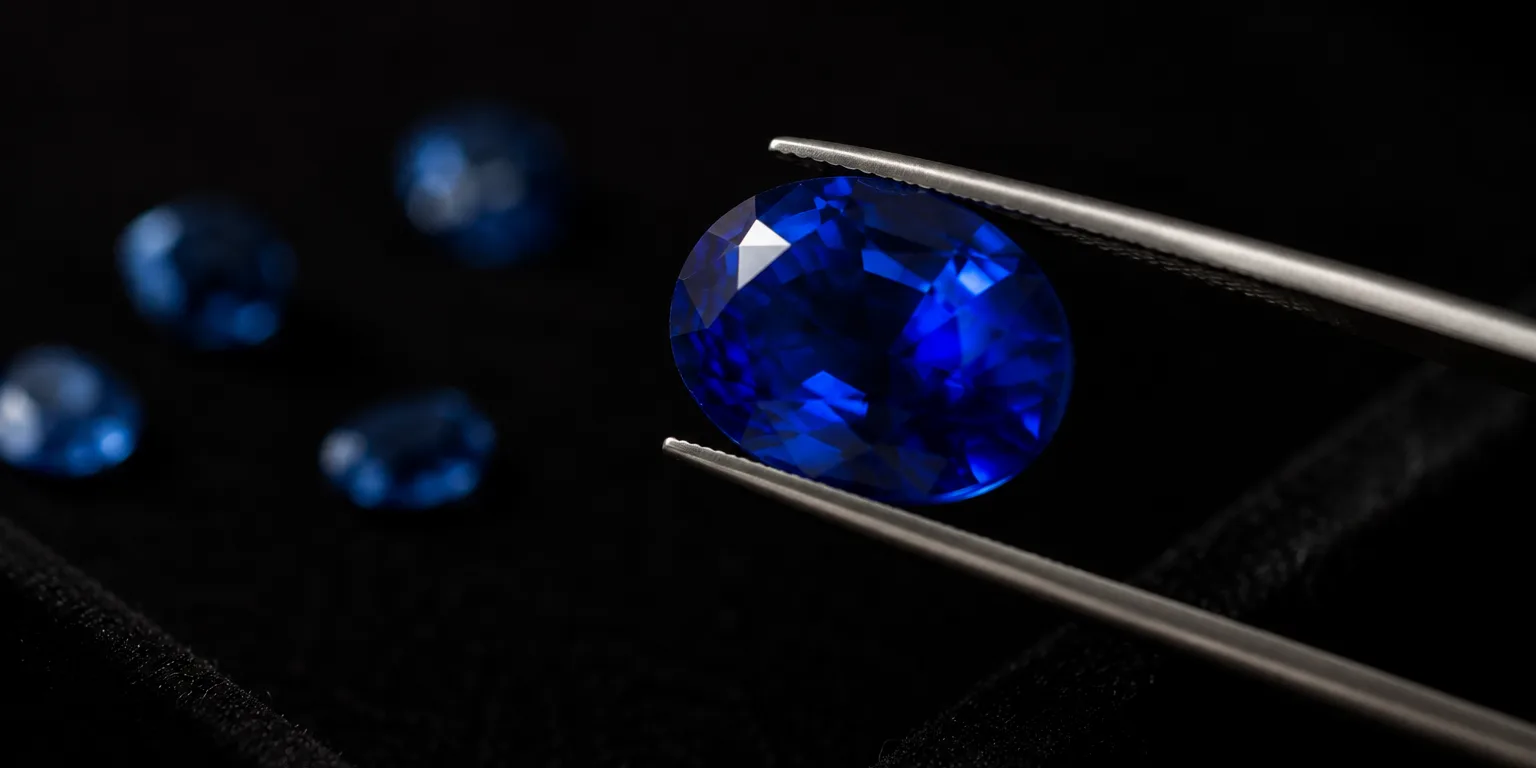
Sapphire inclusions are the internal features a stone acquired while growing, rutile silk, mineral crystals, healed fingerprints, negative crystals and colour zoning among them. Far from being mere flaws, they are the gem's documentation: laboratories read inclusions to confirm a sapphire is natural, to judge whether it has been heated and to support opinions on geographic origin.
Every natural sapphire carries a record of its own history, written in features locked inside the crystal as it grew. Gemmologists call these features inclusions, and no part of gemmology repays curiosity more richly. Inclusions authenticate stones, expose treatments, whisper about geographic origin, and in one famous case, create an entire gem variety. This guide introduces the inclusions a sapphire owner is most likely to meet.
What Inclusions Are
An inclusion is any internal feature of a gemstone: a foreign crystal swallowed during growth, a cavity, a healed fracture, a growth irregularity. In sapphire they range from features requiring a microscope to features visible across a room. Whether they matter to beauty is a question of clarity; whether they matter to knowledge is a different question, and the answer is almost always yes.
Silk
The signature inclusion of sapphire is silk: fine needles of rutile, a titanium mineral, exsolved within the corundum and oriented along the crystal's structure, typically intersecting at characteristic angles. Sparse silk is common and harmless; dense silk lends a soft, velvety quality to some famous sapphires; and heavy, well-oriented silk in a cabochon-cut stone produces the moving star of asterism, the subject of our star sapphire guide.
Silk also testifies. Because heat dissolves rutile needles, intact fine silk supports an unheated conclusion, while stubby, partially dissolved needles suggest the furnace, central evidence in the heated versus unheated question.
Crystals, Fingerprints and Negative Crystals
Natural sapphires often contain crystals of other minerals captured during growth, spinel, zircon, mica and many more, sometimes ringed by tension halos. Fingerprints are partially healed fractures: a break once filled with fluid across which the crystal regrew, leaving droplet patterns of great delicacy. Negative crystals are cavities with crystal form, spaces shaped by the host's own structure.
Together these features form suites that laboratories compare against reference stones from documented deposits, which is how inclusions come to support the origin opinions described in sapphire origin reports.
Growth and Colour Zoning
Corundum grows in episodes, and its colour often records them. Colour zoning appears as straight, angular bands of stronger and weaker colour following the crystal's faces, a distinctly natural geometry. Skilled cutting hides zoning from the face-up view; careless cutting leaves it on display.
Zoning has diagnostic power too: the angular zoning of natural growth contrasts with the curved growth lines of flame-fusion synthetics, one of the clearest separations in gemmology, as explained in natural versus synthetic sapphire.
What Inclusions Reveal
Read together, inclusions answer the trade's three great questions. Is the stone natural? A convincing natural suite is powerful evidence. Has it been treated? Heat, diffusion and filling each alter or add internal features in recognisable ways. Where is it from? Inclusion suites, with chemistry, underpin every origin opinion. A stone's interior is, in effect, its unforgeable archive, one reason perfectly clean stones can be harder for laboratories to pronounce upon.
Looking for Yourself
A 10x loupe and patience will show you more than most buyers ever see: silk flashing as the stone turns, a fingerprint's lacework, zoning bands sliding past the facets. Look against light and dark backgrounds, and note anything reaching the surface. You will not replace a laboratory, but you will understand your stone, and you will be a measurably harder buyer to mislead.
Frequently asked questions
What is silk in a sapphire?
Silk is the trade name for fine, needle-like inclusions of rutile that intersect in oriented patterns within corundum. Dense silk softens a stone's appearance, and when properly oriented in a cabochon it produces the star effect.
Do inclusions prove a sapphire is natural?
A characteristic natural inclusion suite is among the strongest evidence, because features like mineral crystals and angular zoning do not form in synthetic growth. Laboratories combine this with other tests, since some synthetics also contain identifying features of their own.
What is a fingerprint inclusion?
A fingerprint is a partially healed fracture, where fluid once filled a break and the crystal regrew across it, leaving a delicate pattern of tiny droplets resembling a human fingerprint. They are common and characteristic in natural sapphire.
Are inclusions bad for a sapphire's durability?
Most are harmless. The exceptions are fractures that reach the surface, which can weaken the stone during setting and wear, and which deserve attention before purchase.
Related terms
Sources
- Gemological Institute of America (GIA), Corundum inclusion types and their diagnostic significance
- Gübelin Gem Lab, Inclusion research underpinning origin and treatment conclusions
- Lotus Gemology: Low-temperature heat treatment experiments, Inclusion changes as heat-treatment evidence
- GIA: Sapphire Description, Corundum identity context
External references are provided for verification. Listing a source does not imply affiliation or endorsement.
Seen something that needs correcting? Read how corrections work or contact the editorial team.
Related Guides
Sapphire Centre
How Is Sapphire Clarity Judged?
How clarity works in sapphires, the eye-clean standard, common inclusions, silk, and when internal features lower value or actually add to it.
3 min read
Sapphire Centre
What Is a Star Sapphire?
How star sapphires form, why the star moves, how to judge a fine star and body colour, and the treatments and synthetics buyers should know about.
3 min read
Sapphire Centre
Heated vs Unheated Sapphire: What Is the Difference?
How heat treatment changes sapphires, how laboratories detect it, why unheated stones carry premiums and what disclosure you should insist on.
4 min read
Sapphire Centre
What Is a Sapphire Origin Report?
How laboratories form opinions on where a sapphire was mined, why origin conclusions are opinions rather than guarantees, and how to use them when buying.
3 min read