Sapphire Centre
What Is a Star Sapphire?
How star sapphires form, why the star moves, how to judge a fine star and body colour, and the treatments and synthetics buyers should know about.
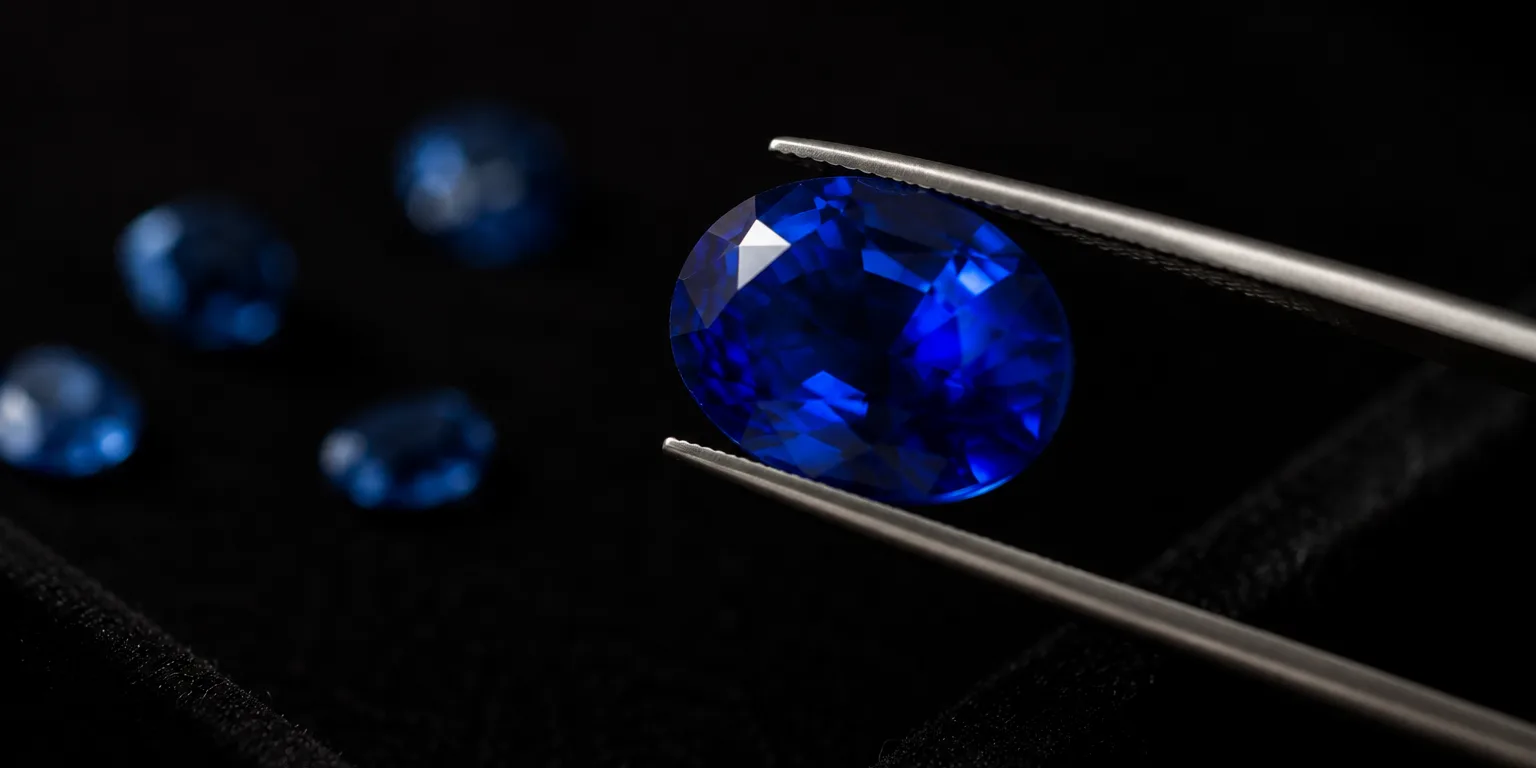
A star sapphire is a sapphire cut as a cabochon that displays asterism, a star of light, usually six-rayed, that glides across the dome as the stone or the light moves. The star is created by light reflecting from dense, oriented needle-like silk inclusions within the corundum. Quality is judged on the star's sharpness and centring together with the stone's body colour and translucency, and buyers should be aware that synthetic star sapphires are common and inexpensive.
Most gems reward stillness; the star sapphire rewards movement. Tilt the stone under a single light and a star of light glides across its dome, alive in a way no faceted gem can match. The effect has fascinated collectors for centuries, and because it depends on inclusions rather than clarity, it turns the usual rules of gem quality agreeably upside down.
What Asterism Is
Asterism is the star effect: bands of reflected light crossing at a point, usually forming six rays in corundum, occasionally twelve. It belongs to the same optical family as the cat's-eye effect, in which a single band appears; in star stones, needles oriented in intersecting directions produce intersecting bands. The star is not inside the stone in any solid sense, it is a reflection phenomenon that lives on the surface of the dome and moves as light and stone move relative to each other.
How the Star Forms
The engine of asterism is silk: dense populations of fine rutile needles aligned along the crystal directions of the host corundum, described in detail in our guide to sapphire inclusions. Light reflecting off each set of parallel needles forms one luminous band; the crystal's structure sets the bands at intersecting angles, and their crossing point becomes the star.
Cutting completes the work. Only a cabochon, a smooth, unfaceted dome, displays asterism properly, and the cutter must orient the dome precisely over the silk so the star sits centred at the summit. A poorly oriented cabochon wears its star off-centre forever; no polishing can move it back.
Judging a Star Sapphire
Judge the star first under a single light source, sunlight or a small torch, not shop spotlights. A fine star is sharp rather than fuzzy, complete with no missing or broken rays, centred on the dome, and mobile, gliding smoothly as the stone tilts.
Then judge the stone as a sapphire. Body colour follows the usual hierarchy, a rich blue commands the classic premium, while grey, black, purple and pink stars have their own markets. Strong translucency with a crisp star is the difficult, desirable combination, because the same silk that builds the star also mutes transparency; the finest stones hold that balance. Finally, inspect the cabochon itself for an even, symmetrical dome and acceptable proportions.
Treatments and Synthetics
Heat and asterism are natural enemies: the furnace temperatures that improve faceted sapphire dissolve the very silk a star depends on. Fine star sapphires are therefore typically untreated, and treatment questions, including any surface work, still belong in writing on the invoice, as with any sapphire under heated versus unheated scrutiny.
The larger trap is synthesis. Synthetic star sapphires have been mass-produced since the mid-twentieth century, wearing bold, perfectly centred stars on evenly coloured stones at trivial prices. Their very perfection is the tell, natural stars are rarely flawless, but certainty belongs to gemmological testing, as explained in natural versus synthetic sapphire. For a significant purchase, require an independent laboratory report.
Owning a Star Sapphire
Star sapphires share corundum's superb hardness and ask little: warm soapy water, a soft brush and sensible storage. Their cabochon form has no facet edges to chip, though the dome shows scratches from harder materials and grime dulls the star's crispness noticeably, a clean stone is a brighter star. Full routines are in our guide to sapphire care, and the variety's wider story is told in our profile of the star sapphire.
Frequently asked questions
What causes the star in a star sapphire?
Dense, fine rutile needles, silk, oriented in intersecting directions within the corundum reflect light as bands. Cut as a cabochon with the silk properly oriented, the bands cross to form a star, usually of six rays.
Why do star sapphires need a single light source?
Asterism is a reflection effect. A single point of light, sunlight or a torch, produces one crisp star; diffuse lighting or multiple bulbs blur the star or multiply it. Always judge a star stone under one light.
Are star sapphires always blue?
No. Star sapphires occur in grey, black, purple, pink and other colours. Blue commands the classic premium, but attractive stars appear across the palette, and black star sapphires are a popular category of their own.
How can I tell a synthetic star sapphire?
Mass-produced synthetic star stones often show a star that is suspiciously sharp, perfectly centred and sitting close to the surface of an evenly coloured stone, at a very low price. Certainty requires gemmological testing, so buy significant stones with a laboratory report.
Related terms
Sources
- Gemological Institute of America (GIA), Asterism in corundum and star sapphire quality factors
- International Gem Society (IGS), Consumer guidance on judging and buying star sapphires
External references are provided for verification. Listing a source does not imply affiliation or endorsement.
Seen something that needs correcting? Read how corrections work or contact the editorial team.
Related Guides
Sapphire Centre
What Are the Inclusions Found in Sapphires?
A guide to sapphire inclusions, silk, crystals, fingerprints and zoning, and how these internal features reveal origin, treatment and authenticity.
3 min read
Sapphire Centre
How Is Sapphire Clarity Judged?
How clarity works in sapphires, the eye-clean standard, common inclusions, silk, and when internal features lower value or actually add to it.
3 min read
Sapphire Centre
Natural vs Synthetic Sapphire: How Do They Differ?
The real differences between natural and synthetic sapphire, how lab-grown corundum is made, how gemmologists tell them apart and what each is worth.
3 min read
Sapphire Centre
How Should You Care for a Sapphire?
How to clean, wear and store sapphire jewellery safely, including the extra care rules for fracture-filled, diffusion-treated and star sapphires.
3 min read