Sapphire Centre
Sapphire vs Spinel: How to Tell Two Classic Blue Gems Apart
Sapphire and spinel are different minerals with different optics, hardness and prices. What separates them, why they get confused, and how laboratories tell them apart.
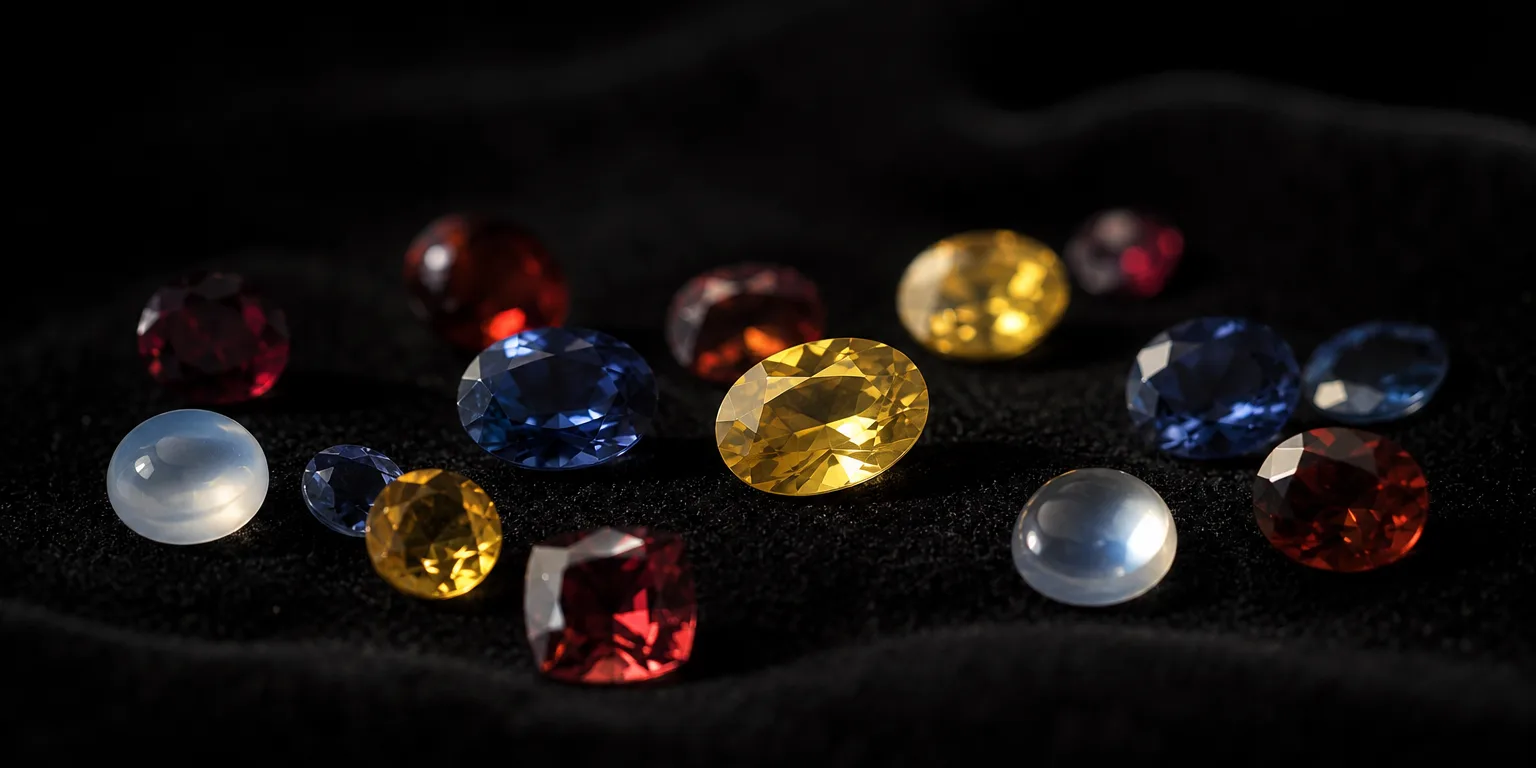
Sapphire is the mineral corundum; spinel is a separate mineral species. Both occur in Sri Lankan gem gravels, both come in fine blues and pinks, and to the eye they can look very similar. The differences are measurable: corundum is harder (Mohs 9 against 8), doubly refractive and pleochroic, while spinel is singly refractive and shows one colour from every direction. A gemmological laboratory separates them in minutes with standard instruments, which is why an unidentified 'sapphire' at a market stall should never be assumed to be one.
Stand at a dealing table in Ratnapura or Beruwala and you may be shown two blue stones of almost identical colour, one a sapphire and one a spinel. Both are natural, both are Sri Lankan, and both can be beautiful. They are nevertheless different minerals with different properties and, usually, very different prices. Knowing how they differ protects you in both directions: from paying a sapphire price for a spinel, and from dismissing a fine spinel that deserves attention on its own terms.
Two species, one confusion
Sapphire is the blue (and fancy-coloured) variety of corundum, crystalline aluminium oxide. Spinel is a separate species, a magnesium aluminium oxide, that grows in some of the same geological environments and weathers into the same gravels. Sri Lanka's gem fields produce both, which is precisely why the confusion is so old: for centuries, before mineralogy could separate them, large red spinels were treated as rubies and blue spinels passed as sapphires. Some celebrated historical "rubies" in royal collections were later identified as spinels once testing became possible.
The measurable differences
| Property | Sapphire (corundum) | Spinel |
|---|---|---|
| Mineral species | Corundum, Al₂O₃ | Spinel, MgAl₂O₄ |
| Crystal system | Trigonal | Cubic |
| Mohs hardness | 9 | 8 |
| Refraction | Doubly refractive | Singly refractive |
| Pleochroism | Yes (two colours by direction) | None |
| Typical blue cause | Trace iron and titanium | Trace elements, differing by stone |
| Common treatments | Heating very common; must be disclosed | Far less commonly treated |
The optical rows are the ones a laboratory reaches for first. Corundum splits light into two rays, so instruments read two refractive indices and a careful observer may see doubling effects; spinel, being cubic, shows a single index and a single colour from every direction. Pleochroism follows from the same physics: tilt a blue sapphire and its blue often shifts between violetish and greenish; a spinel's colour stays put.
Why the distinction matters at the counter
Price is the blunt reason. Fine blue sapphire generally trades far above blue spinel of comparable size and beauty, and the gap widens with quality. A stone offered as "sapphire" at a suspiciously friendly price deserves the obvious question. The subtler reason is disclosure culture: sapphire is very commonly heat treated, and treatment status drives its value, whereas spinel is usually untreated. The paperwork you should expect therefore differs too. An identification report naming the species is the minimum for any significant purchase; our guide to buying a loose sapphire covers what that report should contain.
None of this makes spinel the lesser stone in any absolute sense. Collectors prize fine spinels precisely because they are natural, usually untreated and increasingly appreciated. The problem is never the mineral; it is a stone sold under the wrong name.
How laboratories separate them
A gemmological laboratory does not rely on eye impressions. A refractometer reading distinguishes the two species quickly: two indices for corundum, one for spinel. A polariscope shows the same difference in another form, and magnification adds supporting evidence, since each species carries characteristic inclusion scenes. For mounted stones or difficult cases, laboratories add spectroscopy. The point for a buyer is simple: this is routine work, it is inexpensive relative to the price of a fine stone, and no honest seller objects to it.
In the Sri Lankan context
Both species come out of the same washing baskets, and Sri Lankan spinels, including blues, pinks and violets, appear alongside sapphires at every level of the trade. Dealers themselves usually know exactly which is which. The risk sits mostly with visitors who assume that anything blue from the island of sapphires must be one. Ask for the species in writing on the receipt, and for laboratory confirmation when the money matters. The habit costs little and settles the question that eyes alone have been getting wrong for several hundred years.
Frequently asked questions
Is spinel a fake sapphire?
No. Spinel is a natural gemstone species in its own right, with its own identity, history and market. A spinel only becomes a problem when it is sold as a sapphire. Synthetic spinel also exists and has historically been used to imitate other stones, which is one more reason to insist on laboratory identification for significant purchases.
Can a jeweller tell sapphire and spinel apart by eye?
An experienced dealer can often make a good guess from lustre, colour behaviour and inclusions, but eye opinions are not identification. Standard instruments answer the question definitively, so there is no reason to rely on a guess for a stone that costs real money.
Which is better for a ring, sapphire or spinel?
Both wear well. Sapphire's hardness of 9 gives it the edge for daily wear, but spinel at 8 is harder than most gems and suits rings with ordinary care. The better choice depends on the individual stone's quality and your budget rather than the species label.
Related terms
Sources
- GIA: Sapphire Description, Sapphire as a variety of corundum; colour causes
- Mindat: Corundum, Corundum mineral data and hardness reference
- International Gem Society (IGS), Consumer-level identification and value context for sapphire and spinel
External references are provided for verification. Listing a source does not imply affiliation or endorsement.
Seen something that needs correcting? Read how corrections work or contact the editorial team.
Related Guides
Sapphire Centre
What Is a Ceylon Sapphire?
What a Ceylon sapphire actually is, where Sri Lankan sapphires are mined, how laboratories assess origin and why the name alone never guarantees quality.
3 min read
Sapphire Centre
Natural vs Synthetic Sapphire: How Do They Differ?
The real differences between natural and synthetic sapphire, how lab-grown corundum is made, how gemmologists tell them apart and what each is worth.
3 min read
Sapphire Centre
What Colours Do Sapphires Come In?
A guide to the full range of sapphire colours, blue, yellow, pink, padparadscha and more, and how hue, tone and saturation shape beauty and value.
3 min read
Sapphire Centre
How Do You Buy a Loose Sapphire?
A practical process for buying a loose sapphire, examining the stone, questioning the seller, verifying claims and securing the right documents.
3 min read