Gold & Metals
What Does 750 Mean on Gold?
Why gold jewellery is stamped 750, how the mark equals 18-karat purity at 75% gold, where it appears on fine and gem-set pieces, and how to verify it.
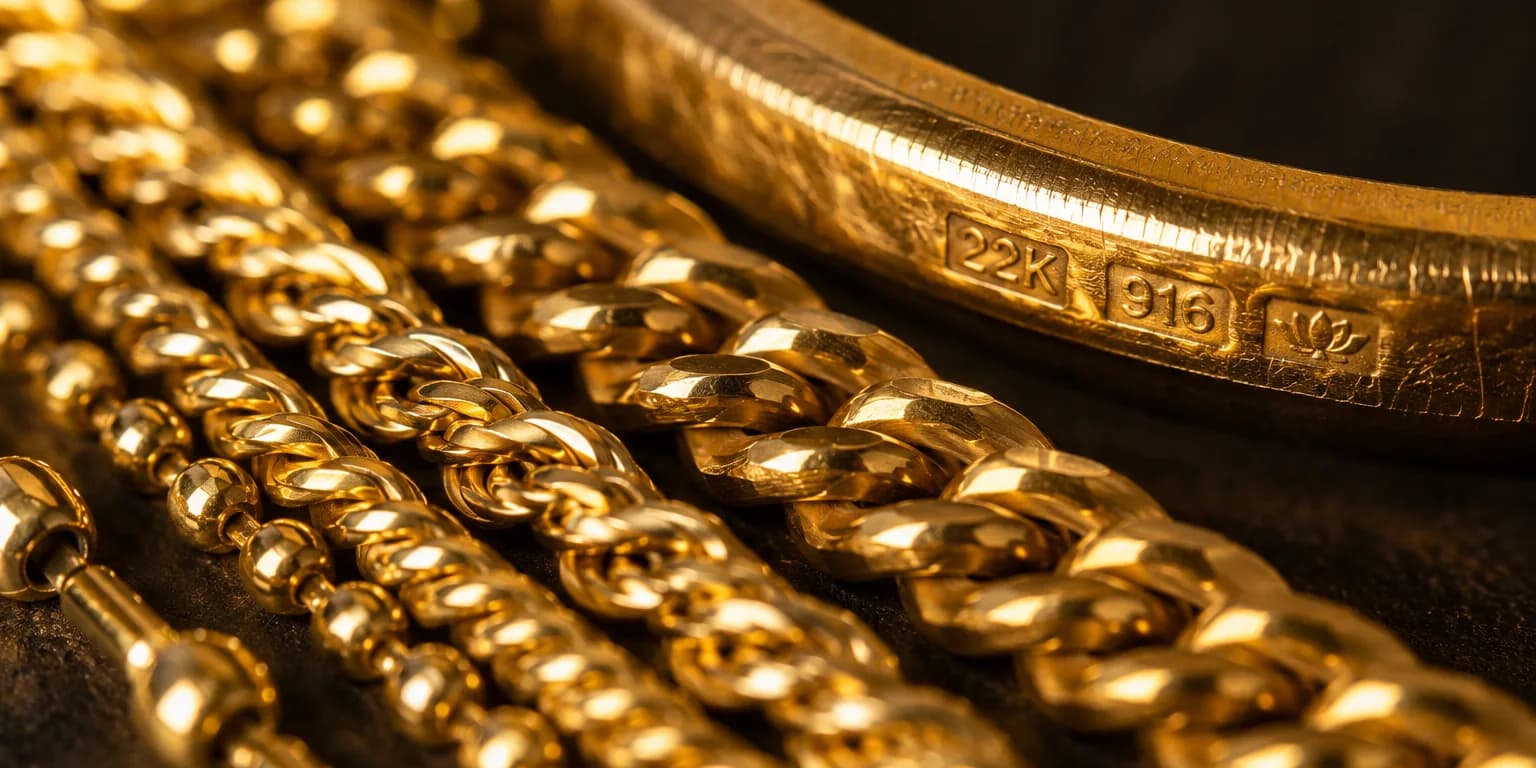
A 750 stamp means the metal is claimed to be 750 parts gold per thousand, exactly 75% pure, which is 18 karat. It is the standard mark on fine gem-set, white gold and rose gold jewellery worldwide. Like any purity stamp it is a claim rather than a certification, so ask for the fineness in writing and test important pieces.
The 750 mark is the international signature of fine jewellery. Inside the shank of a sapphire ring, on the clasp of a designer necklace or the back of a rose gold watch case, those three digits make the same claim everywhere in the world: this metal is 18-karat gold.
The Arithmetic Behind 750
Purity in the modern trade is written as fineness, parts of gold per thousand parts of metal. Eighteen karat means 18/24ths gold, and 18 ÷ 24 = 0.75 exactly. So 18K gold is 750 parts per thousand, or 75% pure, and "750" is stamped rather than "18K" in most of the world. The two notations are interchangeable; the conversion for every grade appears in our karat versus fineness guide.
Why 750 Appears on Fine Jewellery
18K is the purity at which gold becomes strong enough for precision work while remaining three-quarters pure. Slim prongs hold sapphires securely, hinges and clasps keep their spring, and engraving stays crisp, which is why gem-set jewellery, including most of Sri Lanka's export sapphire work, is made in 18K gold. The mark therefore appears most often on exactly the pieces where a buyer has the most at stake.
One Mark, Three Colours
A 750 stamp says nothing about colour. Yellow, white and rose gold at 18K all carry the same mark, because fineness measures gold content, not appearance. The remaining 25% of the alloy is what differs: whitening metals such as palladium in white gold, copper-rich mixes in rose gold. Rhodium plating on white gold sits on top of the alloy and does not affect the fineness claim.
A Claim, Not a Guarantee
As with the 916 mark on traditional jewellery, a 750 punch is applied by the maker and certifies nothing by itself. Some countries operate independent hallmarking systems in which an assay office verifies fineness before marking; elsewhere, including in much day-to-day practice, the stamp stands alone. Marking practices vary between makers and markets, so the reliable protections are the same everywhere: a reputable seller, the fineness written on the invoice, and for significant pieces an independent test or assay report.
Checking and Valuing 750 Gold
XRF machines read an 18K alloy in seconds without damage, and touchstone or acid tests remain common at the counter, see our overview of gold testing. On value, remember the metal is 75% gold: a 750 piece's melt value is three-quarters of the pure-gold rate for its weight, which you can check against the day's figures using the gold purity calculator. The rest of the price lies in making and stones, worth paying for, but worth seeing itemised on the invoice, line by line, before you commit to a significant purchase.
Frequently asked questions
Is 750 gold the same as 18K gold?
Yes. 750 parts per thousand equals 18 parts out of 24, both notations describe metal that is exactly 75% pure gold.
My white gold ring is stamped 750, is that still gold?
Yes. White gold is a genuine gold alloy whose added metals whiten the colour, usually finished with rhodium plating. A 750 stamp on white gold claims the same 75% gold content as on yellow gold.
Is 750 gold worth less than 916 gold?
Per gram of metal, yes, 75% gold content against 91.6%. But finished 18K pieces often carry more value in workmanship and stones, so the invoice price reflects far more than melt value.
Can a 750 stamp be faked?
Yes, as with any punch mark. Buy from reputable sellers, insist the fineness is written on the invoice, and use XRF or assay testing for significant purchases.
Related terms
Sources
- CIBJO, The World Jewellery Confederation, Fineness notation and marking conventions for precious metals
- International Gem Society (IGS), Educational material on gold purity and alloy marks
External references are provided for verification. Listing a source does not imply affiliation or endorsement.
Seen something that needs correcting? Read how corrections work or contact the editorial team.
Related Guides
Gold & Metals
What Is 18K Gold?
What 18K gold is, why its 750 fineness means 75% pure gold, and why it is the preferred purity for gem-set, white and rose gold jewellery worldwide.
2 min read
Gold & Metals
What Does 916 Mean on Gold?
Why gold is stamped 916, how the number equals 22-karat purity at 91.6% gold, where the mark appears, and why a stamp alone is not proof of fineness.
2 min read
Gold & Metals
What Are Gold Hallmarks and How Do You Read Them?
What gold hallmarks are, how independent assay marks differ from a maker's purity stamp, how regimes vary by country, and what Sri Lankan buyers should check.
2 min read
Gold & Metals
What Is White Gold?
What white gold is made of, why it is usually rhodium-plated, how it compares with platinum and silver, and what maintenance owners should expect over time.
2 min read