Gold & Metals
What Is 18K Gold?
What 18K gold is, why its 750 fineness means 75% pure gold, and why it is the preferred purity for gem-set, white and rose gold jewellery worldwide.
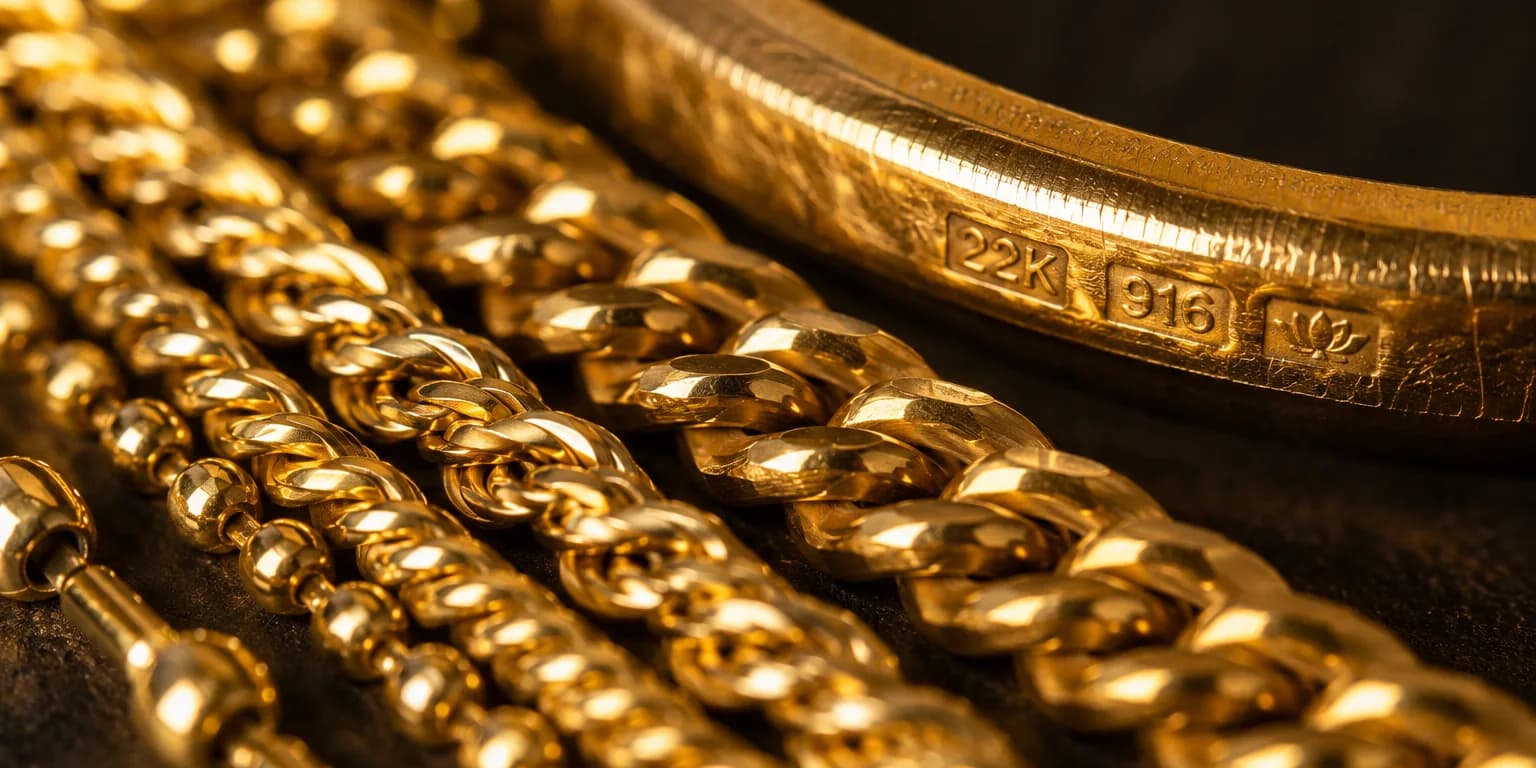
18K gold contains 18 parts gold out of 24, a fineness of 750, or 75% pure gold, with the remaining quarter made of alloying metals. Its extra hardness makes it the international standard for fine gem-set jewellery, and it is the usual base for white gold and rose gold, where the alloy metals create the colour.
If 22K is the gold of South Asian tradition, 18K is the gold of the international fine-jewellery bench. It is the purity in which most serious gem-set jewellery is made, including the sapphire rings for which Sri Lanka is famous, and the foundation of nearly all white and rose gold.
What 18K Means
18K gold contains 18 parts gold out of 24 on the karat scale. Expressed as fineness, that is 750 parts per thousand, exactly 75% gold, which is why 18K jewellery is stamped "750". The remaining 25% is a designed alloy of metals such as copper, silver, zinc, nickel or palladium, chosen for strength and colour. Our companion piece on what 750 means looks at the stamp itself.
| Karat | Fineness mark | Gold content |
|---|---|---|
| 24K | 999 | ~99.9% |
| 22K | 916 | 91.6% |
| 21K | 875 | 87.5% |
| 18K | 750 | 75.0% |
| 14K | 585 | 58.5% |
Why Gem-Set Jewellery Prefers 18K
Setting a valuable stone is an engineering problem: slender claws, bezels and channels must grip the gem through years of knocks. 18K's alloy content makes it markedly harder than 22K, so settings keep their shape and tension. That security is why workshops in Sri Lanka producing sapphire jewellery for export work predominantly in 18K, even in a market where plain gold means 22K.
The Base of White and Rose Gold
The 25% alloy allowance is also a palette. Whitening metals such as palladium or nickel produce white gold, usually finished with rhodium plating; a copper-rich mix produces the warm blush of rose gold. High-purity 22K leaves too little alloy room to shift the colour convincingly, so coloured golds are almost always 18K or 14K.
18K and Value
Per gram, 18K metal value is 75% of the pure-gold price per gram. Finished 18K pieces, however, often cost more than heavier 22K items because precision setting and finishing carry substantial making charges, value that lies in workmanship and stones rather than metal weight. Understand the split before buying: our jewellery price calculator separates metal value from charges.
Buying 18K with Confidence
Check for the 750 stamp, but treat it as a claim to verify rather than proof. Ask for the karat and fineness in writing on the invoice, and for significant purchases consider independent gold testing. If the piece is gem-set, the stone deserves its own documentation, see our guide to buying jewellery in Sri Lanka for the full checklist.
Frequently asked questions
Is 18K gold good quality?
Yes. 18K is the standard for fine jewellery internationally, offering high gold content with the strength needed for secure gem settings and lasting detail. Lower karat does not mean lower workmanship.
Why are sapphire rings usually 18K rather than 22K?
Because 18K is significantly harder. Prongs and bezels in 18K grip stones securely for decades, whereas softer 22K settings can loosen, putting a valuable stone at risk.
Does 18K gold tarnish or fade?
18K yellow gold does not tarnish in normal wear. Rhodium-plated 18K white gold can gradually reveal a warmer tone as the plating wears, which is restored by re-plating.
Is 18K gold a worse store of value than 22K?
Per gram it contains less gold, so its melt value is lower, and finely made pieces carry making costs that are not recovered at resale. Buyers holding gold primarily as metal usually prefer 22K or 24K; this is general information, not financial advice.
Related terms
Sources
- CIBJO, The World Jewellery Confederation, Fineness standards for precious metal alloys
- International Gem Society (IGS), Educational material on gold alloys used in gem setting
External references are provided for verification. Listing a source does not imply affiliation or endorsement.
Seen something that needs correcting? Read how corrections work or contact the editorial team.
Related Guides
Gold & Metals
What Does 750 Mean on Gold?
Why gold jewellery is stamped 750, how the mark equals 18-karat purity at 75% gold, where it appears on fine and gem-set pieces, and how to verify it.
2 min read
Gold & Metals
What Is White Gold?
What white gold is made of, why it is usually rhodium-plated, how it compares with platinum and silver, and what maintenance owners should expect over time.
2 min read
Gold & Metals
What Is Rose Gold?
What gives rose gold its pink colour, how copper content shapes its shades and durability, and what buyers should know about karat, wear and care.
2 min read
Gold & Metals
22K Gold in Sri Lanka: 916 Purity and Why It Dominates
What 22K gold is, why its 916 fineness makes it 91.6% pure, and why it is the standard purity for traditional jewellery across Sri Lanka and South Asia.
2 min read