Certificates
What Is an Assay Report and When Do You Need One?
How assaying establishes the precious-metal content of gold and silver, what an assay report states, and how it relates to hallmarks and fineness marks.
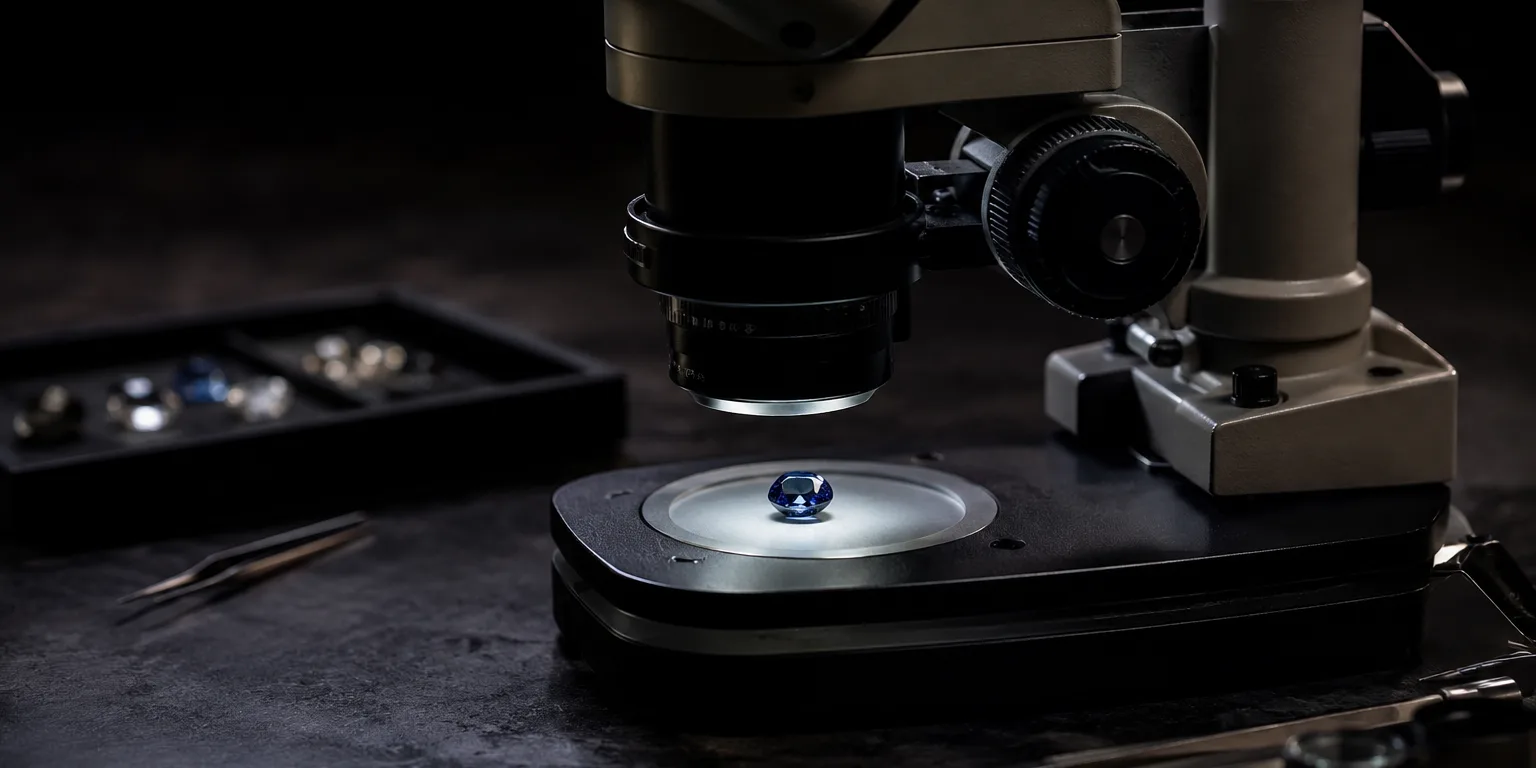
An assay report records the results of testing a metal object to determine its precious-metal content, expressed as fineness in parts per thousand or as karat. Assaying is how a claim such as 22 karat or 916 is verified rather than assumed, and it underpins hallmarking systems wherever they operate.
Gold jewellery is sold on a number, 22 karat, 916, 750. Yet purity cannot be seen. Two bangles of identical colour and weight can differ meaningfully in gold content, and nothing about their appearance will tell you. Assaying is how the trade replaces assumption with measurement, and the assay report is the record of that measurement.
What Assaying Means
An assay is an analytical test that determines the precious-metal content of an alloy. For gold, the result is expressed as fineness, parts of gold per thousand parts of alloy, or converted into karat. Gold of 916 fineness is 91.6 per cent gold, the familiar 22 karat of South Asian jewellery; 750 corresponds to 18 karat; sterling silver is 925.
The essential point is the difference between a claim and a finding. A stamp reading 916 is a claim. An assay result of 916 is a finding.
How Metals Are Tested
Several methods coexist, chosen to balance accuracy against damage to the piece:
| Method | Character |
|---|---|
| Touchstone | Traditional streak test; quick, approximate, near-non-destructive |
| X-ray fluorescence (XRF) | Modern instrument reading of surface composition; non-destructive |
| Fire assay | The long-standing high-accuracy method; destructive, so used for bullion and samples |
XRF has become the everyday workhorse for finished jewellery because it is fast and leaves the piece untouched, though as a surface technique it has known limits, plated items can mislead it. The practical side of getting gold tested is covered in our guide to gold testing.
What an Assay Report States
A typical assay report identifies the item tested, the method used, the date, and the measured composition, chiefly the fineness of the precious metal. Like a gem report, it describes a specific object on a specific date, and it is silent on everything else: workmanship, gemstones and market value all sit outside its scope.
For a stone-set piece, that means three separate questions need three separate documents: the metal (assay), the stones (identification report) and the insured value (valuation).
Assay and Hallmarking
Formal hallmarking systems are built on assay: in jurisdictions that operate them, an independent office tests the metal and then strikes marks attesting to its fineness. A hallmark in such a system is therefore an assay made visible. Where no compulsory system operates, purity stamps are applied by makers and sellers themselves, and independent testing is the buyer's substitute. How the marks work, and how to read them, is the subject of our guides to hallmarking and gold hallmarks.
When to Seek an Assay
Independent testing earns its keep whenever much rests on purity: substantial gold purchases, second-hand or inherited pieces with unverified stamps, and any transaction where the price is calculated from metal weight and fineness. Ask the seller whether the piece has been independently tested, and where. A seller confident in their gold has no reason to resist a test, and verify current practice with the testing provider, since services and methods vary.
Frequently asked questions
What does an assay actually measure?
The proportion of precious metal in an alloy, for gold, how much of the piece is actually gold, expressed as fineness in parts per thousand or converted to karat. It measures composition, not craftsmanship or value.
Is the 916 stamp inside my jewellery proof of purity?
The stamp is the maker's or seller's claim of 916 fineness (22 karat). In jurisdictions with formal hallmarking, marks are applied after independent assay; elsewhere a stamp may be applied without independent testing. An assay verifies the claim.
Does assaying damage jewellery?
Common modern methods such as X-ray fluorescence are non-destructive surface tests. Traditional fire assay is highly accurate but destructive, so it is used for bullion and samples rather than finished jewellery. Touchstone testing removes only a trace of metal.
Does an assay report cover the gemstones in a piece?
No. Assaying concerns the metal alone. Stones need their own laboratory identification, and the piece as a whole may separately need a valuation for insurance.
Related terms
Sources
- National Gem and Jewellery Authority of Sri Lanka (NGJA), Public-body context for gem and jewellery trade standards in Sri Lanka, reference only, no affiliation
- CIBJO, The World Jewellery Confederation, Precious-metal terminology and disclosure standards, reference only, no affiliation
External references are provided for verification. Listing a source does not imply affiliation or endorsement.
Seen something that needs correcting? Read how corrections work or contact the editorial team.
Related Guides
Certificates
What Is Hallmarking and What Do the Marks on Gold Mean?
How hallmarking attests to precious-metal fineness, what common marks mean, why practice differs between countries, and what to check when buying in Sri Lanka.
2 min read
Certificates
What Is a Jewellery Valuation and What Is It Actually For?
What a jewellery valuation covers, how it differs from a laboratory identification report, and why insurance replacement value is not the same as resale value.
2 min read
Gold & Metals
How Is Gold Tested? XRF, Touchstone, Acid and Fire Assay
The four main ways gold purity is tested, XRF, touchstone, acid and fire assay, what each can and cannot tell you, and when a buyer should insist on a test.
2 min read
Gold & Metals
What Are Gold Hallmarks and How Do You Read Them?
What gold hallmarks are, how independent assay marks differ from a maker's purity stamp, how regimes vary by country, and what Sri Lankan buyers should check.
2 min read