Gold & Metals
Gold Karat vs Fineness: What Is the Difference?
Karat and fineness are two ways of writing the same gold purity. How the 24-part karat scale maps to parts-per-thousand fineness, with a full conversion table.
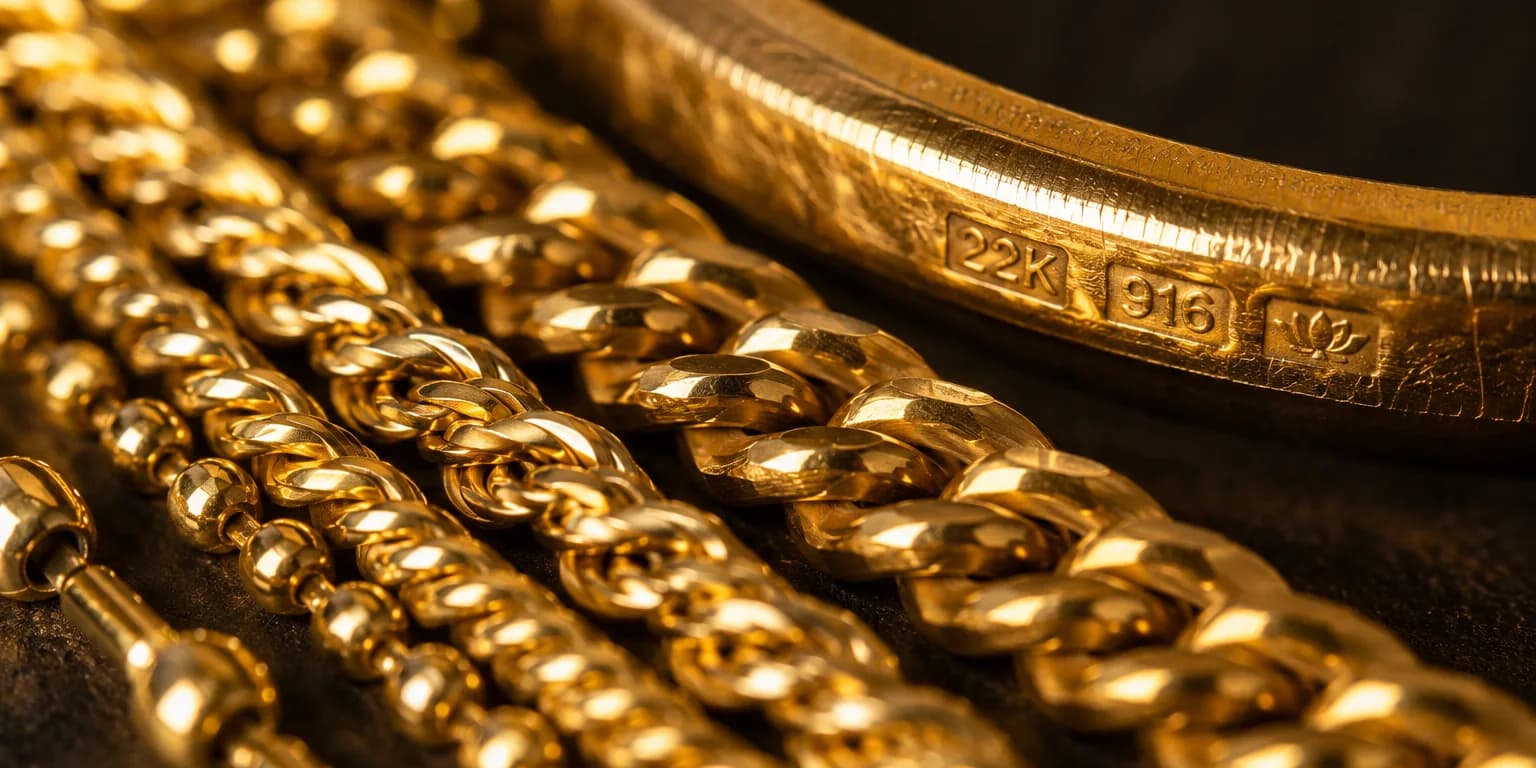
Karat and fineness both measure gold purity, in different units. Karat divides purity into 24 parts, so 22K means 22/24ths gold; fineness expresses it in parts per thousand, so the same metal is 916. Converting is simple arithmetic, karat divided by 24, multiplied by 1,000, and the fineness number is what is stamped on most modern jewellery.
Gold purity has two languages. A Sri Lankan jeweller will tell you a bangle is "22 karat"; the stamp inside it reads "916". Both statements describe exactly the same metal. Knowing how the two systems map onto each other is one of the most useful pieces of arithmetic a gold buyer can carry.
The Karat Scale
The karat system is the older of the two, dividing purity into 24 parts. Pure gold is 24K; an alloy that is half gold would be 12K. The scale's origin lies in medieval weighing conventions, and it survives because it is easy to say and remember. Its weakness is coarseness, one karat step is a jump of over 4% in gold content, and the potential for confusion with "carat", the gemstone weight unit.
The Fineness Scale
Fineness expresses purity in parts per thousand. Pure gold is 999 (in practice never quite 1,000, as trace impurities remain); metal that is three-quarters gold is 750. Because it is precise and unambiguous, fineness is the language of refiners, assay offices and hallmarking systems, and it is what gets stamped on most modern jewellery.
Converting Between the Two
The conversion is one line of arithmetic: fineness = karat ÷ 24 × 1,000. Here is the full table for the grades you will actually meet:
| Karat | Fineness | Gold content |
|---|---|---|
| 24K | 999 | ~99.9% |
| 22K | 916 | 91.6% |
| 21K | 875 | 87.5% |
| 18K | 750 | 75.0% |
| 14K | 585 | 58.5% |
| 10K | 417 | 41.7% |
| 9K | 375 | 37.5% |
Two rounding quirks are worth knowing: 22K works out at 91.66%, stamped 916 by South Asian convention, and 14K at 58.33% is stamped 585 by long-standing European practice. Our gold purity calculator handles the conversion for any value.
What You See on Real Jewellery
Traditional Sri Lankan pieces carry 916, reflecting the local 22K standard; international fine jewellery carries 750, the mark of 18K; Western high-street gold is often 585. Karat markings such as "18K" appear too, mainly on pieces made for the North American market. Whichever notation is stamped, remember that a mark is the maker's claim, verification comes from gold testing, and protection comes from having the fineness written on the invoice.
Why the Distinction Matters at the Counter
Price is calculated from fineness, not from appearance. A quotation should state the weight, the fineness and the rate applied, three numbers that let you check the metal value yourself before making charges are added. If a seller quotes "22K" but the stamp or test says 875, that 4% difference is real money on any substantial piece.
Frequently asked questions
Are karat and carat the same thing?
No. Karat (K) measures gold purity on a 24-part scale, while carat (ct) is a unit of gemstone weight equal to 0.2 grams. British English sometimes spells both 'carat', so context matters.
Why is 22K stamped 916 and not 917?
22 ÷ 24 gives 91.66...%, and trade convention rounds the stamp down to 916. Some national standards list 917; South Asian practice uses 916.
Which is more accurate, karat or fineness?
Fineness is the finer-grained scale because it uses steps of one part per thousand, which is why laboratories, refiners and hallmarking systems work in fineness. Karat survives as convenient shorthand.
Does higher fineness always mean a better piece of jewellery?
No, it means more gold per gram, nothing more. Durability, workmanship and stone quality are separate qualities; fine gem-set jewellery is deliberately made at 750 rather than 916 or 999.
Related terms
Sources
- CIBJO, The World Jewellery Confederation, International standards for expressing precious metal fineness
- International Gem Society (IGS), Educational material on karat and fineness systems
- British Hallmarking Council: Guidance on Fineness, Official karat-fineness equivalence table
External references are provided for verification. Listing a source does not imply affiliation or endorsement.
Seen something that needs correcting? Read how corrections work or contact the editorial team.
Related Guides
Gold & Metals
What Does 916 Mean on Gold?
Why gold is stamped 916, how the number equals 22-karat purity at 91.6% gold, where the mark appears, and why a stamp alone is not proof of fineness.
2 min read
Gold & Metals
What Does 750 Mean on Gold?
Why gold jewellery is stamped 750, how the mark equals 18-karat purity at 75% gold, where it appears on fine and gem-set pieces, and how to verify it.
2 min read
Gold & Metals
22K Gold in Sri Lanka: 916 Purity and Why It Dominates
What 22K gold is, why its 916 fineness makes it 91.6% pure, and why it is the standard purity for traditional jewellery across Sri Lanka and South Asia.
2 min read
Gold & Metals
How Is Gold Tested? XRF, Touchstone, Acid and Fire Assay
The four main ways gold purity is tested, XRF, touchstone, acid and fire assay, what each can and cannot tell you, and when a buyer should insist on a test.
2 min read