Gold & Metals
What Is Rose Gold?
What gives rose gold its pink colour, how copper content shapes its shades and durability, and what buyers should know about karat, wear and care.
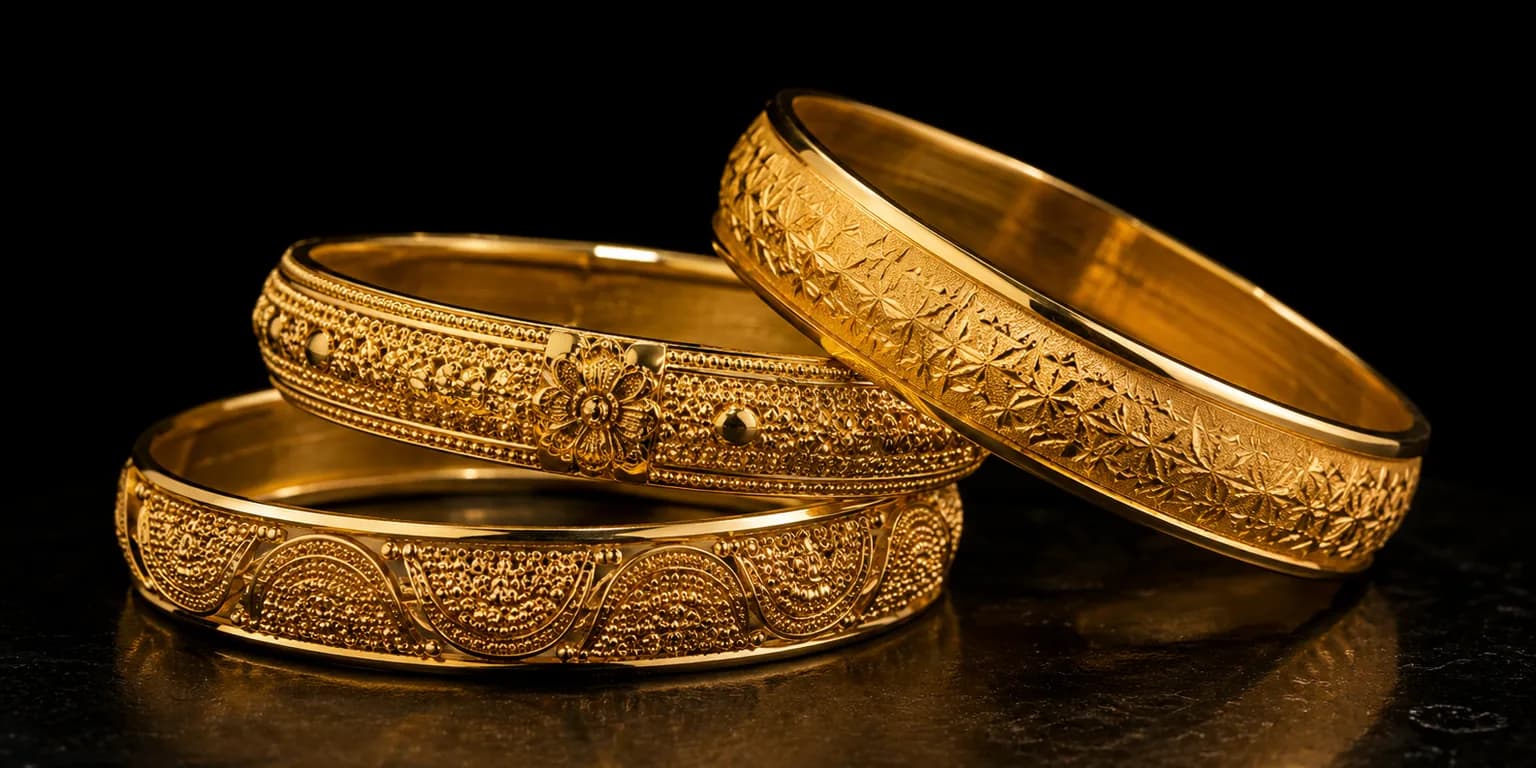
Rose gold is a gold alloy whose pink colour comes from a high proportion of copper in the alloying metals. More copper deepens the blush, from soft pink to reddish tones, while a little silver softens it. Fineness is unchanged by colour: 18K rose gold is 750 and contains 75% gold. The colour runs through the metal, so it never wears off.
Rose gold is the romantic of the gold family, a warm, flattering blush that has swung in and out of fashion since Russian jewellers made it famous in the nineteenth century, earning it the old name "Russian gold". Its recent revival has put it on everything from engagement rings to watch cases, and it hides an appealing secret: of all the coloured golds, it is the most honest. The colour is the metal itself.
Where the Colour Comes From
Gold's karat fixes how much of an alloy must be gold; the remainder is the jeweller's palette. In rose gold, that remainder is dominated by copper, whose redness pulls the alloy from yellow toward pink. An 18K rose gold is typically three-quarters gold with the balance mostly copper and a little silver; shift the copper-silver ratio and the shade moves with it. More silver gives delicate pink; more copper gives the assertive red gold of Eastern European tradition.
Crucially, this happens in the melt. There is no plating, coating or surface treatment, cut a rose gold ring in half and it is pink all the way through.
Karat and Value
Colour and purity are independent. Rose gold is stamped with the same fineness numbers as any gold: 750 for 18K, 585 for 14K, as set out in our karat versus fineness guide. At equal karat and weight, rose gold contains precisely the same gold as yellow or white, copper is cheap, so the blush adds no metal value and costs none. Very high karats resist the colour: 22K leaves too little alloy room for a convincing rose, which is why rose gold lives mainly at 18K and 14K.
How Rose Gold Wears
Copper is a hardening metal, so rose gold runs slightly harder than yellow gold of the same karat, a genuine advantage in rings and bracelets that meet the world edge-first. Unlike white gold, it needs no rhodium plating and therefore no re-plating; its maintenance is ordinary cleaning. Over decades, copper-rich alloys may deepen very slightly in tone, a patina most owners embrace.
Rose Gold and Gemstones
The warm metal flatters warm and pink stones: padparadscha and pink sapphires, morganite, and brown diamonds all sit naturally in rose settings, and the contrast makes white stones read crisp rather than cold. Sri Lankan pink sapphires in rose gold have become a signature pairing in export jewellery.
Buying Rose Gold Sensibly
The rules are the standard gold rules. Check the fineness stamp, have karat and weight written on the invoice, and remember shade names are marketing while fineness is fact. For significant pieces, independent gold testing verifies the claim in seconds, the blush may be poetry, but the purity is arithmetic.
Frequently asked questions
Does rose gold fade or wear off?
No. The colour comes from copper mixed through the entire alloy, not from a surface layer, so it cannot wear off. Over many years copper-rich alloys can develop a subtly deeper patina, which many owners consider part of the charm.
Is rose gold worth less than yellow gold?
Not at equal karat and weight. An 18K rose gold piece contains 75% gold exactly as a yellow one does, and its melt value follows fineness and weight. Copper is inexpensive, so the colour itself carries no metal premium.
Is rose gold good for sensitive skin?
Usually. Rose gold alloys are typically nickel-free, relying on copper and silver, so they trouble fewer wearers than nickel-whitened white gold. True copper sensitivity exists but is uncommon.
What is the difference between rose, pink and red gold?
They are points on the same scale of copper content: pink gold has the least copper, red gold the most, with rose gold between. The terms are descriptive rather than standardised, so judge the actual colour rather than the label.
Related terms
Sources
- CIBJO, The World Jewellery Confederation, Standards for describing gold alloys
- International Gem Society (IGS), Educational material on coloured gold alloys
External references are provided for verification. Listing a source does not imply affiliation or endorsement.
Seen something that needs correcting? Read how corrections work or contact the editorial team.
Related Guides
Gold & Metals
What Is White Gold?
What white gold is made of, why it is usually rhodium-plated, how it compares with platinum and silver, and what maintenance owners should expect over time.
2 min read
Gold & Metals
What Is 18K Gold?
What 18K gold is, why its 750 fineness means 75% pure gold, and why it is the preferred purity for gem-set, white and rose gold jewellery worldwide.
2 min read
Gold & Metals
What Is 14K Gold?
What 14K gold is, why its 585 fineness equals 58.5% pure gold, where this durable purity dominates, and how it compares with 18K and 22K jewellery.
2 min read
Gold & Metals
Gold Karat vs Fineness: What Is the Difference?
Karat and fineness are two ways of writing the same gold purity. How the 24-part karat scale maps to parts-per-thousand fineness, with a full conversion table.
2 min read