Certificates
What Are Gem Certificates and What Do They Actually Tell You?
An overview of gemstone laboratory reports, what identification, origin and treatment documents cover, what they cannot guarantee, and why they matter.
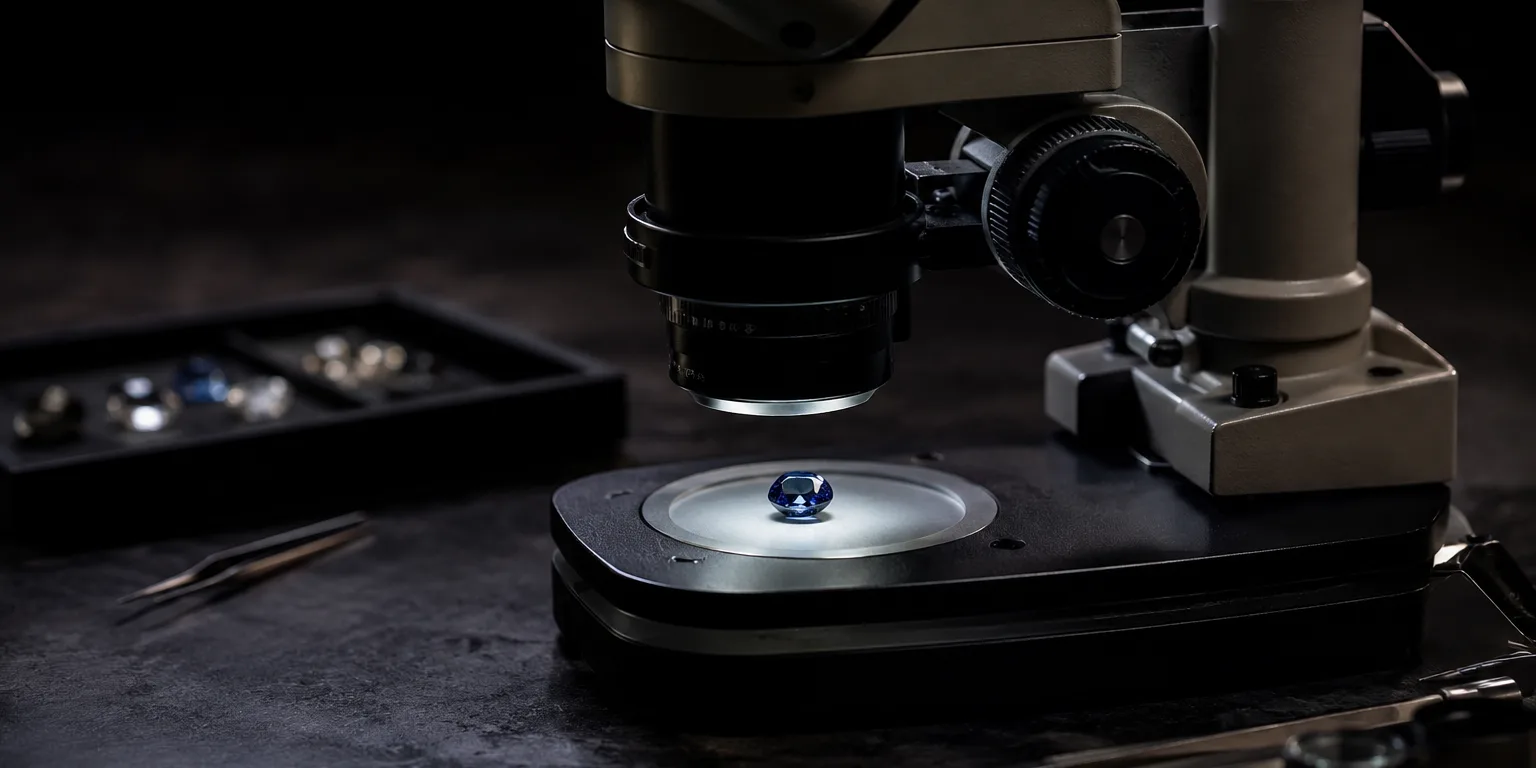
A gem certificate, more accurately called a laboratory report, is an independent gemmological laboratory's written findings on a specific stone. It typically states what the stone is, whether it is natural or synthetic, and which treatments were detected. It is an expert opinion on identity and treatment, not a guarantee of value or a fixed price.
Ask a seller in any gem market for proof of what they are selling and you will be shown a "certificate". The word suggests a guarantee. What the document actually is, and what it can and cannot tell you, is more precise, and understanding that precision is the foundation of buying gemstones safely.
A Report, Not a Guarantee
Gemmological laboratories examine stones and record their findings in a written document. Most laboratories deliberately call this a report rather than a certificate, because it presents the conclusions of scientific testing rather than a warranty. The document typically answers three questions: what the stone is, whether it is natural or synthetic, and which treatments were detected.
Everything else, the price, the beauty of the stone, whether it suits its setting, remains a matter for the market and the buyer. A gem report is powerful precisely because its scope is narrow and its findings are testable.
What a Typical Report States
Although layouts differ between laboratories, the substance is broadly consistent. A report identifies the species and variety (for example, that a blue stone is corundum, variety sapphire), records the weight, measurements, shape and colour, and states whether the stone is natural, synthetic or an imitation. It then discloses any treatments detected, such as heating.
For a field-by-field explanation, see our guide to reading a gem report, or work through a document interactively with the certificate explainer.
The Main Types of Document
Buyers encounter several distinct documents that are often lumped together as "certificates":
| Document | Core question it answers |
|---|---|
| Identification report | What is this stone, and is it natural? |
| Origin report | Where does the laboratory believe it formed? |
| Treatment findings | Has the stone been treated, and how? |
| Jewellery valuation | What figure should insurance use? |
| Assay report | What is the precious-metal content? |
Each answers a different question, and none substitutes for another. A valuation, in particular, is not an identification document, a distinction explained in our guide to jewellery valuations.
What a Report Cannot Tell You
A laboratory report does not state market value, does not grade beauty, and does not promise that a stone is a good purchase at any particular price. Nor does it follow the stone through time: a report describes the stone as examined on a given date.
Origin conclusions deserve special mention. They are expert opinions built from inclusions and chemistry, not certainties, which is why laboratories phrase them carefully.
Making a Report Work for You
A report protects you only if it belongs to the stone in front of you. Compare the stated weight and measurements against the actual stone, ideally weighed in your presence. Many laboratories also offer online report-number lookup, described in our guide to verifying a laboratory report.
Finally, prefer reports from laboratories independent of the seller. A document produced or arranged solely by the person selling the stone is disclosure, not independent confirmation.
Where to Go Next
If you are buying in Sri Lanka, read this section alongside our practical guide to checking a gem certificate before purchase. For high-value stones, consider when a second opinion is worthwhile, a modest additional step that resolves most documentary doubts before money changes hands.
Frequently asked questions
Is a gem certificate a guarantee of value?
No. A laboratory report is an expert opinion on a stone's identity, treatment status and sometimes origin. It says nothing about price. Two stones with identical reports can differ substantially in beauty and market value.
What is the difference between a certificate and a report?
In careful trade usage there is no meaningful difference in the document itself, but laboratories generally prefer the word report because it describes findings rather than promising or certifying anything. 'Certificate' is the everyday word; 'report' is the accurate one.
Do all gemstones need a laboratory report?
No. For inexpensive stones the cost of testing may not be justified. For significant purchases, and for any stone sold with claims about origin or the absence of treatment, an independent report is the standard protection.
Can a laboratory report be wrong?
Laboratory conclusions are expert opinions based on scientific testing, and reputable laboratories are highly reliable on identity. Opinions on origin are inherently harder and are expressed as opinions. Where much depends on a single conclusion, a second opinion from another respected laboratory is reasonable.
Related terms
Sources
- Gemological Institute of America (GIA), General description of gemmological report types, reference only, no affiliation
- SSEF, Swiss Gemmological Institute, General description of coloured-stone testing services, reference only, no affiliation
- CIBJO, The World Jewellery Confederation, Trade terminology and disclosure standards, reference only, no affiliation
- CIBJO: The Blue Books, Nomenclature and disclosure standards
- NGJA: Gem Testing Laboratory, The Sri Lankan state gem testing laboratory and certificate verification
External references are provided for verification. Listing a source does not imply affiliation or endorsement.
Seen something that needs correcting? Read how corrections work or contact the editorial team.
Related Guides
Certificates
How Do You Read a Gem Report, Field by Field?
A field-by-field walkthrough of a generic laboratory report, report number, species, variety, weight, measurements, colour, treatment comments and origin.
3 min read
Certificates
What Does a Gem Identification Report Actually Determine?
What a gem identification report establishes, species, variety, natural or synthetic status and detected treatments, and why it is the baseline document.
2 min read
Certificates
What Is a Gemstone Origin Report and How Reliable Is It?
How laboratories form geographic origin opinions for gemstones, why the conclusion is an opinion rather than a certainty, and what origin adds to value.
2 min read
Buying Guides
How Do You Check a Gem Certificate Is Genuine?
How to check a gem certificate, matching the report to the stone, verifying it with the issuing laboratory, and spotting altered or invented documents.
3 min read