Buying Guides
How Do You Check a Gem Certificate Is Genuine?
How to check a gem certificate, matching the report to the stone, verifying it with the issuing laboratory, and spotting altered or invented documents.
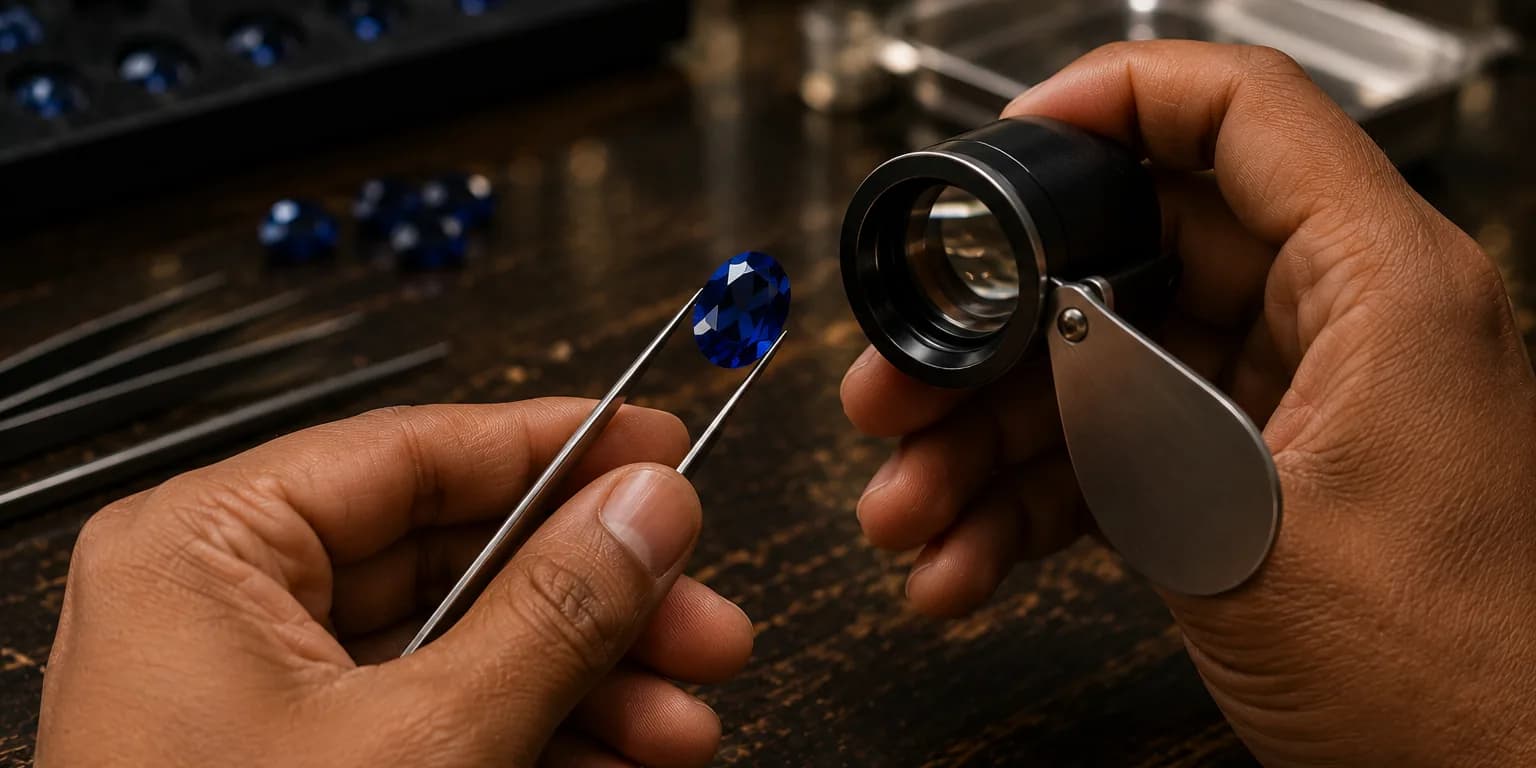
To check a gem certificate, confirm the issuing laboratory actually exists and is independent of the seller, verify the report number directly through the laboratory's own verification service, match the stated weight, measurements and description to the stone in front of you, and treat any mismatch, vagueness or verification failure as a reason to stop.
A laboratory report is the document that turns a seller's claims into something checkable, which is exactly why dishonest sellers produce impressive-looking certificates of their own. Checking a certificate takes a few minutes and requires no gemmological training. This guide covers the sequence.
First, Understand What the Document Is
A gem report from an independent laboratory identifies the material, states whether it is natural or synthetic, and discloses detected treatments; some reports add an origin opinion. It is not a valuation and not a guarantee of price. If you have not read one before, start with our field-by-field guide to reading a gem report, then come back to the checking sequence below.
Check the Laboratory Before the Paper
The first question is not "does this document look genuine?" but "does this laboratory exist, and is it independent of the seller?" Search for the laboratory yourself rather than relying on the address, website or QR code printed on the certificate, a fabricated document can carry a fabricated web address, and a QR code can lead anywhere its printer chose.
Be more cautious, not less, when the certificate comes from an in-house laboratory or one with visible commercial ties to the seller. Independence is the point of the exercise.
Verify the Report Number
Established laboratories provide a verification service, typically an online report check where you enter the report number and see the recorded details. Use it, and use it through the laboratory's own website as you found it independently. If the number returns nothing, returns different details, or the laboratory offers no way to verify at all, stop and reassess.
Match the Report to the Stone
A genuine report is worthless to you if it describes a different stone. Check, in order: the carat weight (ask for the stone to be weighed in front of you), the measurements in millimetres, the shape and cutting style, and the colour description. Where the report includes a photograph, compare it with the stone's outline and proportions rather than its colour, which printing renders unreliably.
Small discrepancies deserve an explanation rather than a shrug; a recut stone, for instance, will no longer match its old report and should be treated as an uncertified stone until re-examined.
Pairing a real certificate with a similar lesser stone is a recognised trick, described with other document games in fake or altered certificates.
Read the Actual Findings
Buyers sometimes verify a certificate is genuine and never read what it says. Check the identity line says what the seller says. Check the treatment line, "evidence of heating" on the report does not support an "unheated" price at the counter. If origin justifies part of the price, confirm the document actually contains an origin report opinion rather than a country name printed decoratively. Our Certificate Explainer translates common report phrases into plain language.
When to Get a Second Opinion
If anything fails, the laboratory cannot be verified, the number does not check out, the stone does not match, or the findings contradict the sales claims, do not negotiate around it. For high-value stones, or whenever a report is old, damaged or from an unfamiliar laboratory, an independent re-test is cheap relative to the risk; our guide to when to get a second opinion covers how. The broader warning signs around documentation are listed in red flags when buying gemstones.
Frequently asked questions
How do I verify a gem certificate is real?
Look up the laboratory independently, not via any address or QR code printed on the document alone, and use the laboratory's own verification service to check the report number, then confirm the details match the stone.
Can a real certificate belong to a different stone?
Yes. Pairing a genuine report with a similar but lesser stone is a known deception. That is why weight, measurements and description must be checked against the stone itself, ideally with the stone weighed in front of you.
Does a certificate guarantee a gemstone's value?
No. A gem report states identity, treatment status and measurable characteristics. It is not a valuation, and no reputable laboratory report guarantees a price.
What if the seller's certificate is from a laboratory I have never heard of?
Research the laboratory independently before relying on the document. If it cannot be verified, treat the stone as uncertified and consider an independent report from a recognised laboratory before completing the purchase.
Related terms
Sources
- Gemological Institute of America (GIA), Report contents and laboratory verification services
- CIBJO, The World Jewellery Confederation, Standards for gemmological laboratory reporting
External references are provided for verification. Listing a source does not imply affiliation or endorsement.
Seen something that needs correcting? Read how corrections work or contact the editorial team.
Related Guides
Buying Guides
How to Identify Fake Gemstones and Avoid Them When Buying
How to avoid fake gemstones, understanding synthetics, imitations and undisclosed treatments, the checks that genuinely help, and when to use a laboratory.
3 min read
Buying Guides
What Are the Red Flags When Buying Gemstones?
Ten red flags when buying gemstones, pressure tactics, resale-profit stories, fantasy discounts and documentation dodges, and why each one matters.
3 min read
Certificates
How Do You Read a Gem Report, Field by Field?
A field-by-field walkthrough of a generic laboratory report, report number, species, variety, weight, measurements, colour, treatment comments and origin.
3 min read
Certificates
How Can You Spot a Fake or Altered Gem Certificate?
Warning signs of fake or altered gem reports, mismatched weights, edited dates, photocopies in place of originals, and sellers resisting laboratory checks.
3 min read