Certificates
What Is a Gemstone Origin Report and How Reliable Is It?
How laboratories form geographic origin opinions for gemstones, why the conclusion is an opinion rather than a certainty, and what origin adds to value.
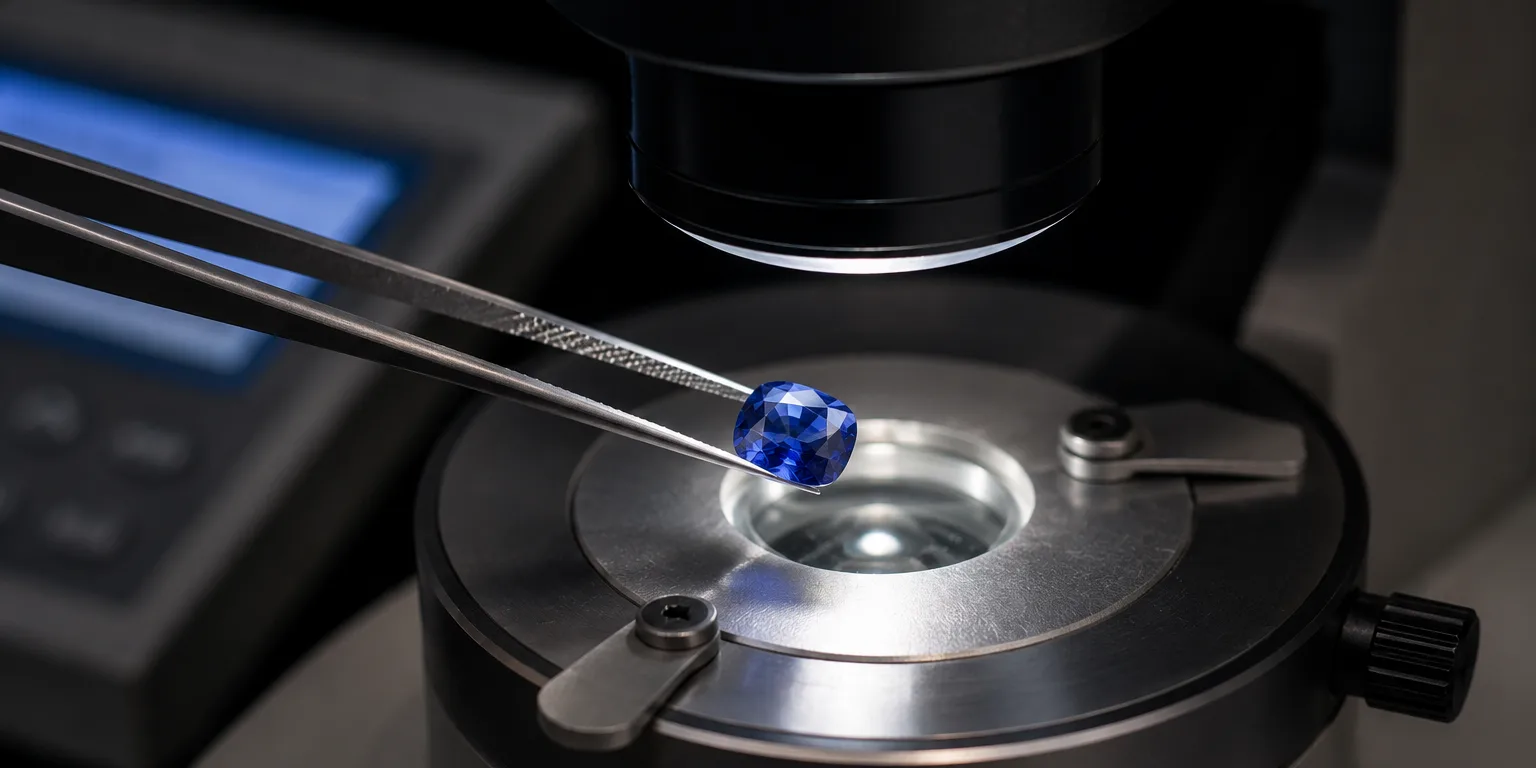
An origin report is a laboratory's professional opinion on the geographic source of a gemstone, formed by comparing its inclusions, growth features and trace-element chemistry with reference stones from known deposits. It is an expert opinion, not a certainty, which is why laboratories word origin conclusions carefully and why opinions can occasionally differ between laboratories.
"Ceylon sapphire" is a phrase that moves prices. Like any origin claim, it raises an immediate question: how does anyone know where a cut, polished stone came from? The answer is the origin report, one of the most valuable and most misunderstood documents in the coloured-stone trade.
What an Origin Report Is
An origin report records a laboratory's opinion on the geographic source of a stone, the country, and sometimes the deposit type, where it is believed to have formed. Some laboratories state the opinion on the main identification document; others issue it separately. Either way it supplements, and never replaces, the identification itself: a gem report establishing species, variety and natural status comes first.
How Laboratories Form the Opinion
A gemstone carries evidence of its birthplace. Inclusions, the minute internal features locked in during growth, differ in character between deposits. Growth structures and colour zoning patterns differ too. Trace-element chemistry, measured by advanced instruments, adds a compositional fingerprint.
Laboratories compare these observations against reference collections of stones gathered from known deposits. When the combined evidence points consistently to one source region, the laboratory states that origin as its opinion.
Why It Is an Opinion, Not a Fact
Weight can be measured; origin can only be inferred. Some deposits produce material with overlapping characteristics, and reference collections, however extensive, cannot contain every variation nature produces. This is why careful laboratories express origin as an opinion, and why the wording on the document tends to be precise and reserved.
It is also why respected laboratories occasionally disagree. A difference of opinion between two serious laboratories is not evidence that either is careless; it reflects the honest limits of the method. For high-value stones, this is a classic case for a second opinion.
Origin and Value
Origin can carry a substantial premium. Stones from celebrated sources may sell for more than visually comparable material from elsewhere, because the market prices history, reputation and rarity alongside beauty. Sri Lankan blue sapphires are among the origins that carry weight with buyers, the specifics are covered in our guide to sapphire origin reports.
The commercial consequence is simple: an origin claim that affects the price belongs on paper. A verbal "Ceylon" costs nothing to say; an independent opinion from an established laboratory is what supports it.
Practical Advice for Buyers
Ask whether an origin opinion exists for any stone priced on its source, and from which laboratory. For major purchases, the internationally known coloured-stone laboratories described in our guide to international laboratories are the usual choice for origin work, since the method depends on deep reference collections. Check, too, that the document refers to the stone in front of you, the stated weight and measurements should match exactly, just as with any other report.
Finally, keep origin in proportion. It is one value factor among several, a beautiful stone with no origin document remains beautiful, and an origin opinion cannot rescue a poorly cut or heavily included stone. Identification first, quality second, origin as the refinement on top.
Frequently asked questions
Why is gemstone origin only an opinion?
Because no single measurement proves where a stone formed. Laboratories infer origin by matching inclusions, growth features and trace-element chemistry against reference stones from known deposits. Deposits can overlap in these characteristics, so the conclusion is a professional judgement.
Does origin affect a sapphire's price?
Often, yes. Stones from certain celebrated sources can command premiums over comparable material from elsewhere. That premium is exactly why origin claims should be supported by a laboratory opinion rather than a verbal assertion.
Can two laboratories disagree on origin?
Yes, occasionally. Because origin is an inference from overlapping evidence, respected laboratories can reach different opinions on the same stone. For important stones, buyers sometimes obtain opinions from more than one laboratory.
Is 'Ceylon sapphire' on an invoice the same as an origin report?
No. An invoice records the seller's claim; an origin report records an independent laboratory's opinion. For a stone priced on its origin, the claim should be supported by the document.
Related terms
Sources
- SSEF, Swiss Gemmological Institute, General methodology of origin determination, reference only, no affiliation
- Gübelin Gem Lab, General description of origin opinion services, reference only, no affiliation
- Gemological Institute of America (GIA), Origin determination concepts, reference only, no affiliation
- SSEF: Sapphire, How laboratories form origin opinions
External references are provided for verification. Listing a source does not imply affiliation or endorsement.
Seen something that needs correcting? Read how corrections work or contact the editorial team.
Related Guides
Certificates
What Does a Gem Identification Report Actually Determine?
What a gem identification report establishes, species, variety, natural or synthetic status and detected treatments, and why it is the baseline document.
2 min read
Certificates
Which International Gem Laboratories Do Buyers Rely On?
An introduction to internationally known gem laboratories such as GIA, SSEF, Gübelin, Lotus and GRS, what they do, why their reports travel, and how to choose.
2 min read
Certificates
When Should You Get a Second Laboratory Opinion on a Gemstone?
When a second gem laboratory opinion is worth the cost, high-value stones, origin premiums, no-heat claims, conflicting documents and doubts about a report.
2 min read
Sapphire Centre
What Is a Sapphire Origin Report?
How laboratories form opinions on where a sapphire was mined, why origin conclusions are opinions rather than guarantees, and how to use them when buying.
3 min read