Certificates
How Do You Verify That a Laboratory Report Is Genuine?
How to check a gem laboratory report using online report-number lookup, document security features and a physical comparison between the stone and the paper.
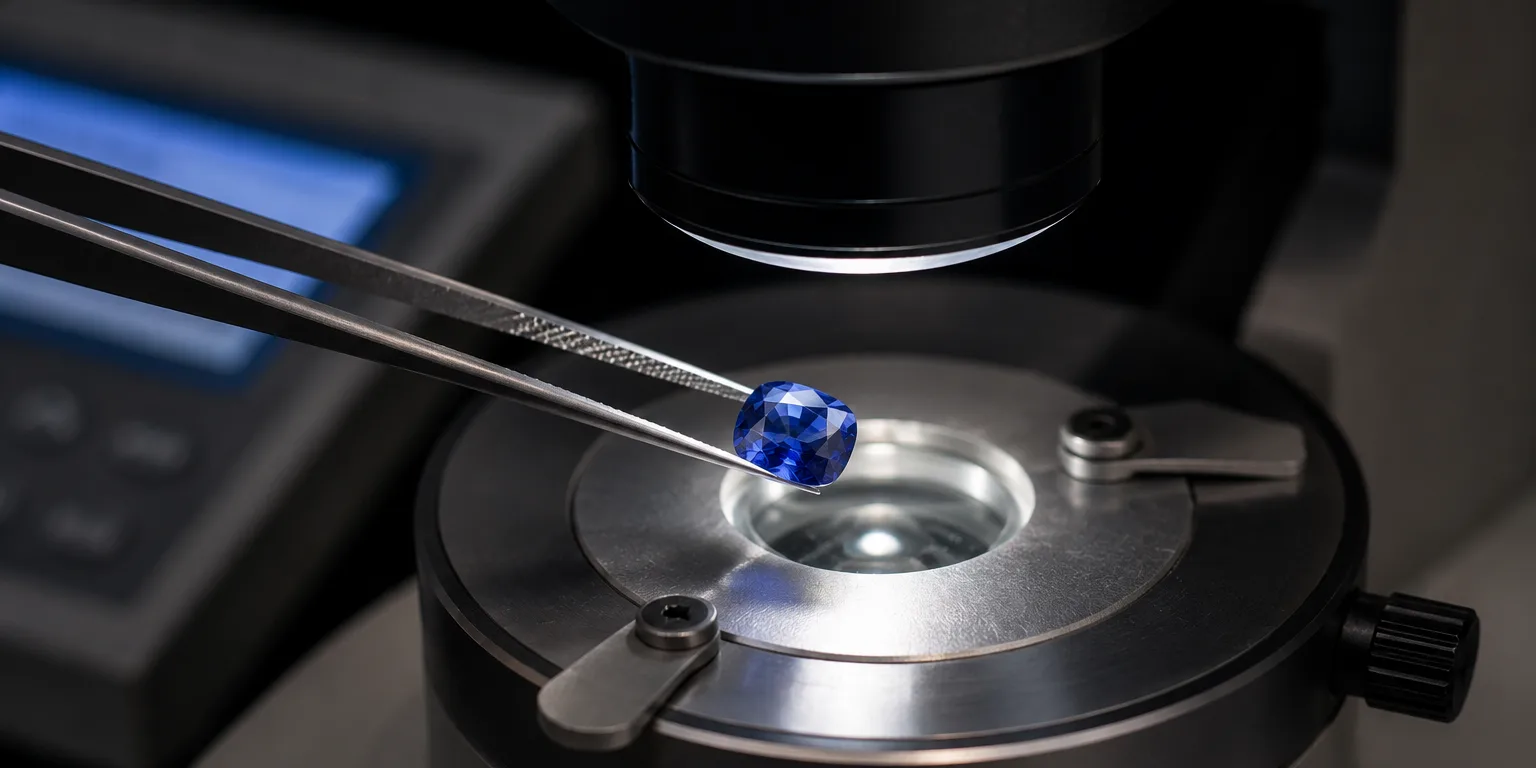
Verify a laboratory report in three steps: use the issuing laboratory's own online report-number lookup, where offered, to confirm the document's details against the laboratory's records; check the document's security features; and compare the stated weight and measurements against the actual stone. Verification always runs through the laboratory itself, never through the seller alone.
A laboratory report is only as good as its connection to two things: the laboratory that issued it, and the stone it describes. Verification is the process of testing both connections, and it is simpler than most buyers expect, provided it is done through the right channel.
Start With the Report Number
Every gem report carries a unique number. Many laboratories, internationally known names among them, offer an online facility on their own websites where anyone can enter that number and see the key details held on record for it: typically the identification, weight, measurements and treatment findings.
The check is straightforward. If the details returned by the laboratory's own system match the paper in your hand, the document is consistent with the laboratory's records. If the number returns nothing, or returns details for a different stone, stop and ask questions before proceeding.
Use the Laboratory's Own Channel
The single most important rule of verification: the channel must be one the seller does not control. Type the laboratory's website address yourself or find it independently, do not follow a link or scan a code supplied with the document, and do not phone a number printed on the paper, since a falsified document can carry falsified contact details pointing to an accomplice.
Where a laboratory offers no online lookup, contact it directly using details published on its own site. Laboratories receive such enquiries routinely. What we can offer is guidance on the process; SriLankaJewellery.com does not verify reports or authenticate documents, verification is always between you and the issuing laboratory.
Match the Stone to the Paper
A genuine document is only half the answer. The second connection, paper to stone, is physical. Compare the report's stated carat weight against the stone weighed in front of you, and its measurements against the stone's dimensions. The described shape, cutting style and colour should also correspond to what you see.
This matters because the classic misuse of a genuine report is pairing it with a different stone. Our guide to reading a gem report explains each field you are matching, and fake or altered certificates covers the warning signs when things do not line up.
Check the Document Itself
Laboratories protect their documents with security features, which vary by issuer and evolve over time. Be cautious of photocopies and digital images offered in place of an original document: a copy proves little, since the original may be attached to a different stone, or may never have existed. Where only a copy is available, treat the online lookup and, ideally, retesting as essential rather than optional.
When Verification Is Not Enough
For a high-value purchase, the strongest confirmation available is to have the stone itself re-examined, either resubmitted to the issuing laboratory or tested afresh by another established one. This collapses both questions, document and stone, into a single new answer. When that step is worth taking is the subject of when to get a second opinion, and the broader purchase checks are covered in how to check a gem certificate.
Verification takes minutes and costs little or nothing. For any stone worth documenting, it is worth doing every time.
Frequently asked questions
How does online report lookup work?
Many laboratories provide a facility on their own website where you enter a report number and see the key details the laboratory holds for that report. If those details match the document and the stone, the paper is consistent with the laboratory's records.
What if a laboratory has no online lookup?
Contact the laboratory directly through the contact details published on its own website, not details printed on a document a seller handed you, which could themselves be false. Laboratories are accustomed to such enquiries.
Does a verified report prove the stone is the one described?
No, it proves the document matches the laboratory's records. You must separately confirm the stone matches the report's weight and measurements. The strongest confirmation for an important stone is resubmitting it to a laboratory.
Should I rely on the seller to verify the report for me?
No. Verification only means something when it runs through a channel the seller does not control. Do the lookup yourself, on the laboratory's own site, or contact the laboratory directly.
Related terms
Sources
- Gemological Institute of America (GIA), Example of a laboratory offering online report lookup, reference only, no affiliation
- SSEF, Swiss Gemmological Institute, Example of a laboratory offering report-checking facilities, reference only, no affiliation
- Gübelin Gem Lab, Example of a laboratory publishing report-verification guidance, reference only, no affiliation
External references are provided for verification. Listing a source does not imply affiliation or endorsement.
Seen something that needs correcting? Read how corrections work or contact the editorial team.
Related Guides
Certificates
How Do You Read a Gem Report, Field by Field?
A field-by-field walkthrough of a generic laboratory report, report number, species, variety, weight, measurements, colour, treatment comments and origin.
3 min read
Certificates
How Can You Spot a Fake or Altered Gem Certificate?
Warning signs of fake or altered gem reports, mismatched weights, edited dates, photocopies in place of originals, and sellers resisting laboratory checks.
3 min read
Certificates
When Should You Get a Second Laboratory Opinion on a Gemstone?
When a second gem laboratory opinion is worth the cost, high-value stones, origin premiums, no-heat claims, conflicting documents and doubts about a report.
2 min read
Buying Guides
How Do You Check a Gem Certificate Is Genuine?
How to check a gem certificate, matching the report to the stone, verifying it with the issuing laboratory, and spotting altered or invented documents.
3 min read