Certificates
How Do Laboratory Reports Disclose Gemstone Treatments?
How laboratories detect and disclose gemstone treatments, why the wording on a report matters, and how treatment findings change what a stone is worth.
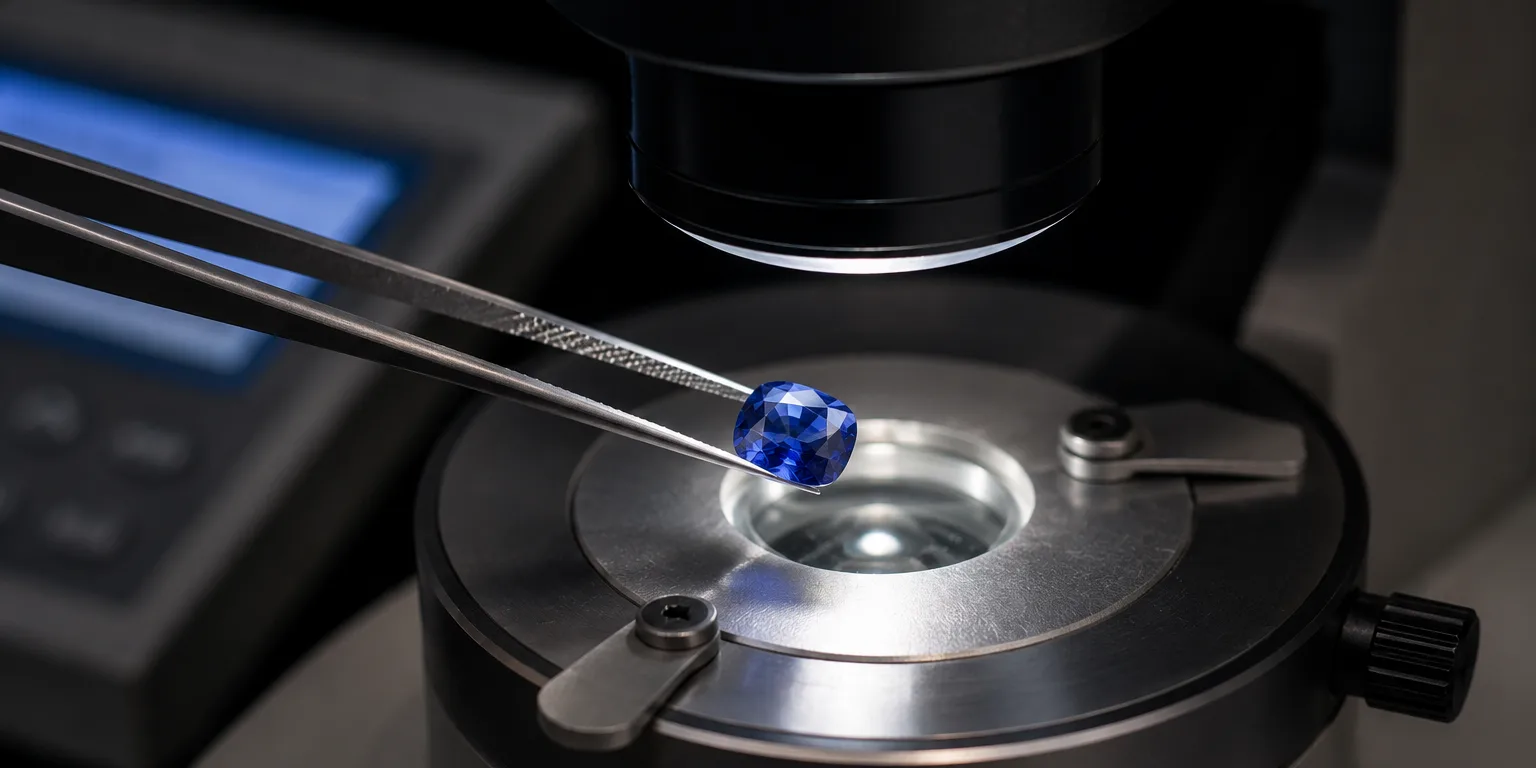
Laboratories disclose treatments in the comments or treatment section of a gem report, using standard wording to state whether they found evidence of heating or other processes. Because an untreated stone can be worth several times a treated equivalent, the treatment lines are often the most commercially significant text on the document.
Most sapphires on the world market have been heated. That single fact explains why the treatment lines on a laboratory report matter so much: they separate stones whose colour was finished in a furnace from the rarer stones nature finished by itself, and the market prices the difference accordingly.
Why Treatment Disclosure Exists
A treatment is any process applied to a stone after mining to improve its appearance. Trade bodies and laboratories have long converged on a simple principle: treatments are legitimate when disclosed. Disclosure lets two superficially similar stones be priced as what they actually are.
The laboratory report is where disclosure becomes independent. A seller's statement is a claim; a laboratory's finding is the result of examination.
Heating: The Everyday Case
Heating is by far the most common treatment in the sapphire trade, used for centuries to improve colour and clarity. It is stable, accepted and unremarkable, provided it is disclosed. The commercial gap between heated and unheated stones, and why it exists, is explored in detail in heated versus unheated sapphire.
Laboratories detect heating chiefly through its effects on a stone's internal features. Inclusions altered by high temperature leave recognisable evidence under the microscope, supplemented where needed by spectroscopic analysis.
Beyond Heating
Other processes exist across the gem world, among them fracture filling, diffusion processes, irradiation and dyeing, depending on the species. Some are accepted with disclosure; others sit lower in the market's estimation because they are less stable or change the stone more fundamentally. The constant across all of them is the same: the report should say what was found, and the price should reflect it.
A treatment finding is also different in kind from the natural-versus-synthetic question. A treated natural stone is still natural; treatment describes what was done to it, not what it is.
Reading the Wording
Treatment findings usually appear in a dedicated field or in the comments of the gem report. The wording is standardised within each laboratory and chosen with care, reports typically describe the evidence found on examination, phrased in the laboratory's established terms.
Two habits serve buyers well. First, read the exact words rather than a paraphrase; the difference between "no evidence of heating" and silence on the subject is meaningful. Second, read the whole comments section, since related observations may appear there. Our field-by-field guide to reading a gem report puts the treatment lines in context.
What This Means at the Counter
Ask every seller, of every significant stone: has this been treated, and how? Then ask for the answer in writing, and for an independent report on any stone priced as untreated. A premium price for "no heat" is only as good as the document behind it. Keep the report together with the invoice and the seller's written disclosure, so the stone's treatment history remains documented for insurance and any future resale.
Where a great deal rides on a single treatment conclusion, as it does for fine unheated sapphires, obtaining a second laboratory opinion before purchase is a proportionate, normal step, not a sign of distrust.
Frequently asked questions
Is a heated sapphire a fake?
No. A heated sapphire is a natural stone whose colour or clarity has been improved by heating, a long-accepted trade practice when disclosed. It is entirely different from a synthetic or an imitation. The issue is never the heating itself but whether it is disclosed and priced accordingly.
Why do treatment findings affect price so much?
Because untreated stones of fine quality are rarer. A sapphire whose colour is entirely natural can command a large premium over a heated stone of similar appearance, which is why laboratory confirmation of no evidence of heating carries real commercial weight.
Can every treatment be detected?
Laboratories detect treatments by their physical evidence, and detection is very reliable for well-understood processes. Reports state what was found on examination, in careful standard wording, rather than making absolute guarantees about every conceivable process.
Where do I find treatment information on a report?
Usually in a dedicated treatment field or in the comments section. Read it in full and in the laboratory's exact words, summaries by third parties can blur distinctions the laboratory chose deliberately.
Related terms
Sources
- CIBJO, The World Jewellery Confederation, Treatment disclosure standards in the trade, reference only, no affiliation
- Gemological Institute of America (GIA), Treatment detection concepts, reference only, no affiliation
- SSEF, Swiss Gemmological Institute, Coloured-stone treatment terminology, reference only, no affiliation
External references are provided for verification. Listing a source does not imply affiliation or endorsement.
Seen something that needs correcting? Read how corrections work or contact the editorial team.
Related Guides
Certificates
How Do You Read a Gem Report, Field by Field?
A field-by-field walkthrough of a generic laboratory report, report number, species, variety, weight, measurements, colour, treatment comments and origin.
3 min read
Certificates
What Does a Gem Identification Report Actually Determine?
What a gem identification report establishes, species, variety, natural or synthetic status and detected treatments, and why it is the baseline document.
2 min read
Certificates
When Should You Get a Second Laboratory Opinion on a Gemstone?
When a second gem laboratory opinion is worth the cost, high-value stones, origin premiums, no-heat claims, conflicting documents and doubts about a report.
2 min read
Sapphire Centre
Heated vs Unheated Sapphire: What Is the Difference?
How heat treatment changes sapphires, how laboratories detect it, why unheated stones carry premiums and what disclosure you should insist on.
4 min read