Gold & Metals
22K Gold in Sri Lanka: 916 Purity and Why It Dominates
What 22K gold is, why its 916 fineness makes it 91.6% pure, and why it is the standard purity for traditional jewellery across Sri Lanka and South Asia.
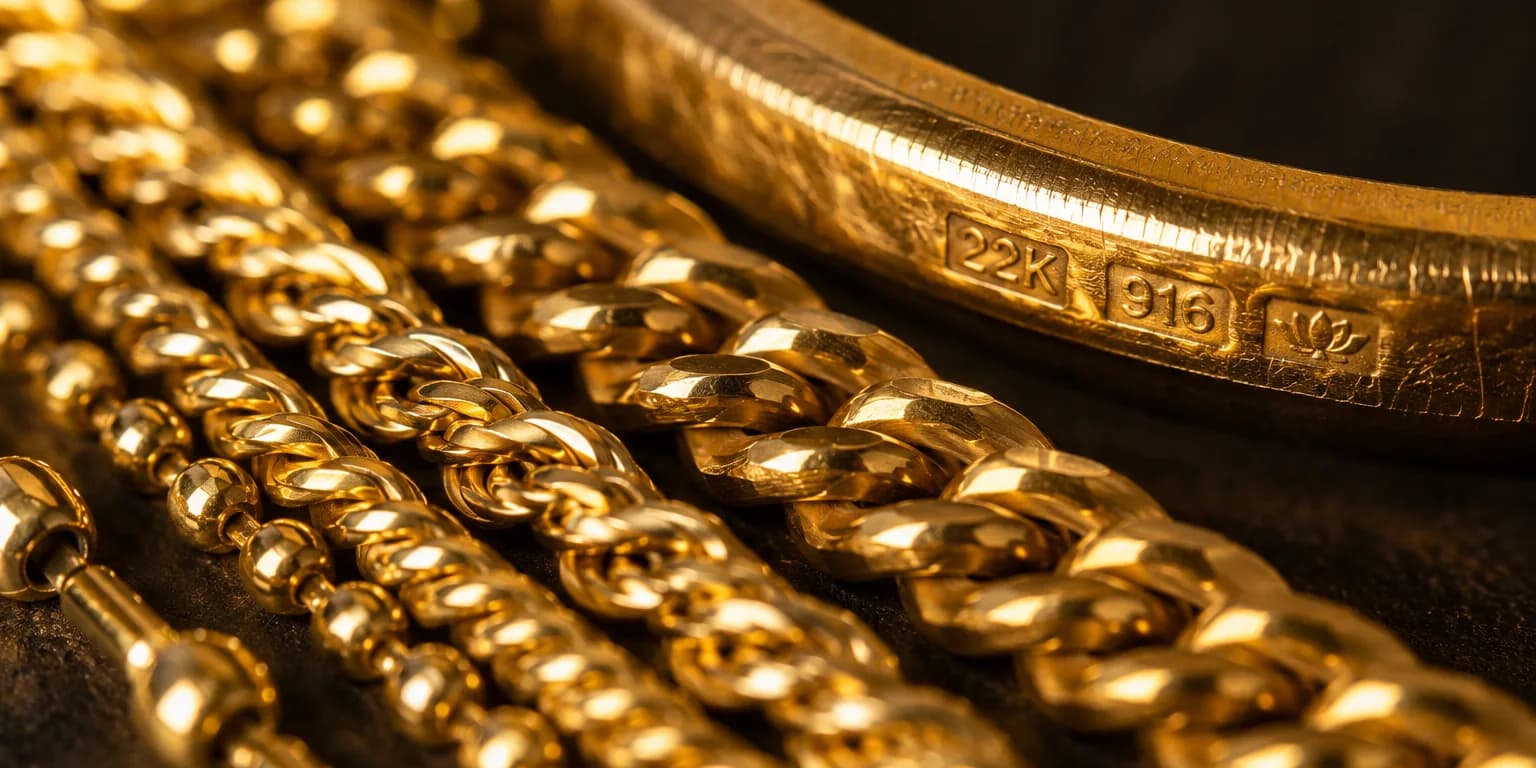
22K gold contains 22 parts gold out of 24, a fineness of 916 or 91.6% pure gold, with the remainder made up of alloying metals such as copper and silver. It is the standard purity for traditional jewellery in Sri Lanka and across South Asia because it keeps gold content, and resale value, high while being hard enough for everyday wear.
Walk into almost any jewellery shop in Colombo, Kandy or Galle and the gold on display will overwhelmingly be one purity: 22 karat. Across Sri Lanka and the wider South Asian trade, 22K is not just a grade of gold, it is the default in which weddings are gifted, savings are stored and daily rates are quoted.
What 22K Means
On the karat scale of 24 parts, 22K gold contains 22 parts gold and 2 parts alloying metal, typically copper and silver in proportions each workshop guards as its own. Expressed as fineness, that is 916 parts per thousand, or 91.6% pure gold, which is why 22K jewellery is stamped "916". Our guide to what 916 means covers that mark in detail.
| Karat | Fineness mark | Gold content |
|---|---|---|
| 24K | 999 | ~99.9% |
| 22K | 916 | 91.6% |
| 21K | 875 | 87.5% |
| 18K | 750 | 75.0% |
| 14K | 585 | 58.5% |
Why South Asia Chose 22K
The preference is cultural and economic at once. Gold jewellery in Sri Lanka and its neighbours functions as wearable savings: it is gifted at weddings, pledged when cash is needed and eventually resold or remade. High purity keeps that stored value close to the metal price, so buyers want as much gold as a wearable piece can carry.
22K is the practical ceiling. The small alloy addition hardens the metal enough for bangles, chains and pendants that survive daily wear, while sacrificing only about 8% of the gold content of pure metal. It also retains a rich yellow colour close to that of 24K gold.
Strengths and Limitations
For its intended purpose, substantial, predominantly yellow-gold jewellery, 22K is excellent. Its limitations appear at the fine end of the craft. The metal is too soft to hold slender prongs reliably, which is why serious gem-set jewellery, including most sapphire rings, is made in 18K gold instead. Thin 22K rings worn on working hands will also slowly go out of round.
How 22K Gold Is Priced
The metal value of a 22K piece is roughly 91.6% of the pure-gold price per gram multiplied by its weight; jewellers commonly quote per gram or per 8-gram sovereign. On top of the metal come making charges, any wastage and stone value, the full build-up is explained in our guide to gold jewellery pricing, and you can test a quotation with the jewellery price calculator.
Buying 22K in Sri Lanka
Ask for the weight, the karat and the per-gram rate to be written on the invoice, and remember that a 916 stamp is a claim rather than a certification, practices around marking vary, so written disclosure and, for large purchases, independent gold testing remain the buyer's real safeguards.
Frequently asked questions
Is 22K gold good for daily wear?
Yes, within reason. 22K is distinctly harder than pure gold and copes well with bangles, chains and earrings worn daily, though it still scratches more easily than 18K and is not ideal for rings that take heavy knocks.
Why is Sri Lankan jewellery usually 22K rather than 24K?
Tradition and practicality. South Asian buyers value high gold content for resale and gifting, and 22K keeps 91.6% purity while adding enough alloy to make wearable, workable jewellery, a balance 24K cannot offer.
How is 22K gold priced?
Its metal value is about 91.6% of the pure gold price for the same weight, and jewellers quote a 22K rate per gram or per 8-gram sovereign. Making charges and any wastage are added on top of the metal value.
Can gemstones be set in 22K gold?
They can, but 22K is soft for fine claw settings, so stone-set pieces in 22K tend to use protective styles. Precision gem setting is more often done in 18K, which grips stones more securely.
Related terms
Sources
- CIBJO, The World Jewellery Confederation, Fineness standards for gold alloys
- Central Bank of Sri Lanka, Reference context for gold pricing in Sri Lanka
- International Gem Society (IGS), Educational material on gold alloys and their working properties
- British Hallmarking Council: Guidance on Fineness, 916/22ct equivalence
External references are provided for verification. Listing a source does not imply affiliation or endorsement.
Seen something that needs correcting? Read how corrections work or contact the editorial team.
Related Guides
Gold & Metals
What Does 916 Mean on Gold?
Why gold is stamped 916, how the number equals 22-karat purity at 91.6% gold, where the mark appears, and why a stamp alone is not proof of fineness.
2 min read
Gold & Metals
What Is 24K Gold?
What 24K gold is, why 999 fineness means around 99.9% pure gold, where the softest and purest grade is used, and how it compares with 22K and 18K jewellery.
2 min read
Gold & Metals
What Is 21K Gold?
What 21K gold is, why its 875 fineness equals 87.5% pure gold, where this purity is popular, and how it compares with the 22K standard used in Sri Lanka.
2 min read
Gold & Metals
How Is Gold Jewellery Priced in Sri Lanka?
How a gold jewellery price is built: metal value by weight and purity, making charges, any wastage, stone value and fees, and how to check each line yourself.
2 min read