Gold & Metals
What Is 24K Gold?
What 24K gold is, why 999 fineness means around 99.9% pure gold, where the softest and purest grade is used, and how it compares with 22K and 18K jewellery.
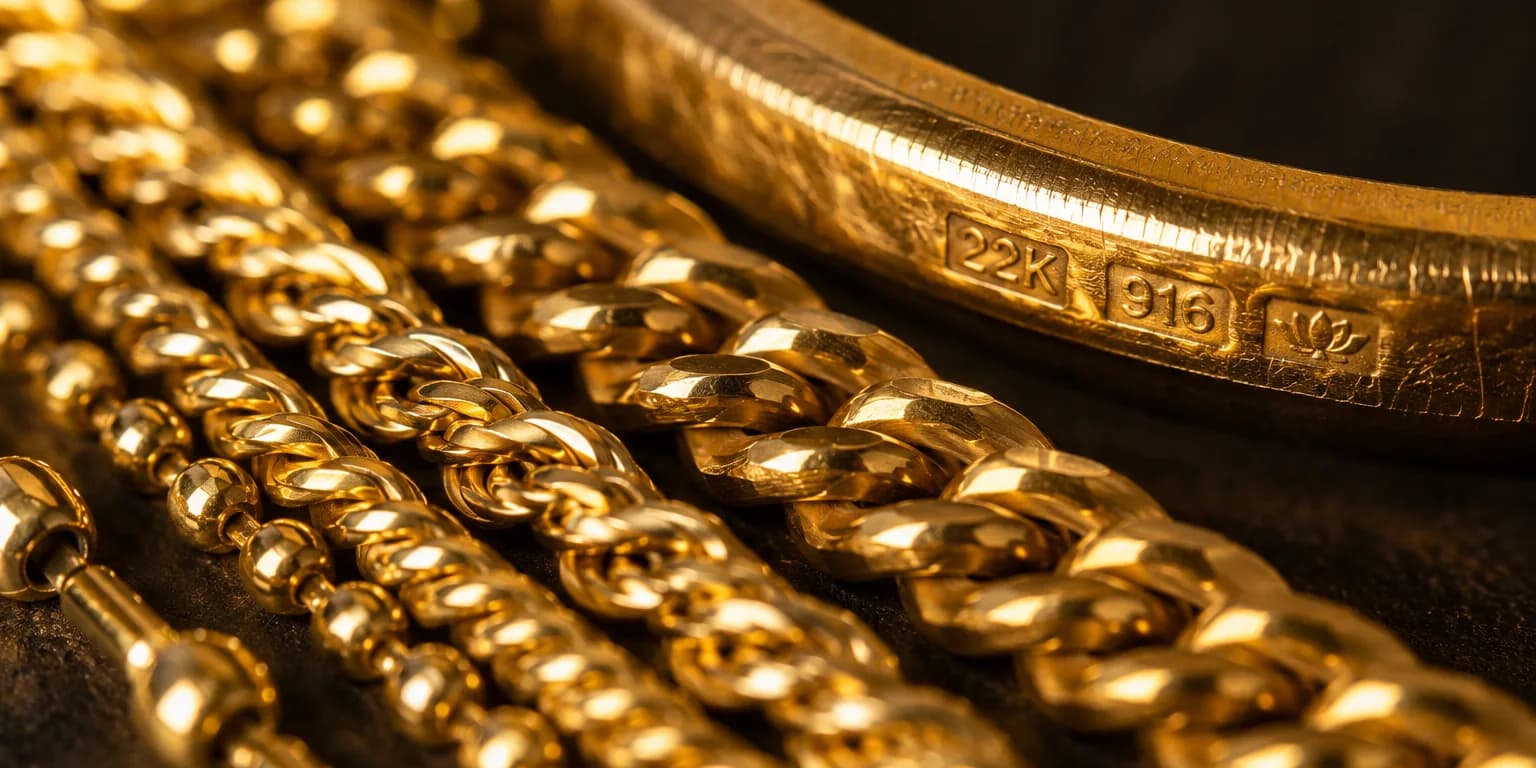
24K gold is the purest commercial grade of gold, corresponding to a fineness of about 999, or roughly 99.9% gold. Because pure gold is very soft, 24K is used mainly for bars, coins and some East Asian jewellery traditions, while most jewellery elsewhere is made in 22K, 21K, 18K or 14K alloys that trade some purity for durability.
24K is the top of the gold purity scale, the grade against which every other karat is measured and the basis of the daily gold price. When people talk about the value of "pure gold", they mean 24K.
What 24K Means
The karat scale divides gold purity into 24 parts. 24K means all 24 parts are gold, expressed in the modern trade as a fineness of 999, that is, 999 parts per thousand, or about 99.9% gold. Refined bullion is often struck 999.9, called "four nines" fine.
The table below shows how 24K sits against the other common grades:
| Karat | Fineness mark | Gold content |
|---|---|---|
| 24K | 999 | ~99.9% |
| 22K | 916 | 91.6% |
| 21K | 875 | 87.5% |
| 18K | 750 | 75.0% |
| 14K | 585 | 58.5% |
Properties: Colour and Softness
With almost no alloying metals present, 24K gold shows the metal's natural colour, a deep, saturated yellow with a slightly warm cast that paler alloys cannot match. It is also dense, does not tarnish and is highly resistant to corrosion.
The trade-off is softness. Pure gold can be marked with modest pressure, so 24K pieces scratch and deform more readily than lower karats. Fine prong settings and thin clasps in pure gold do not hold up well to daily wear.
Where 24K Gold Is Used
24K dominates wherever metal content matters more than durability: cast and minted bars, bullion coins and gifting pieces bought primarily as stored value. In several East Asian jewellery traditions, notably Chinese "chuk kam" work, 24K jewellery is also widespread and prized precisely for its purity and colour.
In Sri Lanka, everyday jewellery is overwhelmingly 22K gold, which keeps purity high while remaining strong enough for bangles, chains and pendants that are worn constantly.
24K Versus 22K for Buyers
Choosing between the two comes down to purpose. If the object is essentially a way of holding gold, 24K delivers more metal per gram and typically lower making cost relative to its metal value. If the piece will be worn, 22K's small alloy addition buys meaningful durability for a modest reduction in gold content, about 8% less pure gold per gram, reflected directly in the price per gram.
Verifying 24K Purity
A "999" stamp is a claim, not a guarantee. For bars and coins, buy from established sellers and keep the invoice stating weight and fineness. For any significant purchase, independent verification by gold testing methods such as XRF is quick and non-destructive. Always ask the seller to record the fineness in writing on the invoice, a request no reputable dealer will resist.
Frequently asked questions
Is 24K gold really 100% pure?
Not quite. Commercial 24K gold is typically marked 999 or 999.9, meaning 99.9% or 99.99% pure. Trace impurities are always present, which is why the trade describes purity as fineness rather than claiming absolute purity.
Can I wear 24K gold jewellery every day?
You can, but pure gold is soft and will scratch, dent and lose crisp detail faster than alloyed gold. Bangles and chains in 24K need gentler handling than 22K or 18K equivalents.
Is 24K gold a good investment?
24K bars and coins carry the highest gold content per gram and the lowest making cost relative to metal value, which is why they are the usual form for holding gold as metal. Whether gold suits your circumstances is a personal financial decision, this is general information, not financial advice.
Why is most jewellery not made in 24K?
Softness. Alloying gold with small amounts of copper, silver or other metals makes it hard enough to hold settings, clasps and fine detail through years of wear, which is why 22K and below dominate jewellery manufacture.
Related terms
Sources
- CIBJO, The World Jewellery Confederation, International definitions of gold fineness standards
- International Gem Society (IGS), Educational material on gold purity and alloys
External references are provided for verification. Listing a source does not imply affiliation or endorsement.
Seen something that needs correcting? Read how corrections work or contact the editorial team.
Related Guides
Gold & Metals
22K Gold in Sri Lanka: 916 Purity and Why It Dominates
What 22K gold is, why its 916 fineness makes it 91.6% pure, and why it is the standard purity for traditional jewellery across Sri Lanka and South Asia.
2 min read
Gold & Metals
Gold Karat vs Fineness: What Is the Difference?
Karat and fineness are two ways of writing the same gold purity. How the 24-part karat scale maps to parts-per-thousand fineness, with a full conversion table.
2 min read

Gold & Metals
Gold Rate per Gram in Sri Lanka: How It Is Calculated
How the gold price per gram is derived from the international spot price, adjusted for karat purity, and why the price you pay in a jewellery shop is higher.
3 min read
Gold & Metals
How Is Gold Tested? XRF, Touchstone, Acid and Fire Assay
The four main ways gold purity is tested, XRF, touchstone, acid and fire assay, what each can and cannot tell you, and when a buyer should insist on a test.
2 min read