Gold & Metals
How Is Gold Jewellery Priced in Sri Lanka?
How a gold jewellery price is built: metal value by weight and purity, making charges, any wastage, stone value and fees, and how to check each line yourself.

Gold jewellery is priced as the metal value, weight multiplied by the day's rate for the piece's purity, plus making charges, plus wastage charges where the shop applies them, plus the value of any stones, plus applicable fees. Asking for each component separately on the quotation is the single most effective way to compare shops and avoid overpaying.
Two bangles of identical weight can leave the same street with price differences of many thousands of rupees. Neither shop is necessarily dishonest, gold jewellery pricing is a sum of parts, and the parts differ. Once you can read the formula, every quotation becomes checkable.
The Pricing Formula
Virtually every gold jewellery price in Sri Lanka decomposes the same way:
Price = metal value + making charges (+ wastage where charged) + stone value + fees.
Each line behaves differently. Metal value is objective and market-driven; making and wastage are set by the shop; stone value depends on the gems; fees follow the transaction. A good invoice shows them separately, and asking for that separation is entirely normal practice.
Metal Value: The Checkable Core
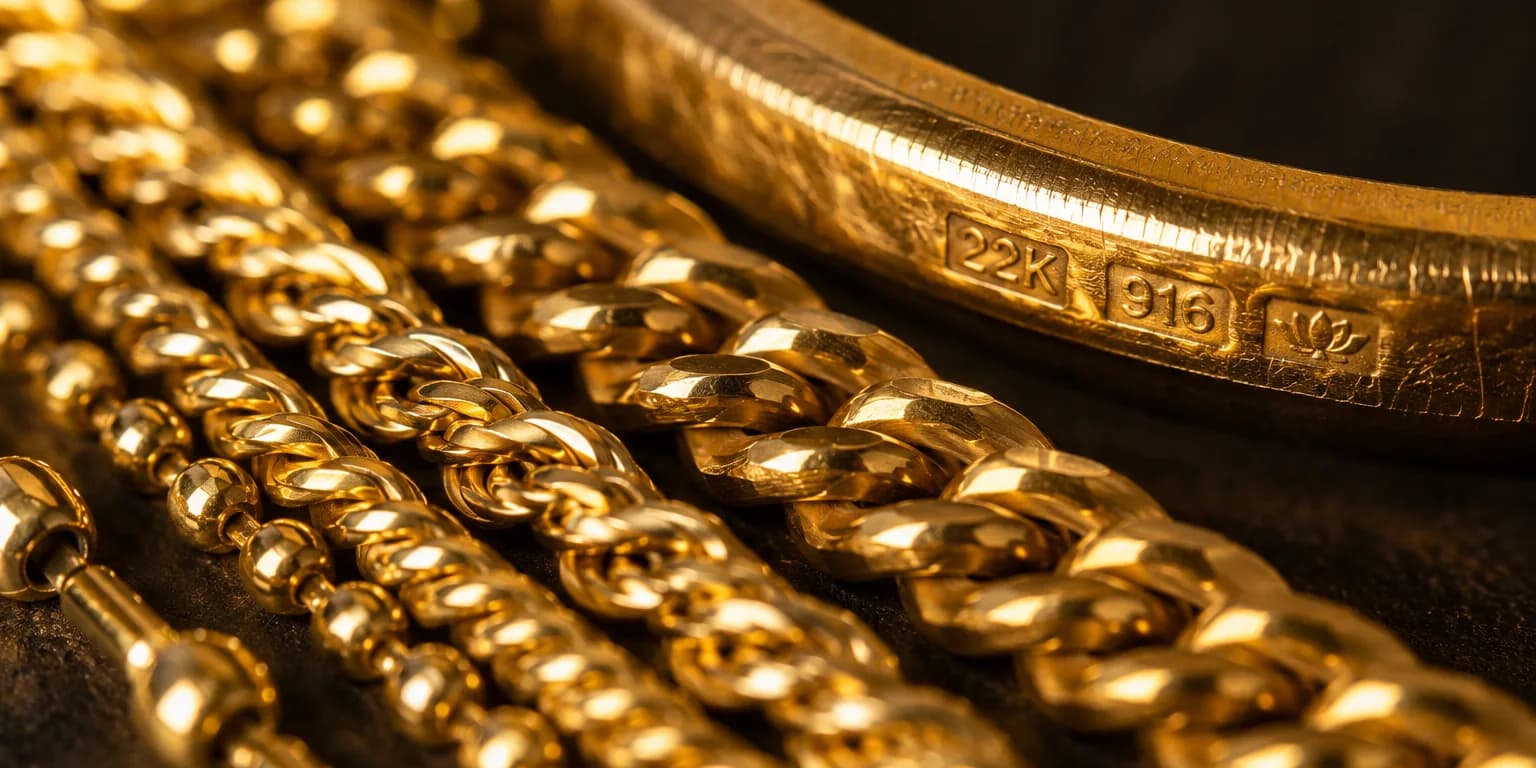
Metal value is the piece's net gold weight multiplied by the day's rate for its purity. A 16-gram bangle at 22K is priced off the 916 rate; an 18K ring off the 750 rate. The rate itself derives from the international market, as explained in our gold price per gram guide, and indicative figures appear on our gold price page.
Insist on seeing the piece weighed in front of you, and confirm which purity the quoted rate refers to. With weight, purity and rate in hand, you can reproduce this line to the rupee.
Making Charges
The making charge pays for converting raw gold into a finished piece, design, casting or handwork, finishing and the shop's overheads. It may be quoted per gram, as a percentage of metal value or as a flat amount, and it varies more between shops than any other line. Our dedicated guide to making charges covers the structures and how to negotiate them.
Wastage and Other Additions
Some shops add wastage, a traditional allowance for metal lost during manufacture, usually a small percentage of weight. Practices differ; many modern retailers have folded it into the making charge, so ask whether wastage is charged and how. Stones should be itemised separately with their weights, and any applicable fees stated on the invoice. We avoid quoting tax figures here because they change; confirm current charges at purchase.
Comparing Quotations Properly
Compare shops line by line, never on the headline figure. The metal value should be nearly identical everywhere on a given day, so the real comparison is making plus wastage for equivalent workmanship. Our jewellery price calculator rebuilds a quotation from weight, purity and rate so you can see what the charges amount to.
What to Get in Writing
Before paying, the invoice should record the gross and net weight, the karat and fineness, the rate applied, each charge separately and each stone described. That single document is your protection at resale, for insurance and in any dispute, the wider checklist appears in our guide to buying jewellery in Sri Lanka.
Frequently asked questions
What is a fair making charge on gold jewellery?
There is no single fair figure, charges vary with design complexity, whether the piece is handmade or machine-made, and the shop's positioning. Comparing itemised quotations for similar pieces across two or three shops reveals the realistic range quickly.
Why do two shops quote different prices for the same-weight bangle?
The metal value should be nearly identical, so the difference lies in making charges, wastage practices and margin. An itemised quotation shows exactly where the gap comes from.
Do I get making charges back when I resell jewellery?
Generally no. Resale is based on tested metal content, so making, wastage and design premiums are consumed at purchase. Heavier, plainer pieces therefore retain a larger share of their price.
Are gemstones in gold jewellery priced by weight too?
No, stones are valued on their own quality factors and should appear as a separate line. Beware quotations that price a gem-set piece purely on gross weight, as you may be paying gold rates for stone weight.
Related terms
Sources
- Central Bank of Sri Lanka, Reference gold price context for Sri Lanka
- CIBJO, The World Jewellery Confederation, Standards for describing precious metal content in trade
- International Gem Society (IGS), Educational material on jewellery value components
External references are provided for verification. Listing a source does not imply affiliation or endorsement.
Seen something that needs correcting? Read how corrections work or contact the editorial team.
Related Guides
Gold & Metals
What Are Making Charges on Gold Jewellery?
What making charges are, how jewellers structure them per gram, as a percentage or flat fee, why they vary so widely, and how buyers can compare and negotiate.
2 min read
Gold & Metals
What Are Wastage Charges on Gold Jewellery?
What wastage charges are, why the traditional allowance for gold lost in manufacture persists, how shops apply it today, and the questions buyers should ask.
2 min read
Gold & Metals
Gold Rate per Gram in Sri Lanka: How It Is Calculated
How the gold price per gram is derived from the international spot price, adjusted for karat purity, and why the price you pay in a jewellery shop is higher.
3 min read
Gold & Metals
22K Gold in Sri Lanka: 916 Purity and Why It Dominates
What 22K gold is, why its 916 fineness makes it 91.6% pure, and why it is the standard purity for traditional jewellery across Sri Lanka and South Asia.
2 min read