Gold & Metals
What Is 14K Gold?
What 14K gold is, why its 585 fineness equals 58.5% pure gold, where this durable purity dominates, and how it compares with 18K and 22K jewellery.
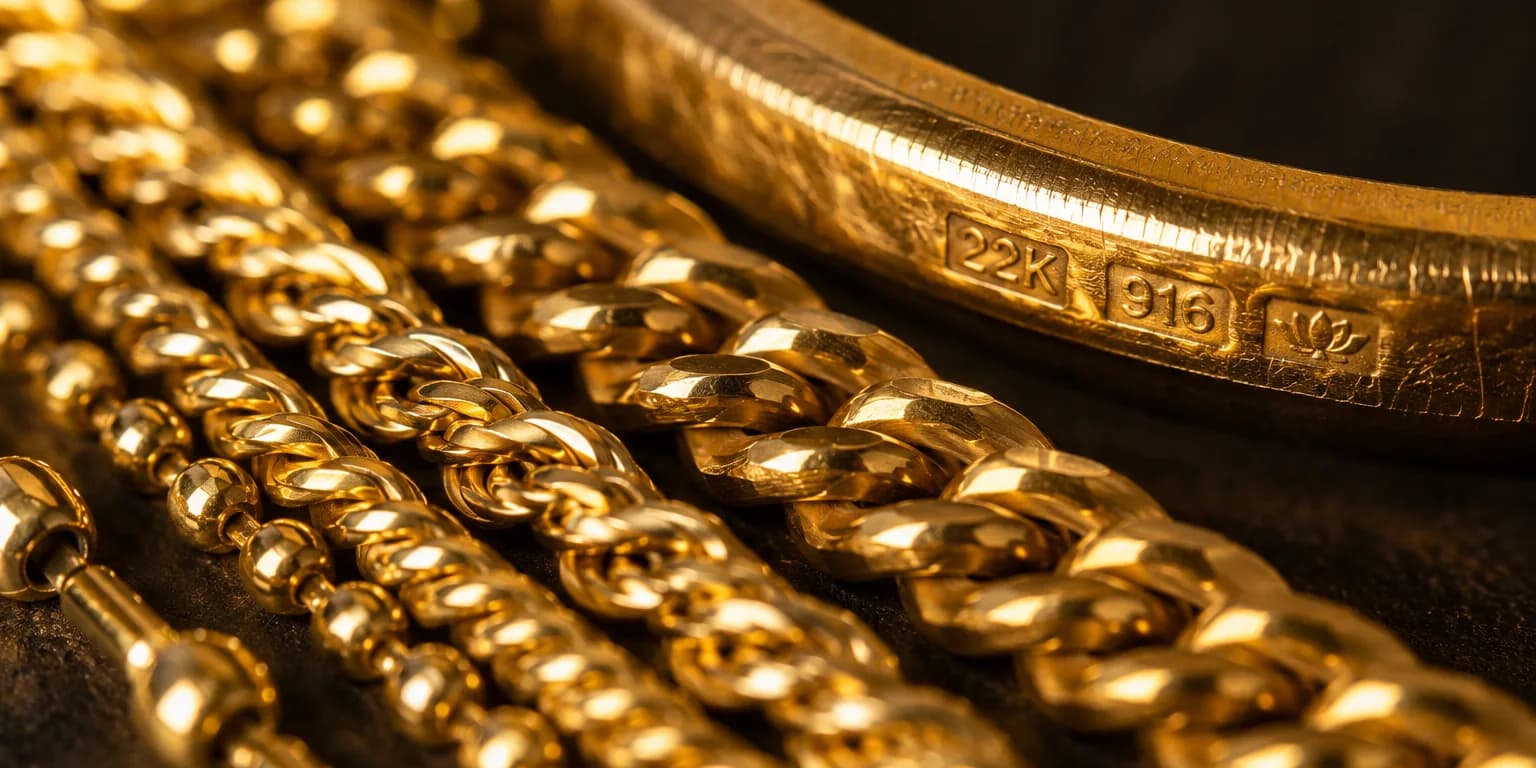
14K gold contains 14 parts gold out of 24, a fineness of 585, or 58.5% pure gold. It is the workhorse purity of Western jewellery markets, prized for durability and affordability. In Sri Lanka it is uncommon in traditional shops but appears in imported, branded and export-oriented jewellery.
14K is the gold most of the Western world actually wears. Engagement rings in the United States, everyday chains in Europe's high-street shops and much branded designer jewellery are 14K, a purity built around durability and price rather than maximum gold content.
What 14K Means
On the karat scale, 14K is 14 parts gold out of 24. As fineness, that rounds to 585 parts per thousand, 58.5% pure gold, the number stamped inside 14K pieces. Just over 40% of the metal is alloy: copper, silver, zinc and sometimes nickel or palladium, tuned for hardness and colour.
| Karat | Fineness mark | Gold content |
|---|---|---|
| 24K | 999 | ~99.9% |
| 22K | 916 | 91.6% |
| 18K | 750 | 75.0% |
| 14K | 585 | 58.5% |
| 10K | 417 | 41.7% |
Why Western Markets Favour 14K
The appeal is practical. With nearly half its mass as hardening alloy, 14K resists scratches, dents and bent prongs better than any higher karat, making it well suited to rings and bracelets that take daily punishment. It is also markedly cheaper per gram than 18K, which lets manufacturers offer substantial-looking jewellery at accessible prices. For markets where jewellery is bought to wear rather than to store value, that trade-off makes sense.
Colour, Wear and Skin
The higher alloy fraction lightens the colour: 14K yellow gold is a paler, cooler yellow than 22K's rich saturation. The same alloy room makes 14K a practical, hard-wearing base for white gold and rose gold. One caution, some 14K white alloys use nickel, a known skin sensitiser, so nickel-sensitive buyers should ask about alloy composition or choose palladium-based white gold.
14K in the Sri Lankan Market
Traditional Sri Lankan jewellers rarely stock 14K; the local benchmark is 22K gold, and lighter purities can meet mild scepticism. Where 14K appears locally, it is usually imported branded jewellery or export-oriented gem-set work. If you bring 14K pieces to sell, they will be tested and valued at 585 fineness, a substantially lower per-gram figure than the familiar 22K board rate, as our gold price per gram guide explains.
Buying 14K Sensibly
Check for the 585 stamp and have the fineness written on the invoice; stamps are claims, and gold testing settles doubt for significant pieces. Compare prices on gold content, not appearance, the gold purity calculator converts any karat to its true gold weight in seconds.
Frequently asked questions
Is 14K gold real gold?
Yes. 14K is a genuine gold alloy containing 58.5% pure gold. It is not plated or filled, the gold is distributed throughout the metal, but it contains less gold per gram than 18K or 22K.
Why is 14K jewellery cheaper than 22K?
Mainly metal content: 58.5% gold against 91.6%. A 14K piece of the same weight simply contains much less gold, so its metal value and price are lower, though branding and workmanship can narrow the gap.
Does 14K gold suit sensitive skin?
Usually, but not always. The higher alloy content means more non-gold metal against the skin, and 14K white golds containing nickel can trouble nickel-sensitive wearers. Ask what the alloy contains if sensitivity is a concern.
Will Sri Lankan jewellers buy 14K gold?
Many will, valued on tested gold content at 585 fineness. Because the local trade centres on 22K, expect the offer to reflect the lower purity, and confirm the rate before selling.
Related terms
Sources
- CIBJO, The World Jewellery Confederation, International fineness standards for gold alloys
- International Gem Society (IGS), Educational material on karat gold alloys
External references are provided for verification. Listing a source does not imply affiliation or endorsement.
Seen something that needs correcting? Read how corrections work or contact the editorial team.
Related Guides
Gold & Metals
What Is 18K Gold?
What 18K gold is, why its 750 fineness means 75% pure gold, and why it is the preferred purity for gem-set, white and rose gold jewellery worldwide.
2 min read
Gold & Metals
Gold Karat vs Fineness: What Is the Difference?
Karat and fineness are two ways of writing the same gold purity. How the 24-part karat scale maps to parts-per-thousand fineness, with a full conversion table.
2 min read
Gold & Metals
What Is White Gold?
What white gold is made of, why it is usually rhodium-plated, how it compares with platinum and silver, and what maintenance owners should expect over time.
2 min read
Gold & Metals
What Does 916 Mean on Gold?
Why gold is stamped 916, how the number equals 22-karat purity at 91.6% gold, where the mark appears, and why a stamp alone is not proof of fineness.
2 min read