Jewellery
How Is Jewellery Manufactured in Sri Lanka?
How jewellery is made in Sri Lanka, casting and hand fabrication, the workshop-to-factory spectrum, quality control and what methods mean for buyers.
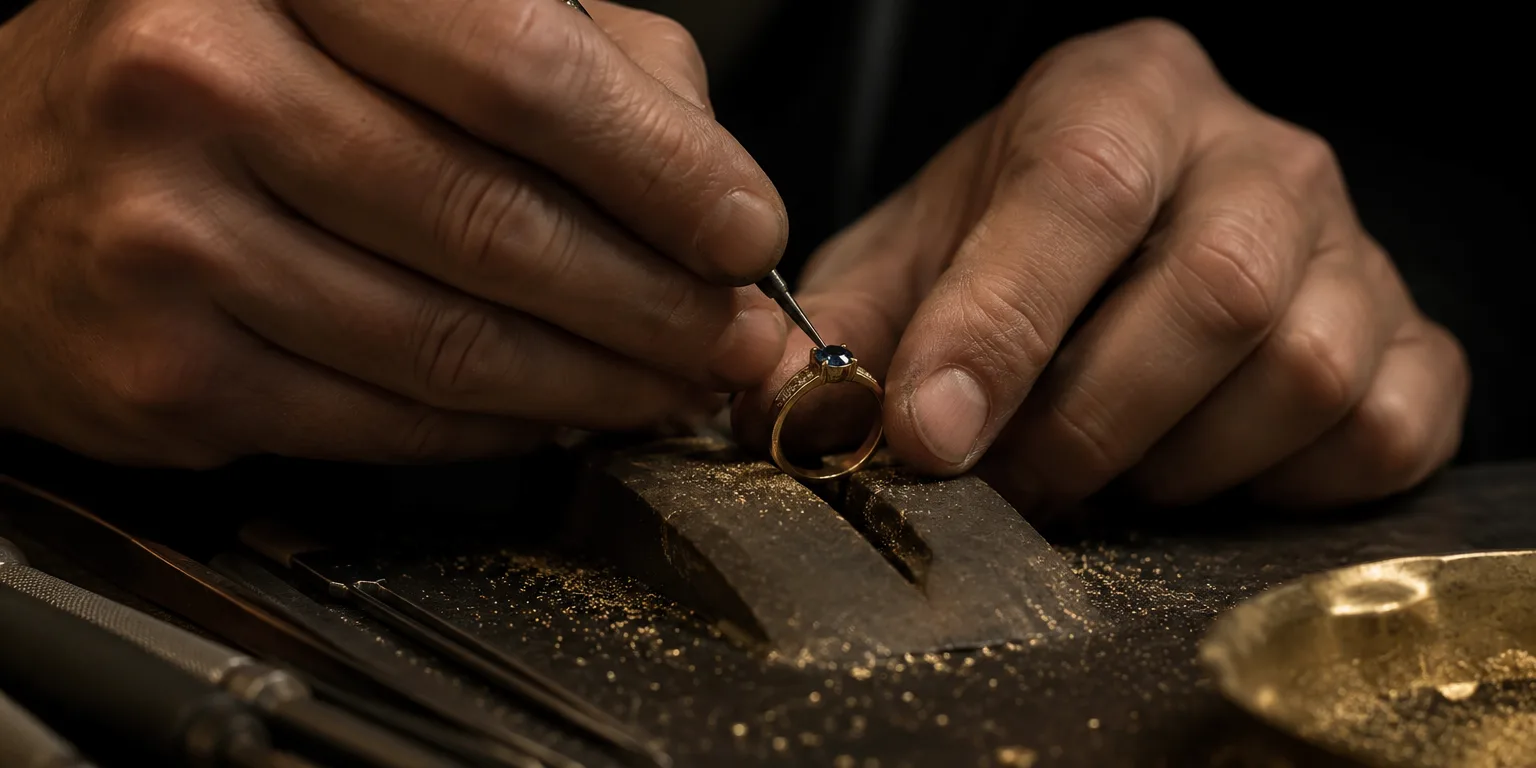
Jewellery in Sri Lanka is manufactured along a spectrum from hand fabrication at small family benches to modern casting-based production in larger workshops and factories. Most modern pieces are made by lost-wax casting followed by hand finishing and stone setting. The making method affects price, consistency and repairability, which is why buyers should ask how a piece was made.
Between the romantic image of a lone goldsmith and the industrial image of a production line lies the reality of jewellery manufacturing in Sri Lanka: a spectrum of workshops, from two-person family benches to organised factories, most of them combining old techniques and new ones in the same room. Understanding that spectrum tells you a great deal about the piece in your hand, including what it should cost.
The Production Spectrum
At one end sit traditional benches where pieces are fabricated by hand from sheet and wire, the world described in our handmade jewellery explainer. At the other end are factories producing consistent lines by casting, with division of labour across model-making, casting, finishing and setting. In between, where much of the island's output is made, mid-sized workshops cast structural components and complete everything else by hand.
These are not rival worlds. A single workshop may hand-fabricate a bridal commission in the morning and finish cast stock pieces in the afternoon, and the same craftsman's skills serve both.
Lost-Wax Casting: The Modern Backbone
Most contemporary production rests on lost-wax casting. A model of the design, carved in wax by hand, or printed from a digital file, is invested in a plaster-like mould; the wax is burnt out; molten gold or silver fills the cavity. Multiple models are usually cast together on a "tree", so a batch emerges in one pour.
Casting's virtues are accuracy and repeatability: one approved design, many faithful copies. Its risks are porosity and softened detail when process control is poor. This is why the steps after casting matter so much.
Finishing and Setting: Where Hands Return
A freshly cast piece is nowhere near finished. It must be cut from the tree, ground, assembled if it has multiple parts, filed, polished, and, crucially, set with its stones. Across Sri Lankan production at every scale, this finishing and setting work is done by hand. Setters secure each stone individually; polishers bring up the final surface.
The practical consequence for buyers: even "manufactured" jewellery embodies significant handwork, and the quality of that handwork, crisp or careless setting, thorough or hasty polishing, is where good and poor manufacturers diverge most visibly. Our fine jewellery guide explains how to inspect it.
Design Goes Digital
Increasingly, production begins on screen. Computer-aided design lets a workshop show a customer a rendered piece before any metal moves, and printed resin or wax models feed straight into casting. For commissioned work this has been a real change in practice: the approval stage of a custom order can now include a physical model of the final piece. Contemporary studios lean on the same tools, as described in contemporary Sri Lankan jewellery.
The Export Dimension
Alongside the domestic trade, Sri Lanka maintains an export-oriented manufacturing sector producing for overseas brands and buyers, drawing on the same pools of casting capacity and, especially, hand-setting skill. We deliberately omit figures for the sector's size, which require verified current sources, but its existence matters to buyers: it is one reason internationally standard production techniques are widely available on the island.
What This Means When You Buy
Ask how a piece was made, fully hand-fabricated, cast and hand-finished, or production line, and expect a straight answer. The method should be reflected in the making charge: hand fabrication commands more than casting, and our guide to making charges explains how that labour is priced. Method also affects repair: cast and fabricated pieces respond differently at the bench, a point covered in jewellery repair and restoration. None of these answers makes a piece good or bad; honesty about them, and quality of execution, is what does.
Frequently asked questions
What is lost-wax casting?
A process in which a wax model of the piece is encased in a plaster-like investment, the wax is burnt out, and molten metal is poured or forced into the cavity left behind. It allows one design to be reproduced accurately and underpins most modern jewellery production.
Is cast jewellery lower quality than handmade?
Not inherently. Well-executed casting followed by careful finishing produces excellent jewellery; poorly controlled casting can leave porosity and soft detail. Quality depends on execution and finishing, not the label.
Are stones set by machine?
Stone setting remains overwhelmingly hand work, even in factory production. Skilled setters secure each stone individually, which is one reason setting quality is a good indicator of a manufacturer's overall standards.
Does Sri Lanka manufacture jewellery for export?
Yes, an export-oriented sector operates alongside the domestic trade, producing for overseas brands and buyers. We omit size and value figures here because reliable current statistics require verification.
Sources
- International Gem Society (IGS), General descriptions of jewellery fabrication and casting processes
External references are provided for verification. Listing a source does not imply affiliation or endorsement.
Seen something that needs correcting? Read how corrections work or contact the editorial team.
Related Guides
Jewellery
What Makes Handmade Jewellery Different?
What handmade jewellery means in Sri Lanka, traditional techniques, how handwork differs from casting, how to recognise it and why buyers pay more for it.
3 min read
Jewellery
What Does Contemporary Sri Lankan Jewellery Look Like?
How contemporary Sri Lankan jewellery blends heritage craft with modern design, minimalist gem-set work, designer studios, export ambitions and new buyers.
3 min read
Jewellery
What Counts as Fine Jewellery in Sri Lanka?
What fine jewellery means, precious metals, genuine gemstones and quality workmanship, and how Sri Lanka's sapphires and craft heritage shape the category.
3 min read
Jewellery
Jewellery in Sri Lanka: An Introduction to the Island's Craft
An editorial introduction to jewellery in Sri Lanka, its traditions, gold culture, gemstones and craftsmanship, and how to explore each subject in depth.
3 min read