Jewellery
How Does Custom Jewellery Work in Sri Lanka?
How commissioning custom jewellery works in Sri Lanka, the design process, choosing stones and metal, agreeing costs, timelines and the paperwork to insist on.
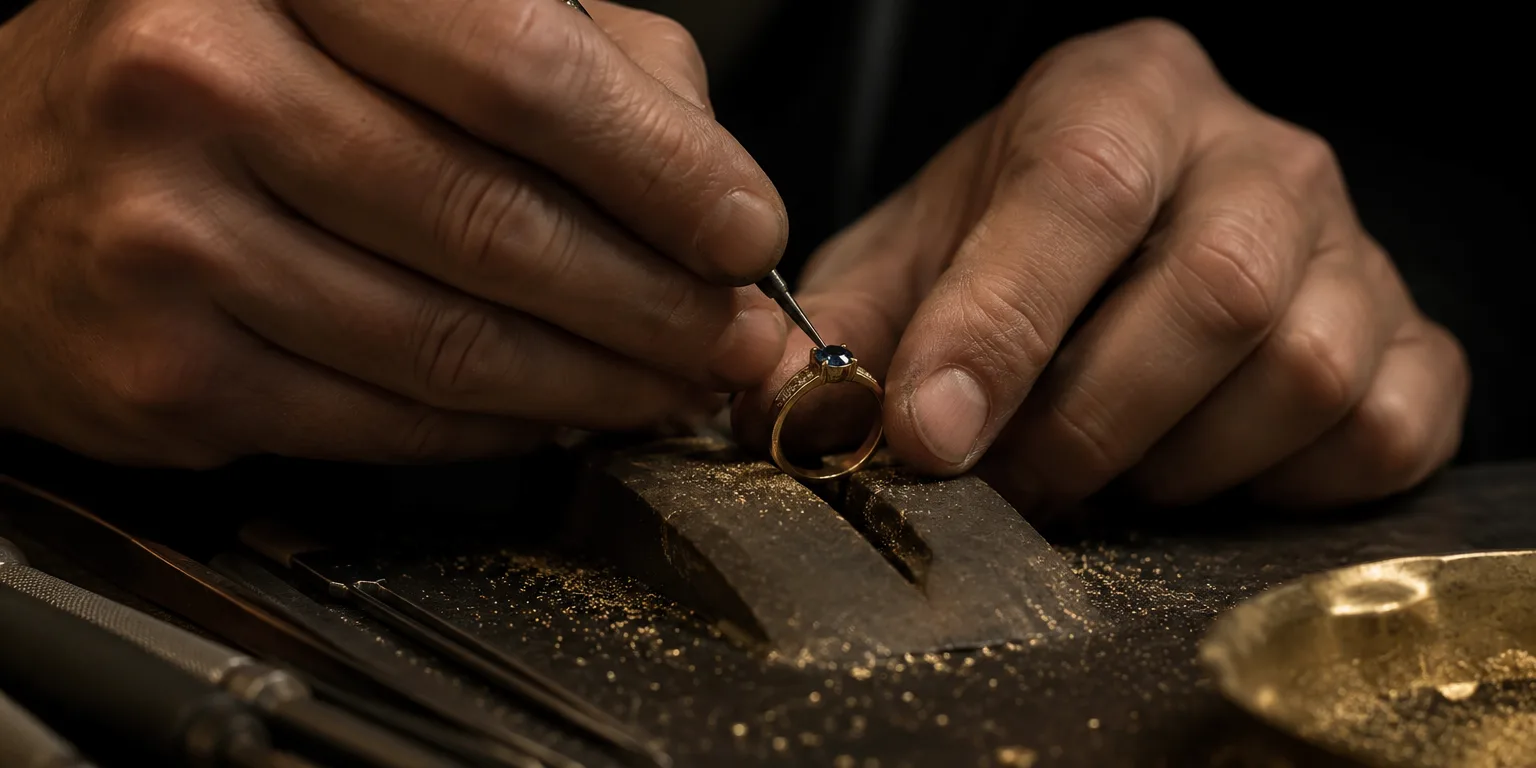
Custom jewellery in Sri Lanka is commissioned directly from a workshop or studio: you agree a design, select the metal and any gemstones, fix the price basis and timeline in writing, and the piece is made to order. Commissioning is a normal way to buy on the island rather than a luxury service, but a good outcome depends on clear written agreement at every stage.
In many countries, commissioning jewellery is a rarefied service with a rarefied price. In Sri Lanka it is simply how a great deal of jewellery gets bought. Families order bridal sets months before a wedding; a customer brings a stone to a bench jeweller and leaves with a design agreed. The infrastructure of commissioning, workshops used to working to order, at every price level, is one of the island's quiet advantages.
This guide explains how a commission should run and how to protect yourself at each stage.
Why Commission Rather Than Buy Ready-Made
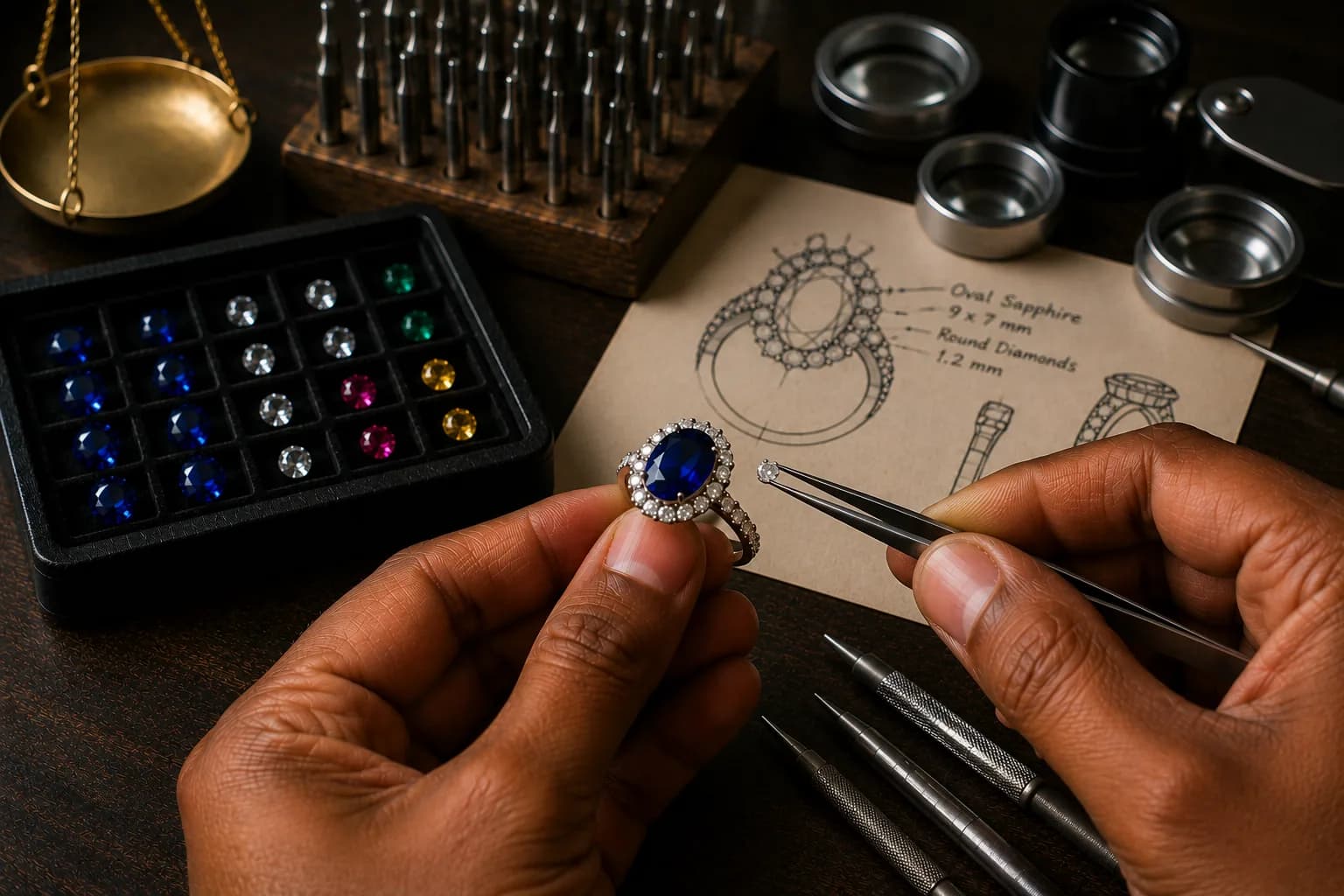
Three reasons recur. Fit: a piece designed around your stone, hand and occasion. Value transparency: a commission prices metal, stones and labour separately, so you see what you are paying for. And meaning: wedding and heirloom jewellery in Sri Lanka has traditionally been made to order, from Kandyan bridal sets to a family's thali, and a commissioned piece carries that intent.
The Stages of a Commission
A well-run commission moves through recognisable stages, and each should leave a paper trail.
Design. You bring references or a concept; the workshop responds with a sketch, a computer model or both. Iterate until the drawing is genuinely what you want, changes are cheap now and expensive later.
Specification and quotation. The quote should state the metal and fineness, expected finished weight, every gemstone with its details, the making charge, and the total price basis. Because gold is priced by weight, understand whether the metal is charged at a fixed price or at the rate on completion day.
Approval and deposit. A deposit is normal. Get a receipt recording the agreed design and specification, the deposit paid, and the delivery date.
Making. Good workshops will show progress, in person or by photograph. For gem-set pieces, ask to see the stone in the unfinished mount before final setting.
Inspection and delivery. Check the piece against the specification: weigh it, verify the stones, examine the finish. The final invoice should restate everything material.
Choosing Stones and Metal
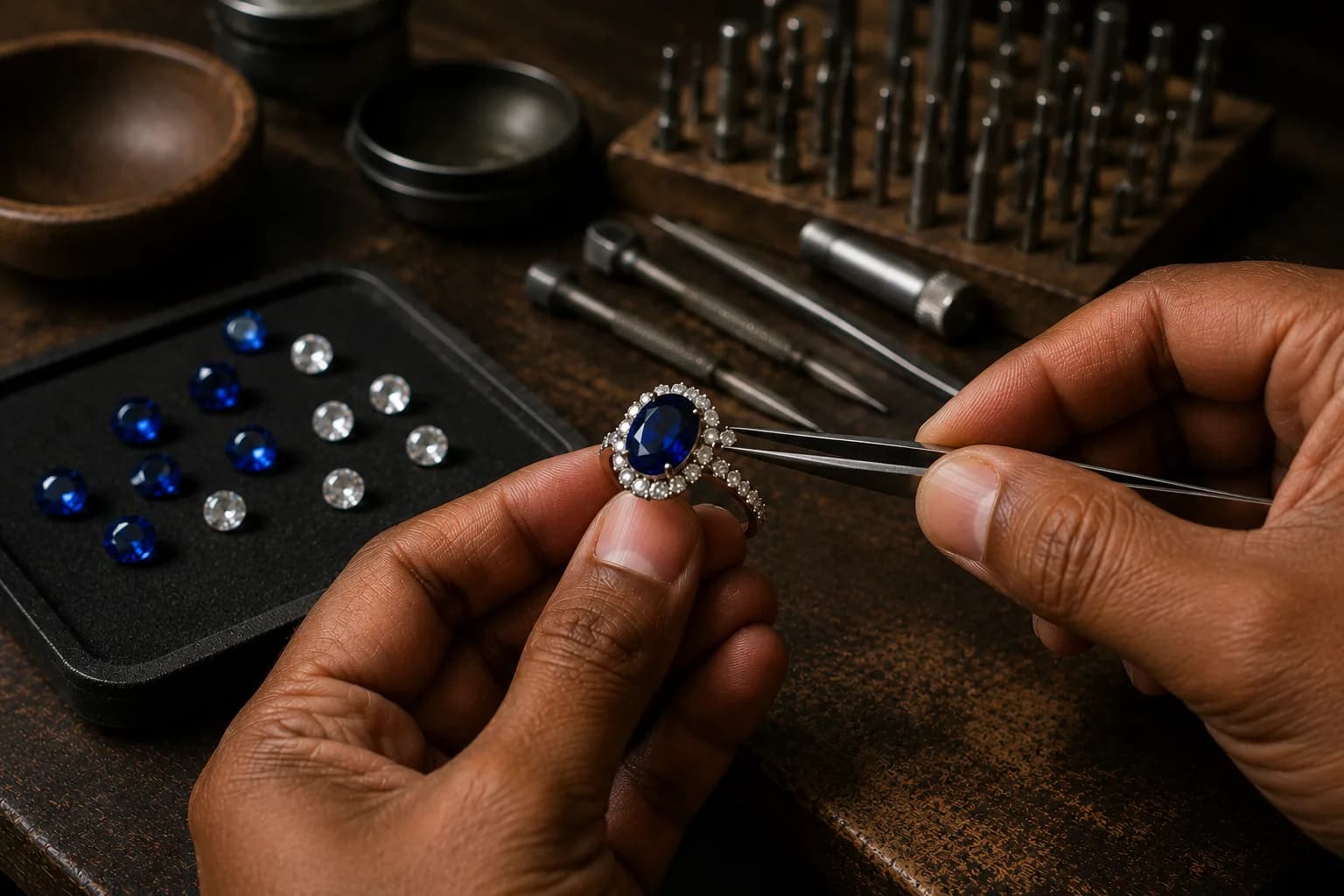
If the piece centres on a gemstone, choose the stone with the same care as a loose-stone purchase: written disclosure of identity and treatments, and an independent laboratory report for anything significant. A Ceylon sapphire commission is the classic case. Supplying your own stone is usually possible, document it first, and agree in writing who bears the risk during setting.
For the metal, fineness should be stated and marked; our gold hallmarks guide explains what markings mean in practice.
Understanding the Cost
A commission's price decomposes into metal value, stone cost and labour. The labour appears as the making charge, which varies with complexity and with how the piece is made, hand fabrication costs more than casting, for reasons covered in handmade jewellery. Read making charges before negotiating, and use the jewellery price calculator to sense-check the metal component of any quote.
Commissioning from Abroad
Remote commissions, common among diaspora families ordering traditional pieces, follow the same rules with extra care: photographs or video at each stage, payment by traceable methods, and clarity on shipping, insurance and your country's import requirements before committing.
Before You Sign
Commissioning rewards preparation more than any other way of buying jewellery. Fix everything material in writing, allow generous time, and choose the workshop as carefully as the design, the directory is a starting point for finding one. For the fuller checklist, see our dedicated guide to buying custom jewellery.
Frequently asked questions
Is custom jewellery more expensive than ready-made?
Not necessarily. You pay for materials plus making charges either way; a commission simply makes those components explicit. Complex handwork costs more than simple designs, but a straightforward commissioned piece can cost much the same as its ready-made equivalent.
How long does a jewellery commission take in Sri Lanka?
Simple pieces may take a few weeks; elaborate work such as bridal sets can take considerably longer. Agree the timeline in writing and build in a margin, especially before a wedding.
Can I supply my own gemstone for a commission?
Most workshops will set a customer's stone. Have the stone documented before handing it over, get a receipt describing it precisely, and clarify who bears the risk of damage during setting.
Can I commission jewellery from Sri Lanka while living abroad?
Yes, remote commissions are common, particularly in diaspora communities. Insist on the same written agreements, ask for photographs or video at each stage, and understand shipping, insurance and import duties before you start.
What should be in writing before work begins?
The design (drawing or model), metal and fineness, expected weight, full gemstone details, the price basis including making charges, the timeline, the deposit, and what happens if the finished piece is not acceptable.
Sources
- CIBJO, The World Jewellery Confederation, Disclosure standards for gemstones incorporated into commissioned pieces
- Gemological Institute of America (GIA), Gemological terminology used when specifying stones
External references are provided for verification. Listing a source does not imply affiliation or endorsement.
Seen something that needs correcting? Read how corrections work or contact the editorial team.
Related Guides
Jewellery
What Makes Handmade Jewellery Different?
What handmade jewellery means in Sri Lanka, traditional techniques, how handwork differs from casting, how to recognise it and why buyers pay more for it.
3 min read
Jewellery
What Does Contemporary Sri Lankan Jewellery Look Like?
How contemporary Sri Lankan jewellery blends heritage craft with modern design, minimalist gem-set work, designer studios, export ambitions and new buyers.
3 min read
Jewellery
How Should You Plan Bridal Jewellery in Sri Lanka?
Planning bridal jewellery in Sri Lanka, Kandyan and Tamil traditions, buying versus hiring, budgets and timelines, and using heirloom pieces on the day.
3 min read
Jewellery
What Counts as Fine Jewellery in Sri Lanka?
What fine jewellery means, precious metals, genuine gemstones and quality workmanship, and how Sri Lanka's sapphires and craft heritage shape the category.
3 min read