Rules & Export
Taking Jewellery Through Customs: A Traveller's Guide
How travellers generally carry jewellery through customs when entering or leaving Sri Lanka, declarations, documentation, and what to verify beforehand.
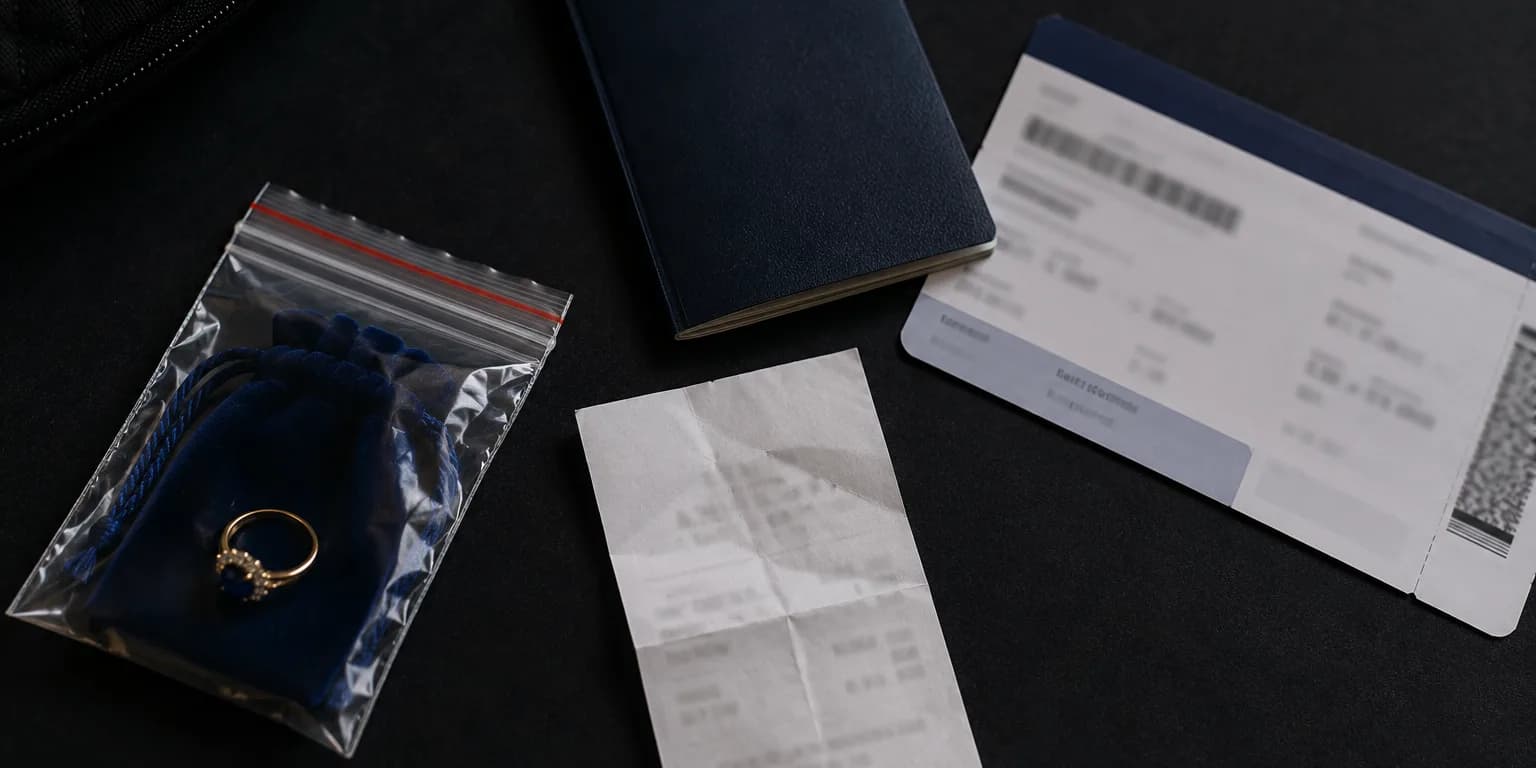
Customs authorities set declaration duties in law; travellers must declare jewellery where the applicable rules require it, and being able to show what you own, what you bought and what it is worth is the practical preparation that makes checks quick. Carrying purchase documents and, for items brought into Sri Lanka, evidence of prior ownership makes the process far smoother. Verify current declaration requirements with Sri Lanka Customs before travelling in either direction.
Jewellery crosses borders with travellers every day, wedding rings, heirlooms, holiday purchases, and customs administrations everywhere have long-standing ways of handling it. Problems are rare, and they almost always trace back to the same two causes: not knowing a declaration was required, or not being able to show where an item came from. Both are avoidable with preparation.
Two Directions, Two Sets of Questions
Travelling with jewellery involves customs twice. On arrival in Sri Lanka, the question is what you are bringing in: personal items in use, or goods that may need to be declared. On departure, the question is what you are taking out: the same personal items, or new purchases made during your stay.
Sri Lanka Customs is the responsible authority in both directions, and its current rules, not general articles like this one, determine what must be declared and how. Your destination country then applies its own rules on your return; see destination country import rules.
Arriving in Sri Lanka With Your Own Jewellery
Personal jewellery worn or carried for personal use is generally treated differently from new or commercial goods, but travellers carrying items of significant value should check the current arrival rules rather than assume. Some customs administrations, in Sri Lanka and elsewhere, operate procedures for declaring or recording valuables on arrival so that taking them out again later is straightforward.
The practical preparation is evidence of prior ownership: dated photographs of each piece, purchase invoices or insurance schedules from home, and a written valuation where one exists. Evidence assembled before travel is worth far more than explanations offered at a counter.
Leaving Sri Lanka With Purchases
Jewellery bought during your stay should leave the country with its full paper trail: itemised invoice, payment evidence and any laboratory report for set stones. Travellers are generally expected to be able to account for valuables at departure, and declaration requirements can apply depending on what is carried.
The same principles covered in taking gemstones out of Sri Lanka apply to finished jewellery, and the distinction between personal purchases and commercial quantities matters just as much, see personal purchase versus commercial export.
Good Habits at the Border
- Carry jewellery and its documents in hand luggage, never in checked bags.
- Keep new purchases separate from personal items, each with their own paperwork.
- If the rules are unclear to you, use the declaration channel and ask, honest questions are routine.
- Never understate values or describe new purchases as old possessions; misdeclaration carries serious consequences in most jurisdictions.
- Photograph everything before travel, and consider transit cover, see our insurance guide.
Verify Before You Rely on This
This guide describes customs processes in general terms only and is not legal advice. Declaration requirements, allowances and procedures change, and only the responsible authorities can state the current position. Before travelling, verify requirements with Sri Lanka Customs and, for the return leg, with your home customs authority. Official contact points are listed on our sources page.
Frequently asked questions
Do I need to declare jewellery I am wearing when entering Sri Lanka?
Personal jewellery in normal use is generally treated differently from new or commercial goods, but declaration rules and any thresholds are set by Sri Lanka Customs and can change. Check the current arrival rules before you travel, particularly for high-value items.
How do I prove jewellery was mine before the trip?
Useful evidence includes dated photographs, purchase invoices, insurance schedules and written valuations from before travel. Some customs administrations also operate procedures for recording valuables on departure from your home country, ask yours before leaving.
Will I have to pay anything on jewellery bought in Sri Lanka when I get home?
That depends entirely on your destination country's rules and allowances, which we deliberately do not quote because they vary and change. Check with your home customs authority before travelling.
What happens if I do not declare something I should have declared?
Failing to declare goods where a declaration is required can have serious consequences, including seizure and penalties, in most jurisdictions. If in doubt, declare and ask, customs officers deal with honest questions every day.
Sources
- Sri Lanka Customs, Responsible authority for traveller declarations in both directions. Verify current requirements directly.
- National Gem and Jewellery Authority of Sri Lanka (NGJA), Regulator of the gem and jewellery trade. Verify current requirements directly.
External references are provided for verification. Listing a source does not imply affiliation or endorsement.
Seen something that needs correcting? Read how corrections work or contact the editorial team.
Related Guides
Rules & Export
Customs Declarations for Gems and Jewellery: How They Work
What customs declarations are, when travellers and traders are generally expected to make them for gems and jewellery, and how to prepare one properly.
3 min read
Rules & Export
Taking Gemstones Out of Sri Lanka: What Travellers Should Know
How travellers generally take purchased gemstones out of Sri Lanka, declarations, documentation and the official bodies to check with before departure.
3 min read
Rules & Export
Documents Required for Gems and Jewellery: The Complete Paper Trail
The documents that generally support buying, carrying, exporting and insuring gems and jewellery from Sri Lanka, and why each one earns its place.
3 min read

Rules & Export
Importing Gems and Jewellery Into Sri Lanka: How It Generally Works
The general process for bringing gems and jewellery into Sri Lanka, traveller arrivals, commercial imports, declarations and the authorities to consult.
3 min read