Rules & Export
Documents Required for Gems and Jewellery: The Complete Paper Trail
The documents that generally support buying, carrying, exporting and insuring gems and jewellery from Sri Lanka, and why each one earns its place.
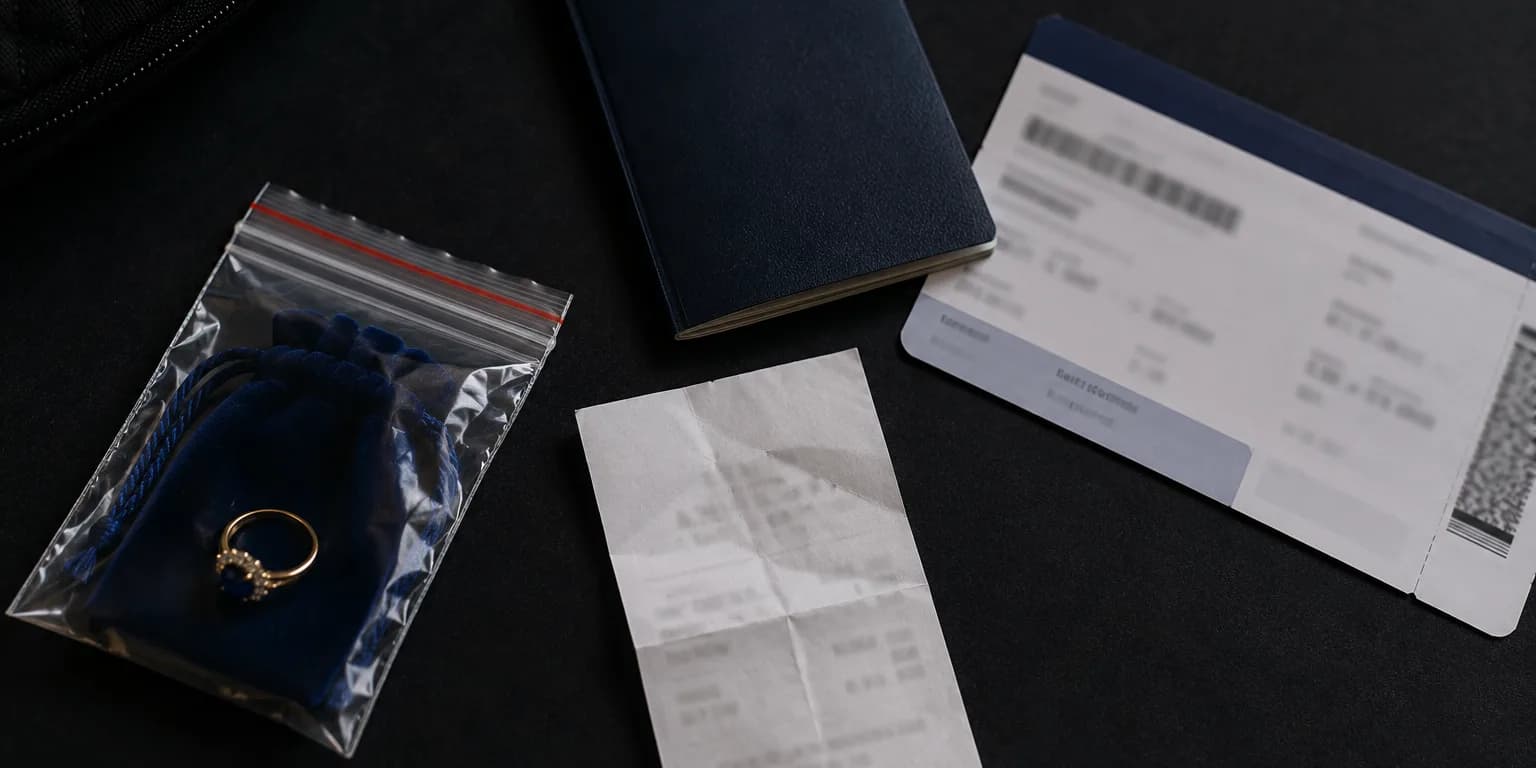
The core paper trail for gems and jewellery is consistent across situations: an itemised invoice stating species, weight, treatments and price; evidence of payment; any laboratory report; and, for commercial movements, the licences, commercial invoices and declarations the authorities require. Exact documentary requirements are set by the National Gem and Jewellery Authority, Sri Lanka Customs and destination authorities, and should be verified before travel or shipment.
Ask anyone who has moved gems across borders for a living what matters most and the answer is rarely the stone, it is the paper. Documentation is what converts a beautiful object into an explainable one: to a customs officer, an insurer, a valuer or a future buyer. This guide assembles the paper trail in one place, from the shop counter to the aircraft hold.
The Core Trio: Invoice, Payment, Report
Three documents anchor everything else.
The itemised invoice is the foundation. It should identify the seller fully, describe the stone or piece precisely, species and variety, weight, treatment status, and state the price actually paid. Vague invoices ("one blue stone") are close to worthless; insist on precision at the counter, as our guide to buying gemstones in Sri Lanka explains.
Payment evidence, a card record, transfer confirmation or receipt, ties the invoice to reality. Declared values that match payment records are believed; unsupported values invite questions.
The laboratory report, where you have one, independently confirms identity and treatments. Check that its weight and measurements match the stone; how to read a gem report walks through each field.
Documents for Travel and Declarations
When the purchase travels with you, the core trio becomes your declaration file. Keeping a complete, consistent file for valuables you carry is our practical recommendation: where an authority does ask questions, the file answers them quickly, and where a declaration duty applies, it gives you the figures to declare accurately. Keep it in hand luggage with the goods, and add the seller's business details and any paperwork issued at purchase about export.
For items you owned before travelling, the equivalent file is prior-ownership evidence: dated photographs, older invoices, insurance schedules and valuations. The role these play at borders is covered in taking jewellery through customs and customs declarations.
Documents for Commercial Movements
Commercial exports and imports carry everything above plus the trade layer: the exporter's licence or registration, commercial invoices for the consignment, packing details, formal declarations and whatever approvals the National Gem and Jewellery Authority and Sri Lanka Customs currently require. Destination countries then add their own import documentation on arrival. The general sequence lives in export procedures; the current, binding list of documents is for the authorities to state.
Documents for Insurance and Afterwards
The same file serves you at home. Insurers typically ask for invoices, reports and valuations when covering jewellery, and shipping cover rests on declared values that documents can support, see our guides to insurance and shipping jewellery internationally. Years later, the file is also the provenance a future buyer or valuer will ask for. A good paper trail never stops earning.
Managing the File
- Keep originals together with the goods while travelling; never in checked baggage.
- Photograph or scan everything and store copies separately, accessible online.
- Check documents against each other at purchase, one inconsistency weakens the whole file.
- Add to the file over time: valuations, insurance schedules, any later reports.
Verify Before You Rely on This
This guide describes documentation in general terms and is not legal advice. Which documents are formally required at any border or in any procedure is defined by the authorities and changes over time. Verify current requirements with the National Gem and Jewellery Authority, Sri Lanka Customs and your destination customs authority, references are on our sources page.
Frequently asked questions
What is the single most important document when buying a gemstone?
The itemised invoice. It should state the species and variety, weight, treatment status and price, and identify the seller fully. Almost every later process, customs, insurance, resale, builds on it.
Do I need a laboratory report to travel with a gemstone?
A report is not generally a travel requirement in itself, but it strengthens every declaration and insurance conversation, and for significant stones it is standard protection. Whether any specific document is required at the border is for the customs authorities to state.
Should I carry originals or copies?
Carry originals with the goods and keep copies, photographed or scanned, stored separately, ideally somewhere accessible online. Lost originals are far less damaging when complete copies exist.
What extra documents do commercial shipments need?
Commercial movements generally add exporter licensing or registration, commercial invoices, packing details and formal declarations to the core purchase documents. The NGJA and Sri Lanka Customs can state the current set for your consignment.
Sources
- National Gem and Jewellery Authority of Sri Lanka (NGJA), Trade authority whose current requirements define commercial documentation. Verify current requirements directly.
- Sri Lanka Customs, Border authority whose current requirements define declaration paperwork. Verify current requirements directly.
External references are provided for verification. Listing a source does not imply affiliation or endorsement.
Seen something that needs correcting? Read how corrections work or contact the editorial team.
Related Guides
Rules & Export
Customs Declarations for Gems and Jewellery: How They Work
What customs declarations are, when travellers and traders are generally expected to make them for gems and jewellery, and how to prepare one properly.
3 min read
Rules & Export
Taking Gemstones Out of Sri Lanka: What Travellers Should Know
How travellers generally take purchased gemstones out of Sri Lanka, declarations, documentation and the official bodies to check with before departure.
3 min read

Rules & Export
Gem and Jewellery Export Procedures in Sri Lanka: An Overview
The general shape of commercial gem and jewellery export from Sri Lanka, licensing, declarations, valuation and clearance through the NGJA and Customs.
3 min read
Rules & Export
Insuring Jewellery at Home and in Transit: General Guidance
General guidance on insuring jewellery and gemstones, documentation, valuations, transit cover and declared value, and the questions to ask an insurer.
3 min read