Jewellery
What Is Traditional Sri Lankan Jewellery?
A survey of traditional Sri Lankan jewellery, Kandyan, Tamil and low-country styles, classic motifs, materials and the ceremonial roles pieces still play.
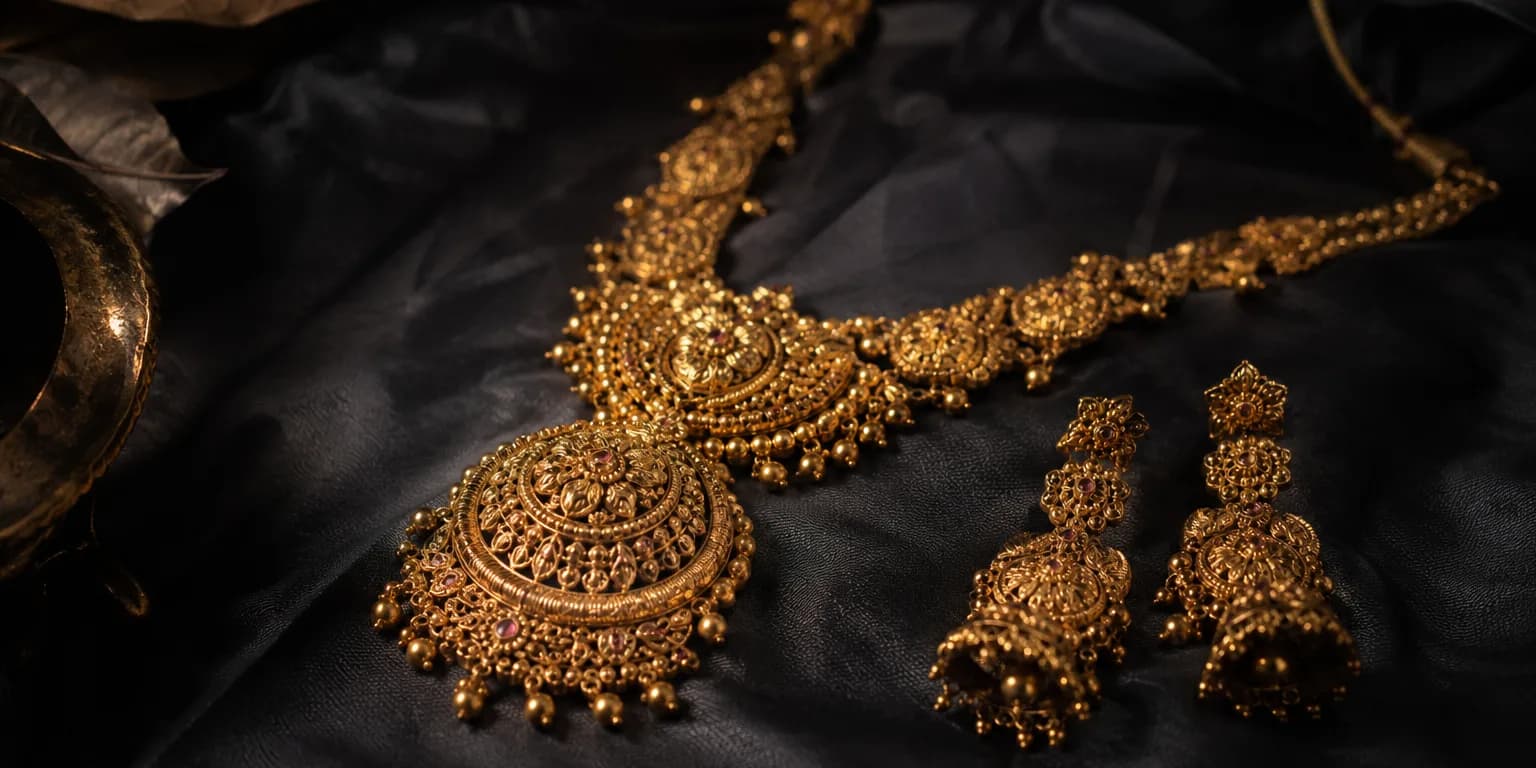
Traditional Sri Lankan jewellery is a family of regional styles rather than a single canon. The best known are the ornate Kandyan tradition of the hill country, Tamil wedding and temple-inspired jewellery centred on the thali, and low-country and coastal styles including a strong silver craft. Gold dominates ceremonial pieces, which are still worn at weddings and passed down as heirlooms.
Ask what "traditional Sri Lankan jewellery" means and you will get different answers in Kandy, Jaffna and Galle, and all of them will be right. The island's traditional jewellery is not one style but several, shaped by region, community and occasion, yet united by a shared reverence for gold, gemstones and the goldsmith's hand.
This guide surveys the main strands and the roles they still play.
The Kandyan Tradition
The hill country around Kandy is associated with the island's most elaborate jewellery tradition, linked to the ceremonial dress of the former royal court. Kandyan jewellery is best known today through the full bridal set, layered necklaces, a forehead ornament, earrings and bangles worn with the Kandyan osariya. The pieces are typically bold, densely worked gold, often with repoussé and gem setting.
Because the style deserves its own treatment, we cover its forms and modern use in detail in our guide to Kandyan jewellery.
Tamil Traditions of the North and East
Tamil communities in Sri Lanka maintain jewellery traditions closely related to those of South India yet with their own local character, historically centred on Jaffna's goldsmithing culture. The thali, the marriage pendant tied at the wedding ceremony, is the tradition's heart, and temple-inspired motifs, heavy gold necklaces and coin-based designs are characteristic. Our dedicated article on Tamil jewellery traditions in Sri Lanka explores these forms and their meaning.
Low-Country and Coastal Styles
Away from the hill country, the island's south and west developed their own jewellery habits, traditionally shaped by trade through coastal towns. Galle in particular has long been associated with jewellery and gem trading, and colonial-era exchange is generally understood to have left its mark on coastal styles and workshop practice. Silver craft flourished here and elsewhere on the island, producing chased and engraved ornaments and decorative objects that stand somewhat apart from the gold-centred bridal traditions.
Motifs and Materials
Across regions, traditional Sri Lankan ornament draws on a recognisable vocabulary: flowers, leaves and seeds; birds and serpents; auspicious and religious symbols; and the dense, rhythmic patterning familiar from South Asian courtly art. Individual motifs carry associations that vary by community, which is one reason commissioned pieces are often discussed carefully with the goldsmith.
Gold, typically of high fineness by international standards, is the traditional ceremonial metal, prized because it combines beauty with reliable value. Gemstones follow the island's own supply: Ceylon sapphires in blue and other colours, moonstone with its soft glow, and a supporting cast of garnets, zircons and other local stones. Buyers weighing modern gold pieces against tradition will find our explainer on gold hallmarks useful context.
Jewellery as Ceremony and Inheritance
What most distinguishes traditional jewellery here is that it remains in use. Wedding jewellery is the clearest case: a bride's set is simultaneously costume, blessing and family capital, assembled from new commissions and inherited pieces alike. Items pass between generations, are remodelled as fashions change, and return to the workshop for repair and restoration rather than being retired.
Buying Traditional Jewellery Today
Traditional forms are still made across the island, from ready-made pieces to full bridal sets commissioned months before a wedding. Quality varies as it does everywhere, so the fundamentals apply: confirm metal fineness in writing, ask how the piece was made, and document any gemstones. For the process end to end, see buying jewellery in Sri Lanka; for commissioned work, our custom jewellery guide explains how a commission should run.
Frequently asked questions
What are the main styles of traditional Sri Lankan jewellery?
The most widely recognised are the Kandyan tradition of the hill country, Tamil wedding and temple-inspired jewellery of the north and east, and low-country and coastal styles that include a notable silver craft. Each has its own characteristic forms and occasions.
Is traditional Sri Lankan jewellery always gold?
Gold dominates ceremonial and bridal jewellery, but silver has a long tradition of its own, particularly for everyday ornaments and decorative objects. Gem-set pieces appear across both metals.
Do people still wear traditional jewellery in Sri Lanka?
Yes. Traditional jewellery remains central to weddings and other ceremonies, and many families keep and wear inherited pieces. Workshops continue to make traditional forms to order.
Can visitors buy traditional-style jewellery?
Traditional-style pieces are widely available, from ready-made items to full custom commissions. Buyers should apply the same care as with any jewellery purchase, clear documentation of metal fineness, gemstones and price.
Sources
- Publicly documented Sri Lankan cultural heritage; specific historical claims pending expert review, Descriptions of regional styles and motifs are given in general, cautious terms.
External references are provided for verification. Listing a source does not imply affiliation or endorsement.
Seen something that needs correcting? Read how corrections work or contact the editorial team.
Related Guides
Jewellery
What Is Kandyan Jewellery?
Kandyan jewellery explained, the hill-country tradition associated with Sri Lanka's royal court, the classic bridal set, its forms, and how it is worn today.
3 min read
Jewellery
What Are the Tamil Jewellery Traditions of Sri Lanka?
Tamil jewellery traditions in Sri Lanka, the thali and wedding gold, temple-inspired design, Jaffna's goldsmithing heritage and how the customs live on today.
3 min read
Jewellery
What Is the History of Sri Lankan Jewellery?
How jewellery making developed in Sri Lanka, from the ancient gem trade to royal court traditions, colonial influences and today's living craft culture.
3 min read
Jewellery
How Should You Plan Bridal Jewellery in Sri Lanka?
Planning bridal jewellery in Sri Lanka, Kandyan and Tamil traditions, buying versus hiring, budgets and timelines, and using heirloom pieces on the day.
3 min read