Jewellery
What Are the Tamil Jewellery Traditions of Sri Lanka?
Tamil jewellery traditions in Sri Lanka, the thali and wedding gold, temple-inspired design, Jaffna's goldsmithing heritage and how the customs live on today.
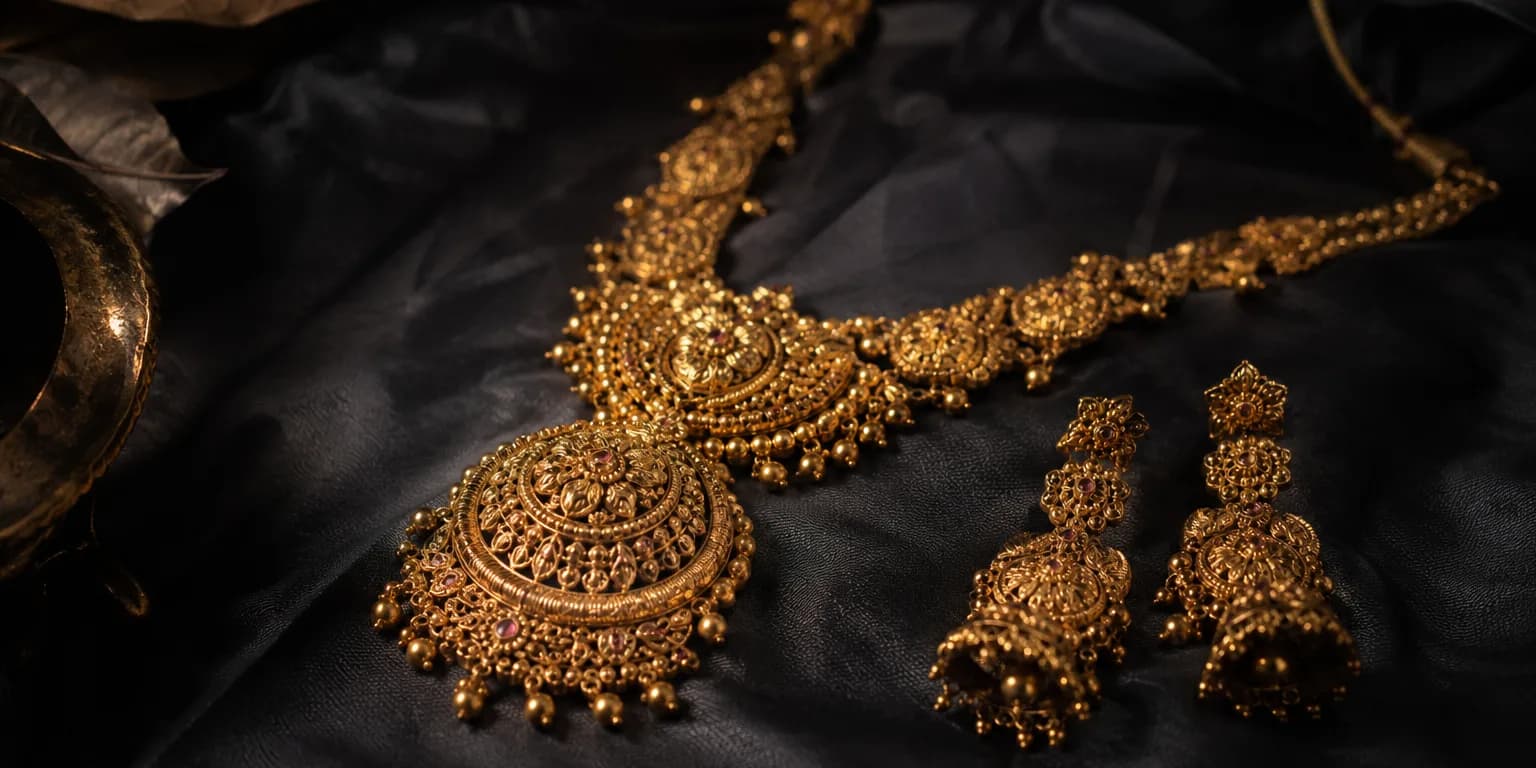
Tamil jewellery traditions in Sri Lanka centre on wedding gold, above all the thali, the marriage pendant tied at the ceremony, together with temple-inspired designs, coin necklaces and heavy gold ornaments. Jaffna has long been associated with Tamil goldsmithing, and the traditions remain central to weddings and family life in Sri Lanka and across the Tamil diaspora.
In Tamil tradition, jewellery is never merely worn; it is conferred. Gold marks the great transitions of life, birth, coming of age, and above all marriage, and carries blessing, status and security in a single material. Sri Lanka's Tamil communities, with their historic goldsmithing centre in the north, have maintained these traditions in a distinctly local key.
The Thali: Centre of the Tradition
The heart of Tamil wedding jewellery is the thali, the pendant the groom ties around the bride's neck at the decisive moment of the ceremony. It is usually gold and often bears auspicious symbols, with designs that traditionally vary by community, region and family. The cord or chain that carries it, the kodi, has its own customs; in many families the thali is tied first on a consecrated cord and later transferred to a gold chain.
What outsiders sometimes miss is the thali's standing. It is not an accessory but the emblem of the marriage itself, worn continuously and treated with reverence. Families commissioning a thali typically discuss its design carefully with the goldsmith, and many keep the details private.
Wedding Gold Beyond the Thali
Around the thali gathers a fuller tradition of bridal gold: necklaces worn in number, earrings, bangles, rings, and ornaments for the hair. Coin necklaces, designs built from gold coins or coin-like elements, are a recognisable form, as are heavy chains and gem-set pieces featuring the island's own stones, including the Ceylon sapphire.
The quantity of gold a bride wears has traditionally reflected family means and affection, but its purpose is practical as well as symbolic: wedding gold is the bride's security, held in a form whose value does not depend on anyone's promise. This is one reason Tamil buyers traditionally insist on high-fineness gold and weigh pieces carefully, habits any buyer would do well to copy, with the help of our guides to gold hallmarks and making charges.
Temple-Inspired Design
A strand of Tamil jewellery known broadly as temple jewellery draws its forms from the ornament of deities and classical dance: necklaces and pendants with divine figures, floral scrolls and dense goldwork. Traditionally associated with South Indian temple culture and shared across the Tamil world, the style appears in Sri Lankan bridal and ceremonial jewellery as well, from faithful heavy-gold interpretations to lighter modern versions.
Jaffna and the Goldsmith's Craft
The Jaffna peninsula is traditionally regarded as the historic centre of Tamil goldsmithing in Sri Lanka, with family workshops passing the craft down through generations. Tamil goldsmiths have long worked to commission, a bride's set made to order, an infant's first gold, a thali designed for a particular family, and that commissioning culture persists today in Sri Lanka and wherever the community has settled. Diaspora families frequently order traditional pieces from island workshops; our custom jewellery guide explains how to run such a commission well.
A Living Tradition
Like the Kandyan tradition in the hill country, Tamil jewellery customs are practised rather than preserved. Weddings remain their fullest expression, and the traditions have adapted, lighter sets for daily wear, modern designs alongside classical ones, without losing their centre. Readers comparing the island's traditions side by side can start with our overview of traditional Sri Lankan jewellery.
Practical Notes for Buyers
Buying for a wedding or simply out of admiration for the style, the fundamentals are the same: agree fineness, weight and price in writing, document any gemstones, and allow real lead time for commissioned pieces. Our guide to buying jewellery in Sri Lanka covers the process, and the jewellery price calculator helps you sense-check gold quotations.
Frequently asked questions
What is a thali?
The thali is the marriage pendant tied around the bride's neck at a Tamil wedding, usually in gold and often carrying auspicious symbols. Its design varies by community and family tradition, and it is treated with deep respect as the emblem of the marriage.
What is the kodi?
The kodi is the cord or chain that carries the thali. In many families the thali is first tied on a consecrated cord and later transferred to a gold chain, though customs vary.
Why is gold so important in Tamil weddings?
Wedding gold traditionally combines blessing, adornment and financial security for the bride. High-fineness gold is preferred because its value is intrinsic and enduring.
Where are Tamil jewellery traditions strongest in Sri Lanka?
The north, particularly the Jaffna peninsula, is traditionally associated with Tamil goldsmithing, and the traditions are also strong in the east and among Tamil communities elsewhere on the island and abroad.
Can diaspora families commission traditional pieces from Sri Lanka?
Yes, many do. Commissioning from a Sri Lankan workshop follows the same principles as any custom order: agree design, fineness, weight and price in writing, and allow generous lead time before the wedding.
Sources
- Publicly documented Sri Lankan cultural heritage; specific historical claims pending expert review, Descriptions of wedding customs and regional craft associations are given in general, respectful terms; practice varies by family and community.
External references are provided for verification. Listing a source does not imply affiliation or endorsement.
Seen something that needs correcting? Read how corrections work or contact the editorial team.
Related Guides
Jewellery
What Is Traditional Sri Lankan Jewellery?
A survey of traditional Sri Lankan jewellery, Kandyan, Tamil and low-country styles, classic motifs, materials and the ceremonial roles pieces still play.
3 min read
Jewellery
How Should You Plan Bridal Jewellery in Sri Lanka?
Planning bridal jewellery in Sri Lanka, Kandyan and Tamil traditions, buying versus hiring, budgets and timelines, and using heirloom pieces on the day.
3 min read
Jewellery
What Is the History of Sri Lankan Jewellery?
How jewellery making developed in Sri Lanka, from the ancient gem trade to royal court traditions, colonial influences and today's living craft culture.
3 min read
Jewellery
How Does Custom Jewellery Work in Sri Lanka?
How commissioning custom jewellery works in Sri Lanka, the design process, choosing stones and metal, agreeing costs, timelines and the paperwork to insist on.
3 min read