Buying Guides
How to Commission Custom Jewellery in Sri Lanka
How to commission custom jewellery, agreeing design and materials in writing, sourcing the stone, making charges, and inspecting the finished piece.
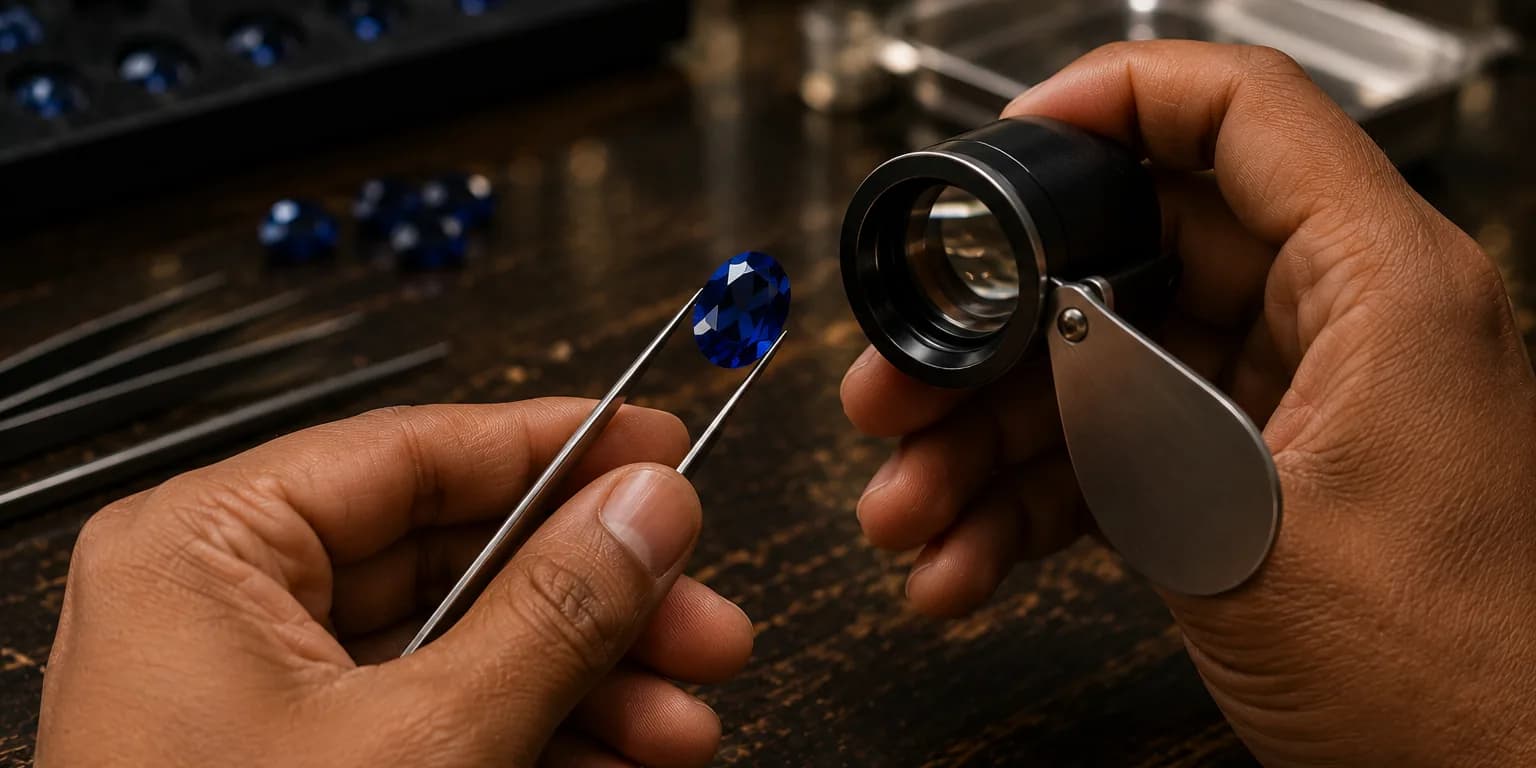
To commission custom jewellery successfully, agree everything in writing before work begins: the design, the metal and its fineness, the exact stones and their disclosed treatments, the making charge, the timeline, the payment schedule and what happens if the result disappoints. Custom pieces are rarely returnable, so the written specification is your main protection.
Sri Lanka pairs a deep bench of goldsmiths with direct access to the source of fine coloured stones, which makes it a natural place to have jewellery made rather than merely bought. A commission also reverses the usual buying problem: instead of judging a finished object, you are buying a promise. Everything therefore depends on how precisely that promise is written down.
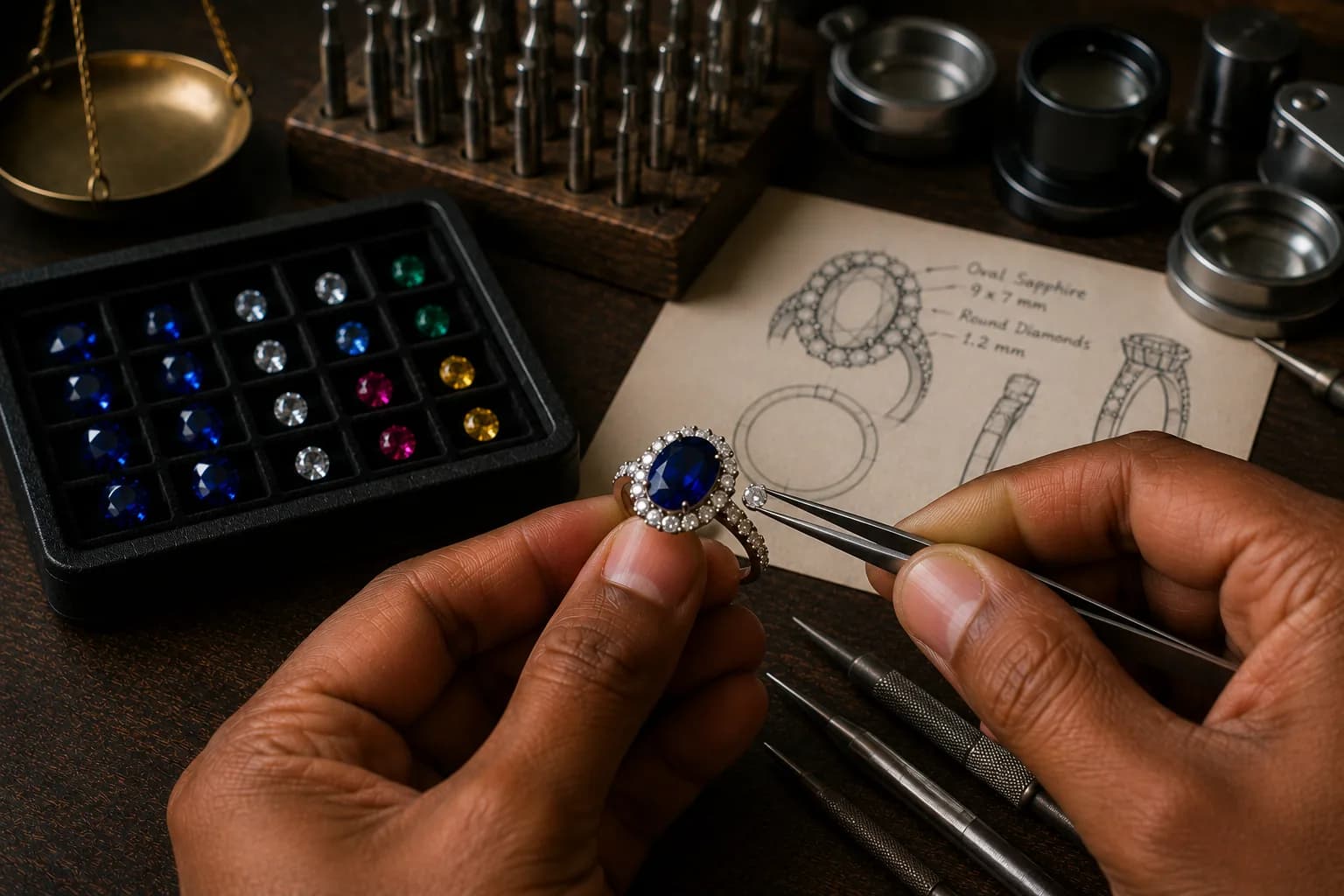
Agree the Design Precisely
Vague briefs produce disputed results. Before any deposit, settle the design in a form both sides can point to later: a drawing, a CAD render or a reference photograph, together with dimensions, ring size where relevant, and the setting style. Ask what is practical for daily wear if the piece is to be worn daily, a good maker will tell you when a design is fragile.
Agree the timeline and the payment schedule at the same time. A deposit with the balance due on satisfactory completion is a common structure; whatever you agree, get it in writing and keep evidence of each payment.
Specify the Stone, and Document It
If the workshop supplies the stone, buy it as carefully as you would a loose stone anywhere: identity, weight and treatment status disclosed in writing, with an independent report for anything significant. The full method is in how to buy a sapphire.
If you supply your own stone, document it before handing it over: its weight, measurements and any report number, recorded on the work order the maker signs. This protects both sides, you against substitution, the maker against later accusations. For an important stone, a laboratory report obtained before setting is the cleanest baseline, since mounted stones are harder to weigh and examine afterwards.
Pin Down the Metal and the Making Charge
Specify the metal and its karat or fineness in writing, along with the expected finished weight range. Ask how the work will be priced: metal at weight, stones itemised, and the making charge, the workmanship fee, stated separately. Our guide to making charges explains the common calculation methods, and a maker who itemises readily is giving you both a comparable quote and a sign of confidence.
Ask whether the finished piece will carry a purity mark and what it will say; our guide to gold hallmarks explains what such marks do and do not prove.
Agree What Happens If It Goes Wrong
Custom pieces are generally not returnable, the piece exists because you ordered it. That makes it essential to agree, in advance and in writing, the difference between two situations: the piece failing to match the agreed specification (wrong fineness, wrong stone, wrong dimensions), where you should be entitled to correction or another agreed remedy, and a change of heart, where you usually are not.
Practices vary between workshops, so do not assume any standard applies. The questions to settle are the same ones covered in jewellery refunds and returns.
Inspect Before the Final Payment
Collection is the moment your bargaining position is strongest, so inspect before paying the balance. Work through the specification line by line: total weight on a scale in front of you, the purity mark as agreed, dimensions and ring size, the stone's identity and weight against your records, and the quality of setting and finish under a loupe.
Then have the final invoice record everything: metal and fineness, stone details and treatments, weights, making charge and total. A custom piece with complete documentation is easier to insure, easier to take through customs and easier to sell, the same principles as in our general guide to buying jewellery in Sri Lanka.
Frequently asked questions
Is custom jewellery cheaper than ready-made?
Not necessarily. You may save on retail margin but you pay for individual workmanship. The advantage of a commission is control, over the stone, the metal and the design, rather than a guaranteed lower price.
Should I pay for custom jewellery upfront?
Paying a deposit with the balance on satisfactory completion is a common arrangement. Be cautious of requests for full payment before work begins, and keep evidence of every payment.
Can I return a custom-made piece of jewellery?
Usually not, since it is made to your order, which is why the written specification matters so much. Agree before paying what happens if the piece does not match the agreed specification, as distinct from you simply changing your mind.
How do I check the finished piece matches what I ordered?
Compare it line by line with the written specification: metal fineness and any marks, total weight, the stone's identity and weight, and the workmanship. For a significant stone, verify it is the same stone you selected, ideally against a laboratory report obtained beforehand.
Related terms
Sources
- National Gem and Jewellery Authority of Sri Lanka (NGJA), Regulation of the Sri Lankan gem and jewellery trade
- CIBJO, The World Jewellery Confederation, Disclosure standards for metals and gemstones in finished jewellery
- Gemological Institute of America (GIA), Gemstone terminology for specifying commissioned pieces
External references are provided for verification. Listing a source does not imply affiliation or endorsement.
Seen something that needs correcting? Read how corrections work or contact the editorial team.
Related Guides

Buying Guides
How to Buy Jewellery in Sri Lanka: A Practical Guide
What to know before buying jewellery in Sri Lanka, gold purity and hallmarks, making charges, gemstone-set pieces, documentation and taking your purchase home.
3 min read
Buying Guides
How to Buy a Sapphire: What Actually Determines Quality
How to buy a sapphire with confidence, judging colour, clarity, cut and weight, understanding heat treatment and origin claims, and using laboratory reports.
3 min read
Buying Guides
Jewellery Refunds and Returns: What Should You Agree Before Paying?
Refund and return practices for jewellery vary widely between sellers, what to agree in writing before paying, and how to handle a dispute if one arises.
3 min read

Gold & Metals
What Are Making Charges on Gold Jewellery?
What making charges are, how jewellers structure them per gram, as a percentage or flat fee, why they vary so widely, and how buyers can compare and negotiate.
2 min read